What Makes a Hearing Aid Truly “the Best” — It Depends on You
Everybody wants the best hearing aid. The honest answer is that the best hearing aid in Singapore is the one matched to your specific type of hearing loss, fitted by a qualified audiologist, programmed precisely to your audiogram, and supported with proper aftercare. There is no single device that wins for every person, which is why any guide that tells you “this is the best hearing aid, full stop” is worth reading with some scepticism.
What this guide does instead is break down the best options by brand, by lifestyle, by budget, and by what makes a provider actually trustworthy — so you can walk into The Hearing Centre or any other clinic with enough knowledge to ask the right questions and make a decision that genuinely serves you.
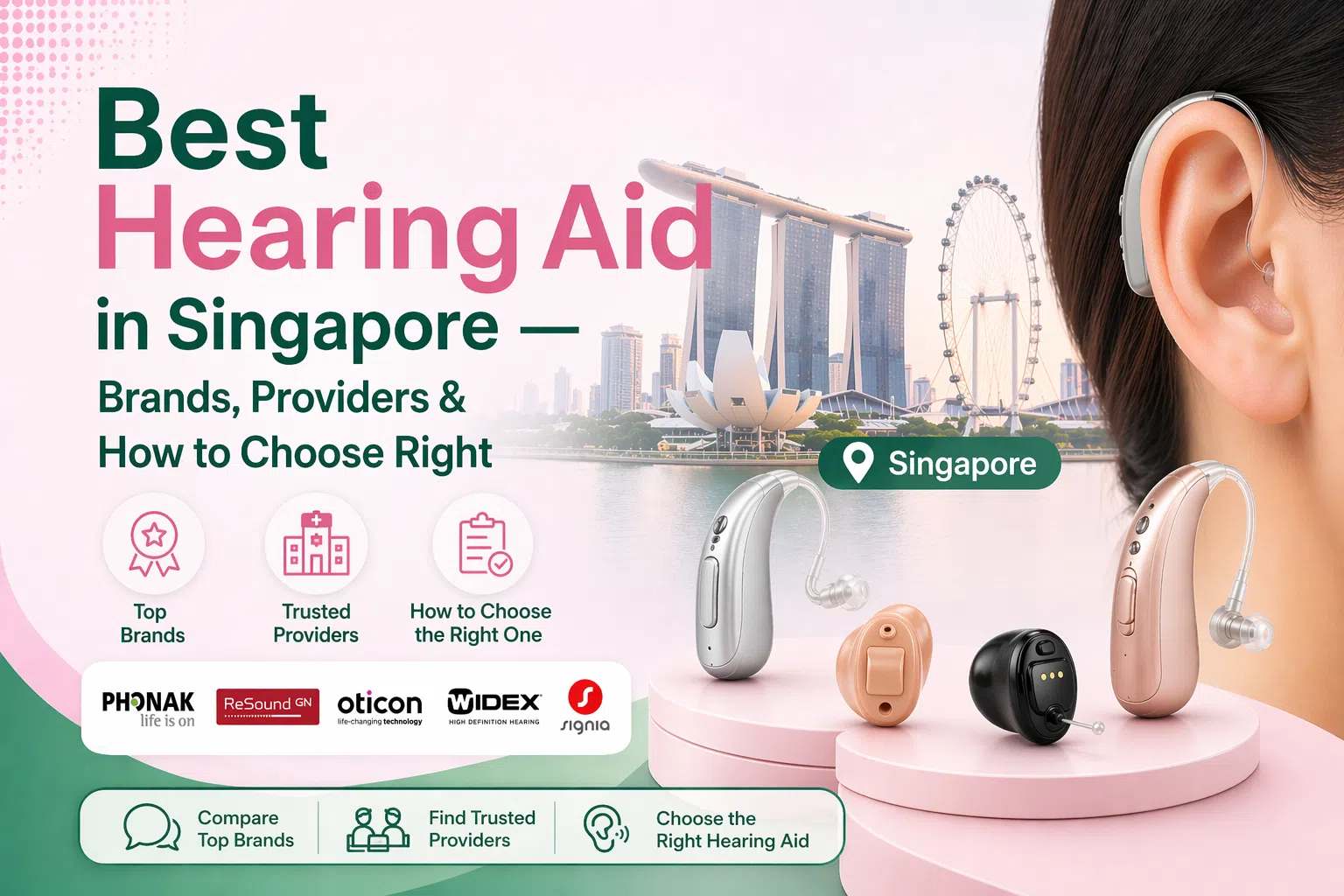
Best Hearing Aid Brands Available in Singapore
Singapore’s reputable clinics carry devices from the world’s leading manufacturers. Here’s what each brand is genuinely known for — not the marketing version, the practical version.
Phonak
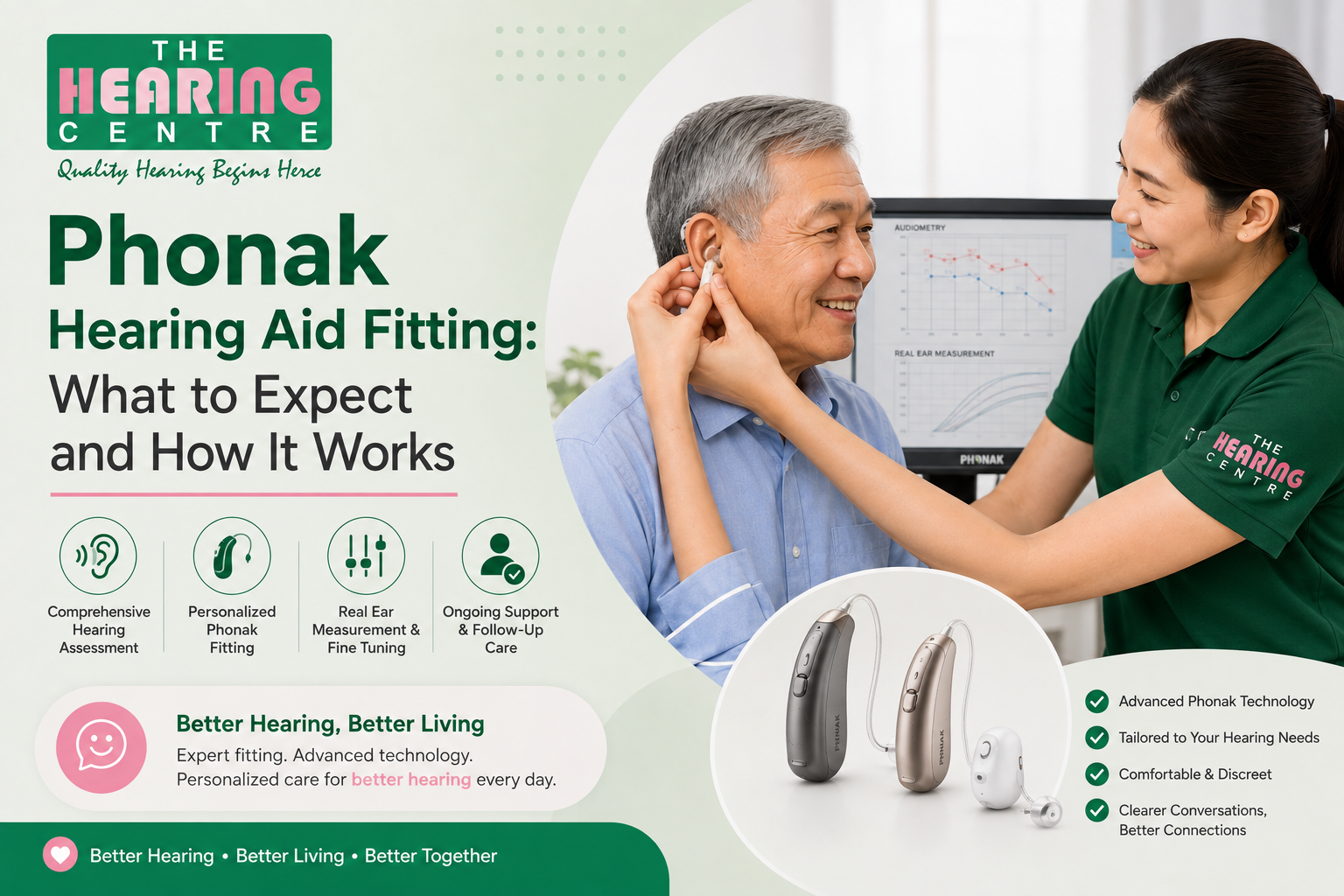
Phonak is probably the most widely fitted brand globally and for good reason. Their devices are exceptionally strong in noisy environments, which matters in Singapore’s hawker centres, MRT stations, and open-plan offices. The Audeo Infinio Sphere is their current flagship — AI-driven, rechargeable, with real-time noise filtering that adapts environment by environment. Their Roger wireless accessory system is particularly useful for people who attend meetings or lectures regularly. If you struggle most in crowded or loud settings, Phonak is worth serious consideration. The Hearing Centre carries the full Phonak hearing aids range.
Signia
Signia (previously Siemens) has carved a reputation for discreet, rechargeable designs and something called Own Voice Processing — a feature that makes your own voice sound natural when you’re wearing the device, which many first-time wearers find surprisingly jarring with other brands. Their Silk Charge and Go model is among the most invisible rechargeable devices on the market. Motion sensor technology automatically adjusts settings as you move from quiet to noisy environments. Good for active users and people who prioritise discretion. Full details on Signia hearing aids Singapore are on The Hearing Centre’s product page.
Starkey
The only major hearing aid brand headquartered in the United States, Starkey has invested heavily in health-monitoring features that go beyond hearing — the Genesis AI and Edge AI models include fall detection, activity tracking, and translation features built into the device. Their custom in-ear options are among the most precisely fitted available. If you’re looking for the best hearing aid that doubles as a health device, Starkey is the brand to look at. Starkey hearing aids are available at The Hearing Centre.
ReSound
ReSound focuses on what they call natural hearing — their microphone placement mimics the ear’s natural positioning to capture sound the way your brain expects to process it. They were one of the earliest brands to offer direct iPhone streaming without an intermediate device, and their app integration is genuinely among the best. If you use a smartphone heavily and want your hearing aid to feel like part of your daily tech rather than a medical device, ReSound is worth prioritising. Check ReSound hearing aids Singapore for available models.
Oticon
Oticon’s entire design philosophy is built around what they call BrainHearing — supporting how the brain processes sound rather than just amplifying it. Their Deep Neural Network technology, now in its second generation, processes 12 million real-life sounds to train the device to deliver natural soundscapes. For people who experience listening fatigue — that exhaustion you feel after a day of straining to follow conversations — Oticon devices often make a noticeable difference. Oticon hearing aids are available at The Hearing Centre.
Rexton
Rexton sits at a slightly more accessible price point than the brands above while still offering solid digital processing, Bluetooth connectivity, and rechargeable options. For budget-conscious buyers who still want a proper prescription device with good functionality, Rexton deserves a look. The Hearing Centre carries Rexton hearing aids across multiple styles.
Best Hearing Aid by Lifestyle — Who Should Choose What
This is the part most guides skip. Your audiogram tells the audiologist what the device needs to do technically. Your lifestyle tells them which device you’ll actually wear every day.
For seniors and elderly users — BTE devices with larger controls, longer battery life, and straightforward operation tend to work best. Rechargeable models eliminate the frustration of tiny batteries. Brands like Phonak and Oticon both have strong senior-specific lines.
For working professionals — RIC devices with strong noise management, Bluetooth streaming for calls and meetings, and discreet styling. Phonak, Signia, and ReSound all perform well here. The ability to connect directly to a phone for calls is no longer a luxury — it’s genuinely practical in a professional context.
For active and outdoor users — moisture resistance, secure fit, and robust construction matter as much as sound quality. Phonak’s Sports sleeve accessories and Starkey’s durable build quality hold up well for people who sweat, swim recreationally, or spend extended time outdoors.
For first-time users on a tighter budget — Rexton’s entry-level range and select Signia models offer good value without stripping out the clinical essentials. A device that’s been properly fitted and programmed at a mid-range price point will outperform an expensive device bought without proper assessment.
For children — Phonak Sky Lumity is a paediatric-specific line with child-adapted features, durable construction, and wireless connectivity for classroom FM systems. Proper fitting for children requires a specialist — The Hearing Centre’s hearing aid for children service handles this properly.
Best Affordable Hearing Aid Options in Singapore
Affordable doesn’t have to mean compromised. It means knowing where the money actually matters and where it doesn’t.
At the entry level, Rexton’s basic digital range and Signia’s entry models start around $800 to $1,500 per device. These offer core amplification, basic noise filtering, and in some cases Bluetooth. They won’t adapt automatically to different environments or process AI-driven soundscapes — but for someone with mild hearing loss who mainly struggles at home or in quiet settings, these work genuinely well.
What makes the best affordable hearing aid isn’t the lowest price — it’s the lowest price with proper fitting included. A $1,200 device fitted with real-ear measurements and follow-up adjustments will perform far better than a $3,000 device bought online without calibration. If you want a deeper breakdown, The Hearing Centre’s hearing aid prices Singapore guide covers the full range across brands.
Government subsidies also change the equation considerably. Through the Assistive Technology Fund and Seniors’ Mobility and Enabling Fund — both updated in January 2026 with higher income thresholds — eligible individuals can receive up to 90% off the device cost. A premium device after subsidy can end up cheaper than buying a basic model at full price. Full details are on The Hearing Centre’s hearing aid government subsidy guide.
Technology Levels Explained Simply
Hearing aids across all brands generally sit across three technology tiers. Understanding what each tier actually delivers helps you decide what’s worth paying for.
Basic tier ($800 – $2,000 per device) — Amplifies sound with basic noise filtering. Manual program switching. Good for quiet environments and straightforward hearing needs. Limited connectivity.
Mid-range tier ($2,500 – $4,500 per device) — Automatic environment detection, proper Bluetooth streaming, rechargeable options, better speech clarity in noise. Most people who wear hearing aids regularly end up here and stay here. The jump in daily comfort from basic to mid-range is real.
Premium tier ($5,000 – $8,000+ per device) — AI-driven real-time processing, near-invisible custom styles, health monitoring features, automatic adaptation without any manual input. For demanding listeners, complex hearing profiles, or people who want the absolute best available. Worth the investment if the features match your actual daily life.
Which Hearing Aid Providers in Singapore Are Trusted
The best hearing aids in Singapore only perform well when they’re dispensed by providers who do the clinical work properly. Here’s what separates trusted hearing aid providers from the rest.
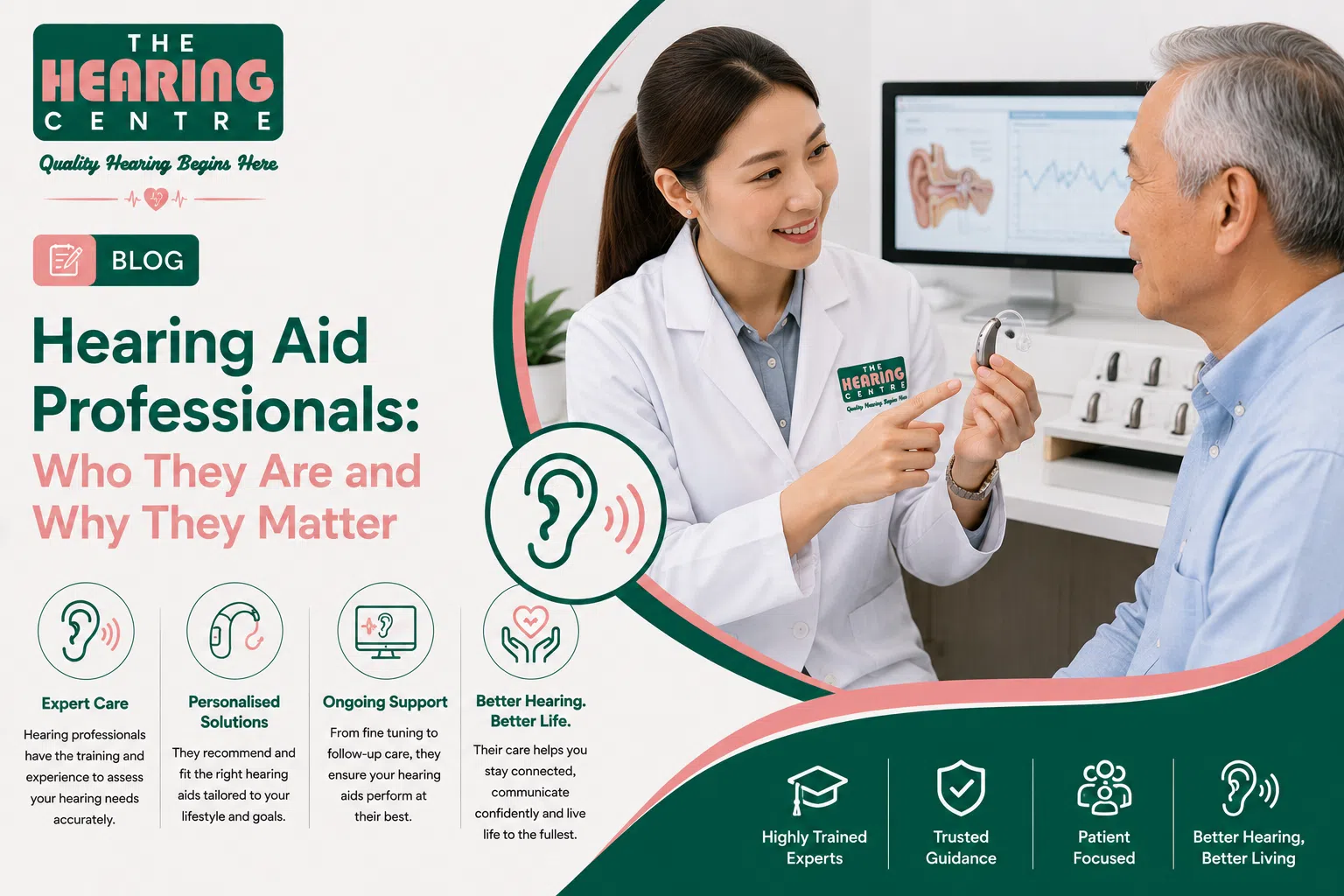
MOH-approved hearing therapists or registered audiologists should be conducting your assessment — not a general sales consultant. Singapore’s Ministry of Health sets standards for who is qualified to diagnose and fit hearing devices. Ask directly about the qualifications of the person seeing you.
Real-ear measurement as standard — this is the gold-standard clinical process for fitting hearing aids. The device is programmed using actual measurements taken inside your ear canal, not factory defaults. Clinics that skip this step are giving you a device performing below its potential regardless of brand. The Hearing Centre’s real ear measurements service includes this in every fitting.
Transparent aftercare — follow-up visits, adjustments, cleaning, and recalibration should be clearly included or itemised. Providers who bundle these properly into the purchase price tend to produce better long-term outcomes because patients actually come back for adjustments rather than quietly stopping wearing the device.
Range of brands — a clinic that carries only one or two brands is likely steering you toward what they have rather than what suits your profile. The Hearing Centre carries Phonak, Signia, Starkey, ReSound, Oticon, and Rexton — which means recommendations are based on your needs, not stock constraints.
Common Mistakes People Make When Choosing a Hearing Aid
Knowing what to avoid is as useful as knowing what to look for.
Buying based on price alone is the most common one. The cheapest device that hasn’t been fitted properly will cost you more in frustration and replacement than a reasonably priced device with full clinical support.
Not asking about aftercare is the third. Hearing changes over time. A device that isn’t recalibrated as your hearing shifts will gradually underperform. If your clinic doesn’t mention follow-up as part of the process, ask explicitly — and if aftercare isn’t included, factor those future costs into your comparison.
Choosing purely on discretion rather than functionality is the fourth. An invisible IIC device is appealing, but if your hearing loss is moderate-to-severe, it may not provide sufficient amplification. Your audiogram should drive the choice, with style preference as a secondary consideration.
Why The Hearing Centre Remains One of the Best Hearing Aid Providers
With over 20 years of clinical experience, MOH-approved hearing therapists, and a full range of the best hearing aid brands in Singapore, The Hearing Centre’s approach is built around long-term hearing health rather than device sales. From the initial hearing test through to fitting, follow-up, repairs, and ongoing hearing aid repairs and adjustments, the same clinical team supports you throughout.
Frequently Asked Questions:
There is no single best brand — Phonak excels in noisy environments, Signia is strongest for discretion, Starkey leads on health features, ReSound is best for smartphone integration, and Oticon is preferred for reducing listening fatigue. Your audiologist will match the brand to your audiogram and lifestyle.
Rexton and entry-level Signia models offer the best balance of quality and price starting around $800 per device. With SMF or ATF subsidies, even mid-range devices can become very affordable for eligible individuals.
Not always. A mid-range device properly fitted with real-ear measurements will outperform a premium device that hasn’t been calibrated correctly. Fitting quality and aftercare matter as much as the device itself.
Look for MOH-approved audiologists, real-ear measurement as part of fitting, a range of brands available, and clear aftercare included in the purchase. Ask directly what happens if you need adjustments in the first year.
Yes. Most reputable clinics including The Hearing Centre offer trial periods. Always ask about this before committing.
Most audiologists recommend wearing it throughout the entire waking day from the start, not just in difficult listening situations. The brain adjusts faster to amplified sound through consistent daily use, and wearing it only occasionally actually slows down the adjustment process.
No — and any clinic that tells you otherwise isn’t being straight with you. A hearing aid improves clarity and makes sounds more accessible, but it doesn’t replicate natural hearing. Most people experience a significant improvement in daily communication, though adjustment takes time and realistic expectations matter.
Your audiologist can reprogram the device to match your updated audiogram in most cases. This is exactly why aftercare matters — a clinic that built follow-up visits into your package will handle this as a routine adjustment rather than a new billable event.
No on both counts. Hearing aids should be removed before sleeping and kept away from water unless the specific model is rated for water resistance. Moisture is one of the main causes of device damage, and storing the device in a dry case or dehumidifier overnight significantly extends its lifespan.
For many people, yes. When hearing aids amplify environmental sound, the brain has less need to “fill in the gaps” with tinnitus noise, which often reduces its perceived intensity. Some devices also include dedicated tinnitus masking features.