TL;DR: A bit of ringing after a show is normal and it’s usually gone by the next day. Tinnitus that won’t quit, hearing that stays muffled, ear pain, sudden hearing loss, or dizziness that feels like the room’s spinning — that’s different. Those are the 5 signs of post-concert ear damage worth actually paying attention to. Give it 48 hours. If nothing’s improved by then, get a hearing test instead of just hoping it’ll sort itself out.
You get home from a show and your ears are still buzzing, maybe everything sounds a little underwater. Almost everyone’s had this. It’s your ears telling you they took a beating tonight, and for most people that’s the end of the story — a night’s sleep and it’s back to normal.
Except sometimes it isn’t. And that’s worth a second look.
We see this a lot at The Hearing Centre, especially after big concert weekends or during festival season here in Singapore. Someone comes in a few days after a gig, still hearing that ring, still feeling like their ears are packed with cotton wool, and they’re not sure if that’s normal or if they’ve actually hurt something. So here’s what’s actually normal, what isn’t, and when it’s time to get checked.
Why Your Ears Take a Hit at Concerts in the First Place
Concert speakers are loud — 100 to 120 decibels isn’t unusual, more if you’re near the stage. A normal conversation is around 60 dB, and anything past 85 dB for an extended stretch starts putting real stress on your ears.
Your inner ear is lined with tiny hair cells that turn sound waves into the signals your brain reads as music or voices. Loud noise bends and stresses those cells. Short burst, no big deal, they bounce back. But push them hard for too long and the damage can be permanent — these cells don’t regenerate once they’re gone, which is the part most people don’t realise until it’s too late.
So that ringing after a concert isn’t just some odd sensation. It’s your ears in the middle of recovering from overload.
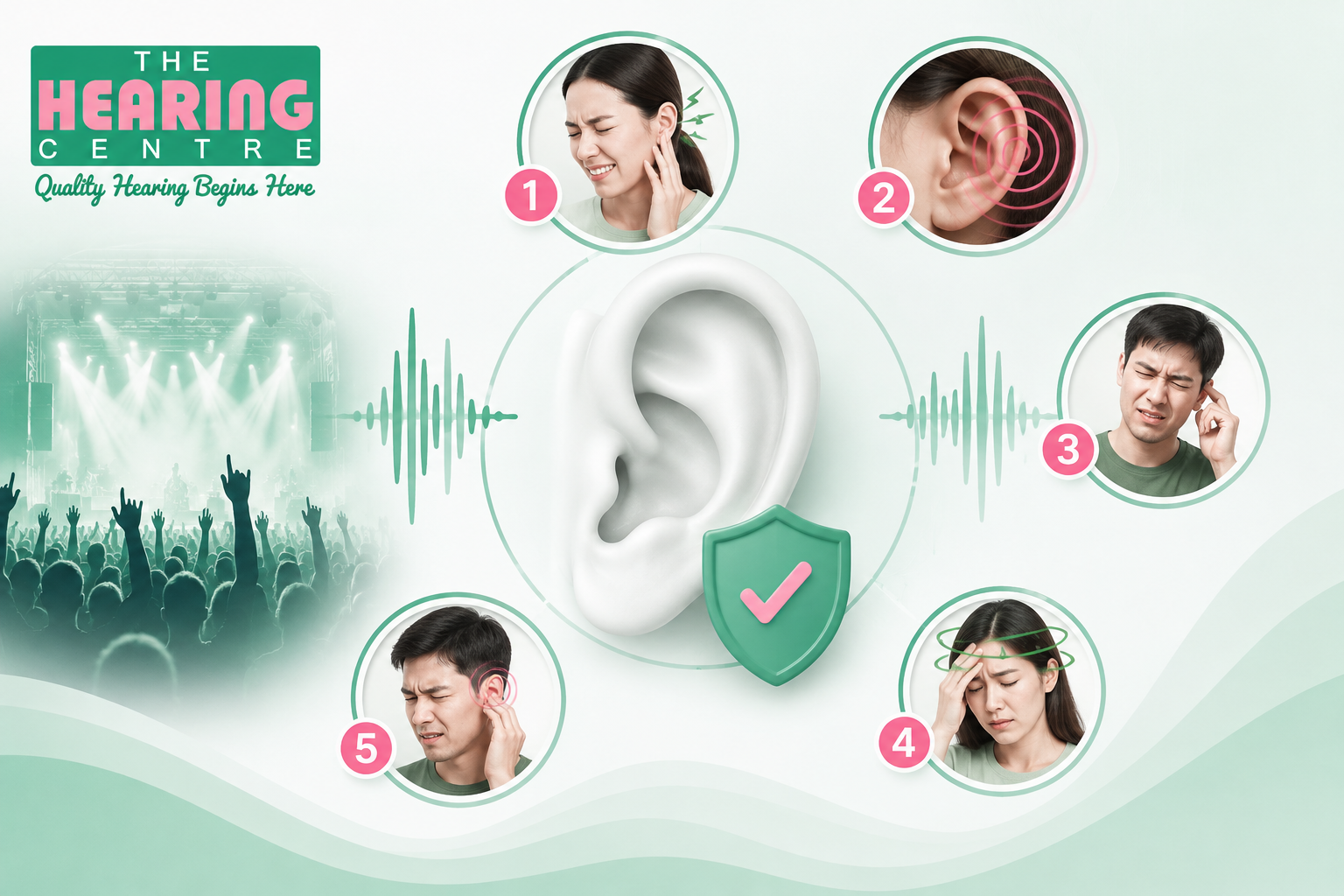
5 Signs of Post-Concert Ear Damage You Should Actually Watch For
Not everything you feel after a loud night out means lasting damage. A few things are worth taking seriously though, especially if they don’t go away.
1. Ringing or Buzzing That Won’t Stop (Tinnitus)
The classic one — a high-pitched ring or buzz that’s there even in total silence. It happens because those overworked hair cells keep firing a signal to your brain even though there’s no sound actually hitting your ear.
Most people, it’s gone in a day or two. Still there after a week? Or it shows up again after every loud event you go to? That’s a pattern, not bad luck.
2. Muffled or Dulled Hearing
Everything sounds like it’s coming through a wall. Audiologists call it a temporary threshold shift — your ears essentially turning their own volume down because they’ve had enough for one night.
Give it a day. If things still sound dull or far away after that, or you’re straining to follow conversations that used to be easy, don’t just shrug and wait.
3. A Feeling of Fullness or Pressure in the Ear
Kind of like being on a plane before your ears pop. Some of that comes from swelling, some from the pressure changes that heavy bass and close-range sound waves cause.
Uncomfortable more than painful, generally. But if it sticks around for more than a day or two, get it looked at rather than assuming it’ll clear on its own.
4. Actual Pain In or Around the Ear
Less common, but don’t brush this one off. A sharp stab, a dull ache, anything that actually hurts — that can point to real trauma to the eardrum or the structures behind it, not just noise fatigue.
Pain is about as clear a signal as your body sends. If it hasn’t let up within a day, book an appointment.
5. Sudden or Noticeable Hearing Loss
This is the serious one. If you genuinely can’t hear as well as before — especially in just one ear, or things sound quieter even in a quiet room — don’t wait around. Sudden hearing loss after loud noise exposure is a medical issue, full stop, not something you sleep off.
Quick reference for what’s normal and what isn’t:
Sign | Usually Normal If… | Needs Checking If… |
Ringing (tinnitus) | Fades within 24-48 hours | Lasts more than a week or repeats often |
Muffled hearing | Clears up in a day | Still dull after several days |
Ear fullness | Mild, goes away on its own | Persistent, uncomfortable pressure |
Ear pain | None to very mild | Sharp, ongoing, or worsening |
Hearing loss | Not present | Any noticeable drop, especially one-sided |
How Long Does Post-Concert Ear Damage Usually Last?
For most people at a show, none of this lasts. It’s a temporary threshold shift — your ears dialling down their own sensitivity for a bit, as a kind of self-defence. Rest them for 24 to 48 hours, stay away from more loud noise, and it typically settles.
Past the week mark, though, it’s not “recovery” anymore. At that point your ears are asking for actual help.
When You Should See a Hearing Specialist in Singapore
Plenty of people wait longer than they should, mostly on the assumption that ears just fix themselves. They don’t always. Time to stop waiting if you’re dealing with any of this:
- Ringing or buzzing that’s lasted more than a week
- Hearing that’s still muffled or “off” days later
- Pain that isn’t easing up
- A sudden drop in hearing, especially on one side
- Dizziness or balance problems alongside the ringing
- This has happened to you before, after other loud events
If any of that sounds familiar, skip the Googling and book a proper hearing test. It’ll tell you exactly what’s going on and whether you’re looking at something temporary or something that needs real, ongoing care. Wait too long and something manageable can turn into something permanent — not a great trade.
We also work with people at The Hearing Centre whose tinnitus started after a concert or loud event and just never went away. If that’s you, our tinnitus treatment team can help work out what’s causing it and how to manage it long term.
How to Protect Your Ears the Next Time You’re at a Show
None of this means skipping concerts. A handful of small habits do most of the work:
- Wear earplugs. Foam ones are cheap and effective. High-fidelity ones are even better since they cut volume without wrecking the sound quality.
- Keep some distance from the speakers. Standing right in front of a stack is asking for trouble.
- Take breaks. Step outside for a few minutes during a long set if you can.
- Rest afterward. Skip the headphones for a day or two post-show and let your ears recover in quiet.
- Pay attention to patterns. If your ears ring after every single show, that’s not bad luck, that’s a warning.
Noise-induced hearing loss almost never comes from one bad night — it’s usually years of “just this once” quietly adding up. If you want the fuller picture of how that kind of damage develops, our guide on noise-induced hearing loss goes into more detail.
The Bottom Line
Ringing ears after a concert are common, and most of the time, not a big deal. But the 5 signs — tinnitus, muffled hearing, fullness, pain, sudden hearing loss — are your body flagging that this has gone past normal recovery. Give it 48 hours. Still there? Get it checked instead of hoping it fixes itself.
The Hearing Centre has been helping people across Singapore protect and understand their hearing for years now, whether that’s from one loud night or years of gradual exposure. If your ears still don’t feel right after a show, don’t just wait around. Book a hearing test and get real answers instead of guesses.
Frequently Asked Questions
Yes, it’s a common symptom of tinnitus after concert exposure. However, it should subside within a day or two.
Usually, a few hours to 48 hours. If it persists, consult a hearing professional.
Yes. Repeated or extreme exposure can cause permanent hearing loss or chronic tinnitus.
Persistent hearing loss, pain, dizziness, and sensitivity to sound are red flags.
Not necessarily, but if you have symptoms that don’t resolve or occur repeatedly, seek expert advice.
Pure-tone audiometry, ABR, and Tympanometry are useful for accurate assessment.
Yes. Explore advanced options from Phonak, Starkey, Signia, or ReSound.
Not at all. High-fidelity earplugs preserve sound quality while lowering volume.
15 minutes at 100 dB can cause damage. Use protection to extend safe listening time.
Visit The Hearing Centre for expert hearing tests, treatment, and prevention solutions.