TL;DR
Buying Phonak hearing aids is only half the job. The other half, honestly the more important half, is the fitting. A great device set up badly still sounds off. Most people don’t realise how much one appointment shapes how their hearing aids feel every day after. Here’s what actually happens during a fitting, what the day looks like, and why it’s more than just switching the thing on.
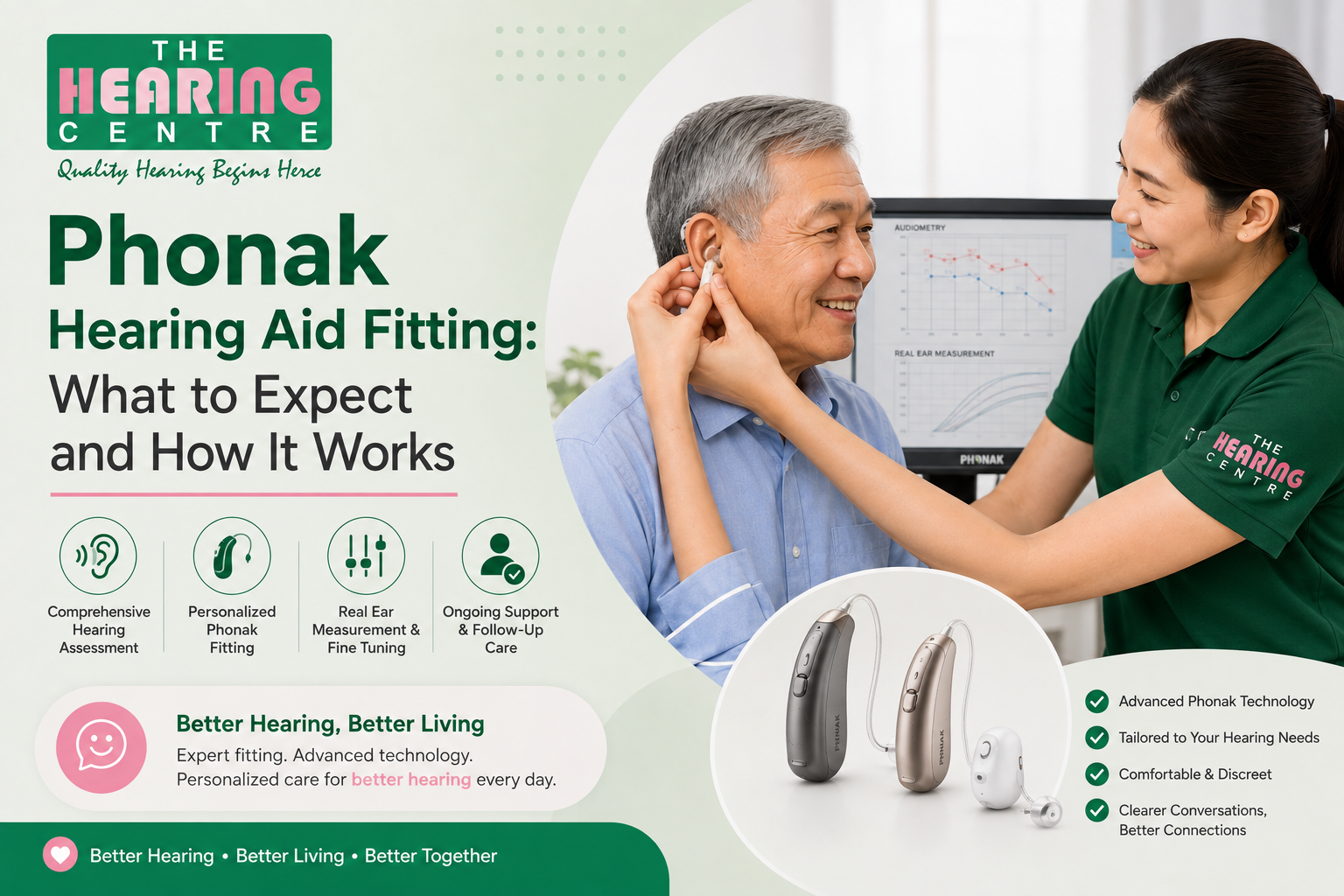
It’s the process of setting your device to match your specific hearing, then physically fitting it so it sits right in or behind your ear. Not a one-step thing at all. Your audiologist takes your hearing test results, loads them into Phonak’s fitting software, and works through volume, noise handling, how the device reacts in different places.
This step matters more than people think. Two people can have “similar” hearing loss on paper and still need completely different settings. Age, lifestyle, how your brain’s adjusted to hearing less over the years, it all plays a part. None of that shows up unless someone actually sits down and does the fitting properly.
A few things need sorting before a real fitting can even start:
Skip any of this and you’re basically booking yourself extra trips back for fixes later. Easier to just get it right the first time.
Roughly how the appointment plays out:
Step | What Happens |
Initial consultation | Reviewing your hearing test results and daily routine |
Programming | Your audiologist loads your results into Phonak Target software |
Real-ear measurement | A tiny microphone checks the sound actually reaching your eardrum |
Fine tuning | Adjustments to volume, noise handling, and comfort |
App pairing | Connecting your device to the myPhonak app, if you’re using one |
Test run | Talking with your audiologist to check how speech and background sound come through |
None of this gets rushed. At The Hearing Centre, fitting takes whatever time it needs, because what gets set here shapes how the device performs for weeks afterward.
On paper this all sounds clinical. In the room, it’s a lot more ordinary than people expect. You’re sitting in a chair, chatting with your audiologist, wearing the device while they type on a laptop next to you. They’ll play different sounds, ask if things feel too sharp or too flat, and make small changes as you go.
Most patients say the strangest part isn’t the testing, it’s hearing their own voice again properly. A few laugh at how loud chewing sounds. Some tear up a bit hearing their grandkids clearly for the first time in years. None of that is unusual. It’s just what happens when your ears pick up sound they’ve been missing for a while.
A few things specific to Phonak change how this whole process works compared to other brands:
Most appointments at The Hearing Centre run somewhere between 45 minutes and an hour and a half, depending how much adjusting the day actually needs. First fittings run longer, more programming and explaining involved. Follow-ups go quicker, since it’s just tweaking what’s already there.
The first few weeks can feel strange, even after a fitting that went well. Sounds you haven’t picked up properly in years, the fridge humming, your own footsteps, suddenly show up out of nowhere. That’s normal. Your brain just needs time to work out what’s actually worth paying attention to and what isn’t.
A few things that help through this stretch:
A few small things go a long way on the day. Come in with clean ears, since wax buildup can throw off the real-ear measurement reading. Bring someone with you if you can, a second set of ears is genuinely useful when your audiologist explains settings and next steps. Don’t rush to judge the sound in the first ten minutes. It takes a bit for your brain to settle before you can really tell what’s working and what isn’t. And write down questions beforehand if you tend to blank out in appointments, most people do.
One session almost never nails everything. Most people go through two or three follow-up visits over the first couple of months while their brain catches up and their audiologist at The Hearing Centre keeps tweaking based on real feedback, not guesswork. After that, a check-in every six months to a year usually keeps things running fine.
Issue | Likely Cause | Fix |
Whistling or feedback | Poor fit or a specific frequency setting | Refitting or adjusting that frequency |
Sounds too sharp or loud | Overcorrected volume settings | Reducing gain in specific frequency ranges |
Speech still muffled | Settings not yet matched to your hearing loss | Further programming adjustments |
App won’t pair | Bluetooth or software issue | Reconnecting, or a firmware update during your visit |
Discomfort in the ear | Fit issue, not a settings issue | Physical adjustment to the earpiece or dome |
Most of this sorts itself out in a session or two at The Hearing Centre. None of it means the device itself is broken.
At The Hearing Centre in Singapore, every Phonak hearing aid fitting starts with a full hearing test and proper ear measurements, not a rushed once-over. Our audiologists use real-ear measurement and Phonak’s own fitting software, so your settings match your actual hearing, not some generic profile off a shelf.
Still weighing up which model to go with? Our guide on Phonak hearing aid costs breaks down pricing across the range. And our hearing aid fitting service page covers what to expect if this is all new to you.
We’re also known for our work with Hearing aids Singapore more broadly, so whether it’s your first fitting or you’re switching over from another brand, The Hearing Centre has this part figured out.
A Phonak hearing aid fitting isn’t just a box to tick after buying the device. It’s the part that actually decides whether your hearing aids feel natural or just plain frustrating day to day. Take the time to get it done properly, ask questions while you’re in the room, and don’t skip the follow-up sessions. That’s usually where the real difference actually happens.
Usually 45 minutes to an hour and a half, depending on how much adjustment is needed. First fittings tend to run longer than follow-up visits.
No. Completely painless. You might feel a bit of pressure from the real-ear measurement microphone, that’s about it.
Most people go through two to three follow-up sessions in the first couple of months, then occasional check-ins every six months to a year after.
A small microphone placed near your eardrum, checking exactly what sound your hearing aid produces, so your audiologist can adjust things precisely instead of guessing.
To a point, yes. The myPhonak app handles volume and programme switching, but bigger changes still need an actual session with your audiologist.
Your brain needs time to catch up on sounds it hasn’t processed properly in a while. If it still feels off after a few weeks, a follow-up session usually sorts it out.
Yes. Fitting is built around your hearing test results, so skipping it usually means a poorly matched device down the line.
Usually a fit or frequency issue, both of which get sorted in a quick follow-up rather than needing a whole new device.
Yes. If you’re using two devices, both typically get fitted and programmed in the same appointment.
Authorised Phonak providers, The Hearing Centre included, offer full fitting with real-ear measurement and ongoing follow-up support.

Evlin holds a Bachelor of Health Science (Honours) in Audiology from the University of Science Malaysia. She is accredited to conduct comprehensive hearing assessments for patients from newborns to the elderly, and began her clinical training at Hospital University of Science Malaysia before working as a Resident Audiologist at Jesselton Medical Centre, Malaysia (2021–2023).