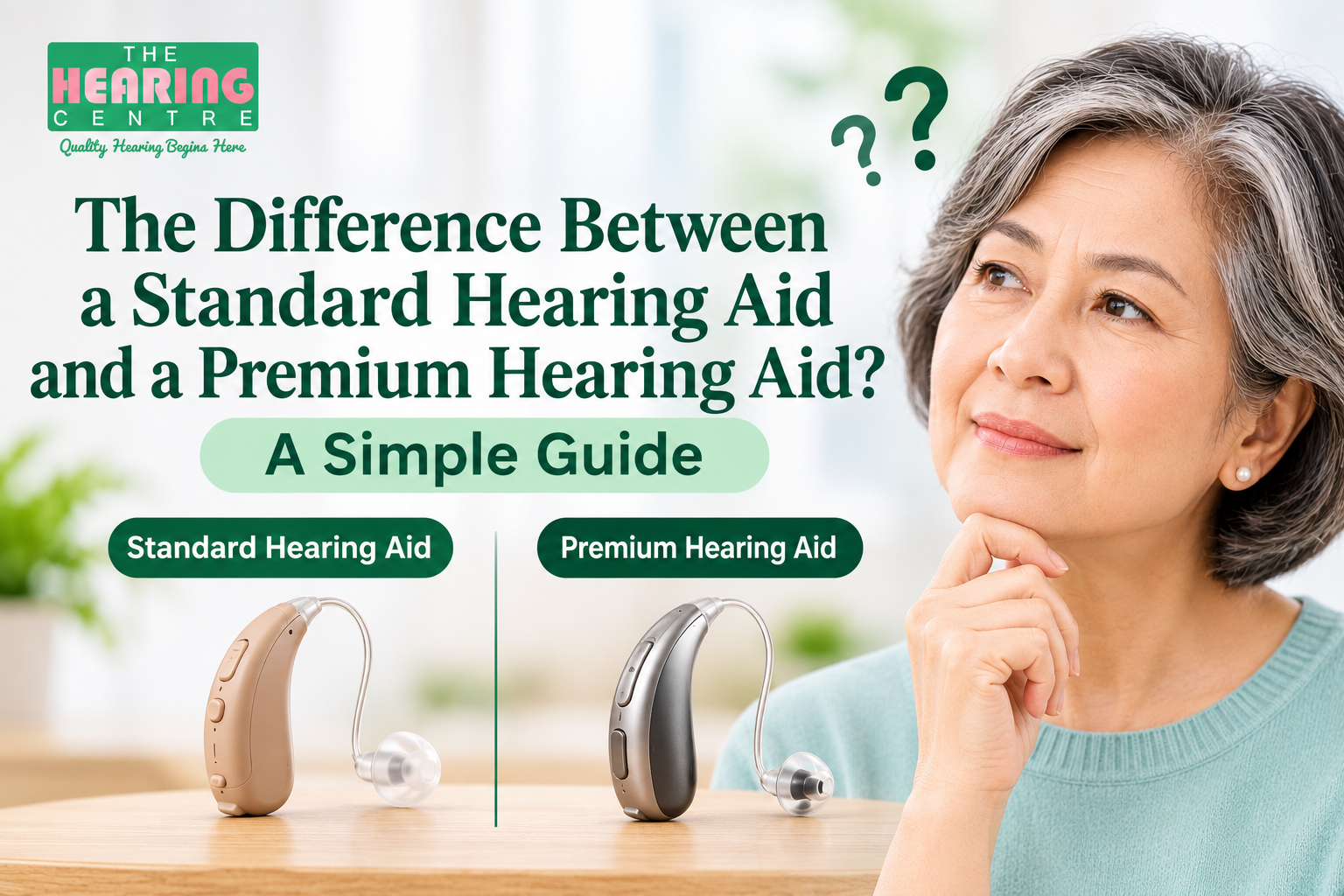
What’s the difference between a standard hearing aid and a high-end hearing aid? Premium models perform better in separating speech from noise, switching to different programs automatically, and offer more fine-tuning in sound. Standard models do a decent job of handling noise, automatic programs switching and tuning in quieter settings. Both can enhance hearing considerably. The difference between them comes down to how much work this aid does automatically in the hectic environment.
The optimal option will depend on the person’s place of work, social activity level and the style of the aid. This guide contains the explanation of each difference in terms of everyday language, details who benefits from the additional features and provides concrete and easily-understood examples, making the choice between the two easier.
Makers sell one product family in several tiers . A standard aid, also called basic or essential, covers the main job of making speech clearer. The main differences between levels lie in fine-tuning options, measured in channels, and in how much help is given with background noise.
On the outside, the two often look the same. The real differences sit inside, in what each one can and cannot do.
Channels are similar to the sliders on a music equaliser. A higher channel count gives the audiologist finer control over specific frequency bands, which is particularly beneficial if you have uneven sensorineural hearing loss.
Standard aids apply simple noise reduction and use directional microphones to pick up sounds from in front of the wearer. In addition, premium hearing aids include technologies to help with challenging listening situations for people who are often out and about in busy environments such as restaurants. This means that conversations in restaurants are not drowned out by background noise as much.
A premium aid can identify the difference between a conversation in a restaurant and a quiet chat at home and change settings automatically. Standard aids may require the user to manually change programs or use a smartphone app to make the switch.
Wind rushing over the microphone can drown out conversation when walking outside. Premium aids reduce the impact of wind noise better, whereas standard aids may be overwhelmed by it. Similarly, sudden noises such as clattering crockery and slamming doors are softened by premium aids, but can be intrusive with standard aids.
Straining to follow talk all day is draining. Experts point out that premium aids tend to reduce this tired feeling after long days in noisy places.
Many premium aids stream calls and music straight to the ears and offer app control. Some standard models include basic versions, so each model’s feature list is worth reading.
Feature | Standard Hearing Aid | Premium Hearing Aid |
Fine tuning | Fewer channels | More channels |
Noise handling | Simple | Smarter, stronger |
Program changes | Often manual | Mostly automatic |
Wind control | Basic | Better |
Phone features | Limited | Wider range |
Best for | Calm routines | Busy, social days |
Not always, and this surprises many people. In one study, none of the measures showed a significant difference in outcomes between premium and basic devices. A study of 190 first-time users found slightly better self-reported hearing with premium aids, though the effect was small.
The gap often shows in comfort. Lab tests found no difference in speech understanding between standard and premium levels from the same brand, but there was a difference in comfort. Premium is less about hearing more and more about hearing with less effort.
Premium aids are not for everyone. They help most when daily life keeps throwing different sounds at the ears. Here are the groups that tend to notice the biggest change.
A Standard aid is a solid choice for many people. Basic aids suit people who spend most of their time in quieter places. Here is who usually does well with one.
Many makers also sell a mid-level model that sits between standard and premium. These often include a good share of the noise handling and automatic features found in premium models. It is easy to overlook, but worth a look.
A hearing aid works as much as the way that it has been programmed and physically fit. A poorly-fitting top-tier device will not work as well as a custom-fitted basic device that’s been properly customised to both your ear canal and audiogram.
Your provider should make sure that:
If you are exploring options, consulting an established clinic like The Hearing Centre allows you to compare different technology levels and test them during real-world trials. Fittings are verified with real ear measurement (REM), which checks that the aid delivers the right amount of sound inside your own ear, so you can judge each level on how it actually performs for you.
The main distinction between a standard and a higher quality hearing aid is the additional noise cancelling features, automation and fine tuning features that are included in the higher quality one. Both types of devices are comfortable and useful, but finding the right one depends on the individual’s preferences and lifestyle. Comfort and convenience in the use of the device are therefore important considerations. Before purchasing, it is useful to make a list of where the hearing aid will be used and request the audiologist to demonstrate the devices.
Premium models handle noise more smartly, switch settings on their own, and allow finer tuning. Standard models cover the basics well in calmer places.
They often do. Stronger noise handling can keep voices clearer in busy rooms. Results still depend on the fitting and the person’s hearing loss.
Yes, up to a point. Basic noise control still helps. In very loud settings, a premium aid may feel calmer.
Not necessarily. Durability depends on the style such as behind-the-ear or custom in the ear hearing aids (ITE) rather than the internal technology level.
Many wearers say sound feels smoother. Others notice little change. A trial period is the best way to find out.
Both are good options; it depends on the individual’s lifestyle and preferences. Some people prefer to start with a standard aid usually due to budget or spending most of their time in a quieter environment, while for others, an automatic version is more comfortable if they have a more demanding lifestyle.
The size depends on the style, not the level: both standard and premium hearing aids can be small or bigger.
an upgrade of the hearing aid tier require a new device. It is best to discuss with the audiologist at the clinic before purchasing any devices.
Often, yes: most of them can stream music and phone conversations. Same features may be available in standard aids, so it is necessary to check what functions are required.
List places you go frequently and how loud they are. It’s best to try both before making your final decision. Audiologist clinic consultant can tell you which one is more suitable for you.

Evlin holds a Bachelor of Health Science (Honours) in Audiology from the University of Science Malaysia. She is accredited to conduct comprehensive hearing assessments for patients from newborns to the elderly, and began her clinical training at Hospital University of Science Malaysia before working as a Resident Audiologist at Jesselton Medical Centre, Malaysia (2021–2023).