TLDR:
- Abnormal bone growth around the stapes (tiny middle ear bone) stops it vibrating properly, causing hearing loss
- Eardrum looks completely normal, which is why it gets missed for years
- Most common in adults aged 20 to 50, more in women, strongly hereditary
- First sign is struggling with soft sounds and quiet voices, not loud ones
- Hearing better in noisy places than quiet ones is a known symptom (paracusis)
- Tinnitus (ringing/buzzing in ears) is also common
- Diagnosed through proper hearing tests, not a basic ear check
- No medication reverses it, but hearing aids and stapes surgery work well
- Surgery (stapedotomy) restores hearing in about 90% of patients
- If it runs in your family, get tested even before symptoms appear
Most people have never heard of otosclerosis. Even people who have it.
I have seen patients come in after three or four years of gradually losing their hearing, and the first time someone actually puts a name to what is happening to them is when they sit down with an audiologist and go through the test results properly. Before that, they just thought they were getting older early, or maybe had some wax problem, or perhaps the other people around them were just mumbling more lately.
The eardrum looks normal in otosclerosis. That is the main reason it gets missed. A GP looks in the ear, sees nothing wrong, and the patient walks away thinking they are fine. But the problem is not in the eardrum. It is deeper inside, in a tiny bone called the stapes, and it has been slowly stiffening up for years.
If your hearing has been sliding and nobody has given you a real explanation yet, read this properly. It might be what you are dealing with.
What Is Otosclerosis
The middle ear has three small bones. Tiny ones. The malleus, incus and stapes, though most people know them as the hammer, anvil and stirrup. These three bones form a chain. Sound hits the eardrum, the eardrum moves, and these bones carry that movement through to the inner ear where it becomes something the brain can read.
The stapes is at the end of that chain. In otosclerosis, abnormal bone tissue forms around it. Not all at once, slowly. Over months and years this tissue hardens and the stapes starts losing its ability to move freely. Eventually some people end up with a stapes that is basically locked in place.
When the stapes cannot move, sound does not travel through properly. That is the hearing loss right there. Not a nerve problem, not a damaged eardrum. Just a small bone that has been progressively surrounded by tissue that should not be there.
One thing worth understanding: your eardrum will probably look completely normal. This confuses a lot of people and their doctors.
Who Gets Otosclerosis in Singapore
In Singapore, audiologists and ENT doctors see otosclerosis most commonly in adults between 20 and 50 years old. Not elderly people. Younger adults, people in their working years, sometimes people who have just had their first child.
Women get it more than men. Pregnancy can sometimes speed up the hearing loss, probably because of how estrogen affects bone behaviour in the body. Some women notice their hearing takes a clear step backwards with each pregnancy.
If one of your parents has otosclerosis, your own chance of developing it is around one in four. The condition follows a genetic inheritance pattern where you only need it from one side of the family to be at risk. That said, plenty of people who carry the relevant gene never develop symptoms. Something else seems to trigger it in some people and not others.
It appears more commonly in South Asian and White populations, though it shows up across all groups. Globally somewhere between 2 and 10 percent of adults are thought to have some degree of it.
The Different Types of Otosclerosis
Where the abnormal bone growth forms changes the type of hearing loss and which treatments will work best.
Type | Where It Forms | What Happens |
Fenestral | Near the oval window where stapes meets inner ear | Conductive hearing loss, most common type |
Cochlear | Around the cochlea | Sensorineural or mixed hearing loss |
Histologic | Microscopic changes only | Usually no symptoms at all |
Most people with otosclerosis have the fenestral type. It responds well to both surgery and hearing aids. Cochlear otosclerosis is rarer and more complex because it affects nerve function in the inner ear, not just the mechanical parts.
Symptoms of Otosclerosis
The first thing most people notice is that soft sounds start becoming harder to catch. Quiet voices, whispers, someone talking from another room. Loud sounds often still come through okay at first, which is part of why people put off getting checked. They are not losing all hearing, just struggling in certain situations.
There is one symptom that tends to confuse people. Some individuals with otosclerosis actually hear better in noisy environments than in quiet ones. When there is background noise, people around you raise their voices without thinking about it, and that extra volume makes up for what the stiffened stapes is not carrying. Audiologists call this paracusis. If you follow conversations more easily at a busy kopitiam than in a quiet meeting room, that detail is worth mentioning when you see someone. It is a real clinical sign.
Ringing or buzzing in the ears is also common. It might be a faint low hum or something more persistent. Some people have had tinnitus for years without knowing it had anything to do with their hearing. If this sounds familiar, reading about tinnitus treatment before your appointment is useful so you can ask the right questions.
Some people with otosclerosis start speaking more quietly without noticing. This happens because the stapes also carries your own voice through bone. When it is not working properly, your own voice can sound louder to you than it really is, so you automatically start speaking more softly. Usually the people around the patient notice this well before the patient does.
Dizziness sometimes comes into it too, though not for everyone. It tends to happen more when the inner ear gets involved.
Why Does It Happen
Nobody has a complete answer yet. The condition has been researched for a long time and the exact cause still is not fully understood. A few things do keep coming up though.
Genetics is the most consistent factor. Otosclerosis runs in families. The way it is inherited means you only need the relevant gene from one parent to be at risk. What makes it complicated is that not everyone with that gene develops the condition, which tells researchers something else is involved, probably some combination of environmental or hormonal triggers.
Estrogen appears to play a role in how it progresses. This fits with the higher rates in women and with the pattern of it worsening during pregnancy. It does not mean women with the condition should avoid having children. It just means it is worth tracking hearing more carefully during those periods.
Several studies have found a connection with measles virus. The idea is that measles may set off abnormal bone activity in people who are already genetically susceptible. Some researchers think the spread of measles vaccination over the past few decades has contributed to a gradual reduction in otosclerosis rates, though this is still being studied.
Low fluoride levels came up in older research as a possible factor, but the evidence is weaker compared to the genetic link.
How It Gets Diagnosed
A basic ear check will not pick this up. The eardrum looks normal, so nothing gets flagged visually. What you need is proper audiological testing.
Pure tone audiometry is the main starting point. This test checks hearing across multiple frequencies and measures two things separately: air conduction and bone conduction. In otosclerosis there is usually a gap between those two measurements. That gap tells the audiologist the problem is in the mechanical system, not in the nerve. The pure tone audiometry test takes around 20 to 30 minutes. You wear headphones and press a button each time you hear a sound.
Tympanometry checks how well the eardrum and middle ear system are moving. In otosclerosis the tympanogram typically shows reduced movement in the middle ear, something audiologists describe as an As pattern. It is a quick test and not uncomfortable.
ABR and ASSR testing looks more closely at the hearing nerve pathway. This becomes relevant when there is a possibility the cochlea is involved as well as the stapes. The ABR/ASSR test helps figure out whether the issue is purely mechanical or whether nerve function is also being affected.
CT scan is usually done when the hearing test results make the audiologist or ENT fairly confident about an otosclerosis diagnosis. It gives a detailed image of the temporal bone and stapes area, confirms the bone changes, and gives surgeons the information they need if an operation becomes part of the conversation.
Treatment Options in Singapore
No medication reverses the bone growth. But there are good options.
Hearing Aids
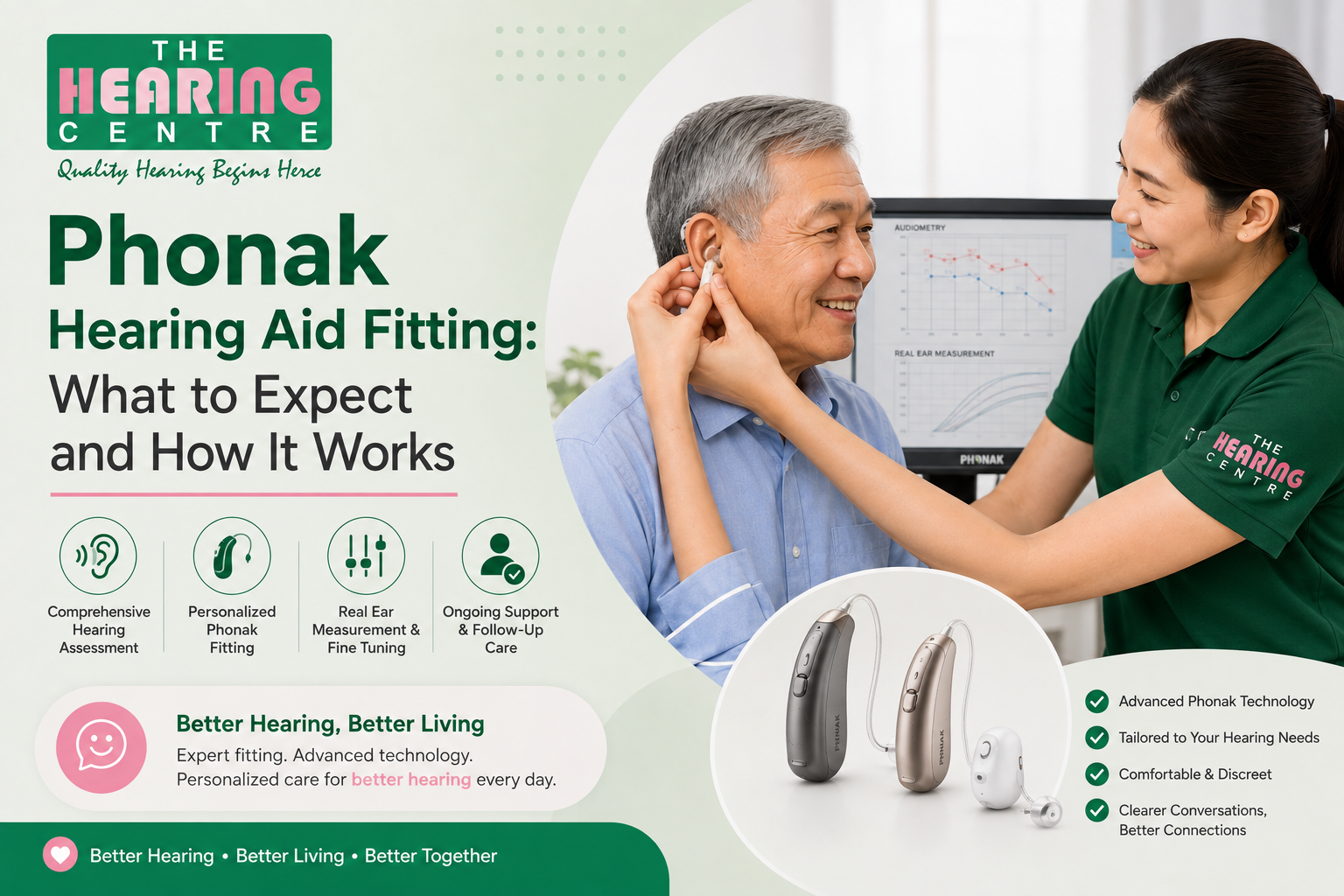
For mild to moderate hearing loss, hearing aids Singapore are usually where things start. They amplify incoming sound to make up for what the stiffened stapes is not passing through. Modern hearing aids are genuinely different from what they were even five years ago. They are much smaller and far better at handling speech in background noise.
Your audiologist will look at your actual test results before suggesting anything. Common options fitted in Singapore include Phonak, Signia, Starkey and ReSound. Which one suits you depends on your type of loss, how you live and your budget.
Some people stay on hearing aids long term. Others use them while they decide about surgery.
Stapes Surgery
When hearing aids are not doing enough or the hearing loss has become more significant, surgery is the longer lasting option.
The two procedures are stapedotomy, where a small opening is made in the stapes and a prosthesis is inserted through it, and stapedectomy, where the entire stapes is removed and replaced. Stapedotomy is now the preferred approach in most centres because it is more precise.
About 90 percent of patients see real improvement in hearing after stapes surgery. Most are done under local anaesthesia and recovery is fairly straightforward. There is a small risk, around 1 to 2 percent, that surgery causes further hearing loss. This is why the decision needs a proper conversation with an ENT surgeon who knows your specific case.
Cochlear Implants
For advanced cochlear otosclerosis where there is also significant sensorineural hearing loss, a cochlear implant may be the appropriate path. It bypasses the middle and inner ear structures and stimulates the hearing nerve directly.
Bone-Anchored Hearing Aids
When standard surgery is not an option and conventional hearing aids are not giving enough benefit, a bone-anchored hearing aid is worth discussing. It conducts sound through the skull bone directly to the inner ear, bypassing the problematic middle ear entirely.
Monitoring
For very early cases where hearing loss is not yet affecting daily life, monitoring with regular hearing tests is sometimes the right approach. The important thing is not letting years pass without check-ins.
How Otosclerosis Compares to Other Hearing Conditions
Because the eardrum looks normal and the loss is gradual, otosclerosis often gets mistaken for other things.
Condition | Typical Age | Loss Type | What Stands Out |
Otosclerosis | 20 to 50 | Conductive or mixed | Soft sounds go first, often better in noisy places |
Age-related hearing loss | 60 and above | Sensorineural | High frequencies affected first, speech clarity drops |
Noise-induced hearing loss | Any age | Sensorineural | Linked to noise exposure, usually affects both ears |
Ear infection | Any age | Conductive, short term | Comes with pain or discharge, usually clears |
Sudden hearing loss | Any age | Sensorineural | Fast onset, one ear, needs urgent assessment |
Testing is the only reliable way to distinguish these. If you want a reference point before your appointment, the early signs of hearing loss in adults is worth reading.
Living With Otosclerosis
Getting diagnosed does not mean things will keep getting worse with nothing to do about it. Most people manage well once they have the right treatment in place.
Get a hearing test at least once a year, even after starting treatment. Otosclerosis can progress and catching changes early keeps your options open. If you are pregnant or trying to be, mention it to your audiologist. Hormonal changes can speed things up and it is better to plan for that in advance.
If your audiologist suspects otosclerosis, ask about a referral to an ENT surgeon. Audiologists handle testing and hearing aids well. The surgical decision is an ENT’s territory. The two work together but you may need to ask for that referral.
If the condition runs in your family, get your hearing checked even if you feel completely fine right now. For parents with a family history of otosclerosis, a newborn hearing test is a sensible early check.
When to Get Checked
Book a hearing evaluation if any of these apply:
- Hearing has been getting worse gradually with no obvious cause
- Soft and quiet voices are harder to follow than louder ones
- There is persistent ringing or buzzing in one or both ears
- You hear better in noisy environments than quiet ones
- A parent or sibling has been diagnosed with otosclerosis
- An ear check came back normal but hearing still feels off
The earlier it gets assessed, the more options are available.
Otosclerosis is treatable. Most people who get properly diagnosed and the right treatment do well. The problem is almost always the delay, years of gradual hearing decline being put down to something else because the eardrum looks fine and the change is so slow it feels normal.
If your hearing has been quietly getting worse, a full hearing test is where to start. It gives you actual answers.
Frequently Asked Questions
Yes. If one parent has it, your risk is around 25 percent. Worth knowing before symptoms show up.
No medication reverses it. Stapes surgery restores hearing for about 90 percent of patients. Hearing aids handle it well at earlier stages.
Differently for everyone. Some people are stable for many years. Others, particularly women around pregnancies, see faster changes. Annual testing is the only real way to track it.
Usually yes, in time. Often starts on one side and spreads to both, though the severity is usually different in each ear.
No. Otosclerosis is primarily a conductive problem, meaning the mechanical system is blocked. Cochlear otosclerosis can add a sensorineural element, but these are different issues.
It is when the stapes bone becomes immobile because of the abnormal bone tissue surrounding it. That physical immobility is the direct cause of hearing loss.
Yes, especially in earlier stages. They compensate well for conductive hearing loss. Whether they stay sufficient long term depends on how things progress.
Rarely, but yes, particularly with a strong family history. Most cases appear in early to mid adulthood.