Hearing plays a vital role in how we communicate, connect, and experience the world. For many people with severe or profound hearing loss, conventional hearing aids may no longer provide enough benefit. In such cases, a cochlear implant offers hope by directly stimulating the auditory nerve and restoring access to sound.
This guide explores what a cochlear implant is, how it works, the process of cochlear surgery, benefits, risks, and what to expect after implantation. Whether you are considering this advanced hearing implant for yourself or a loved one, understanding its role can help you make an informed decision.
What is a Cochlear Implant?
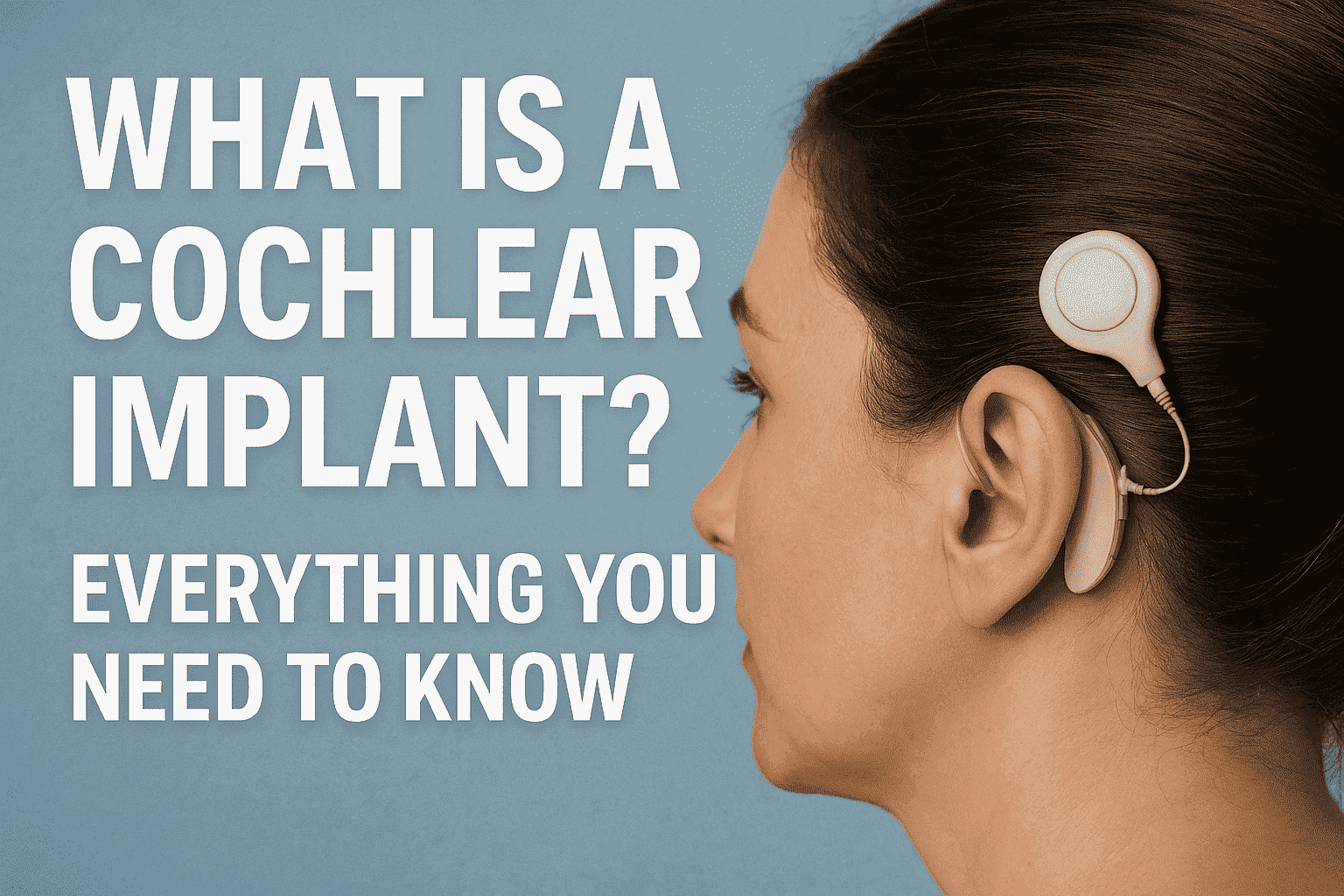
A cochlear implant is a small, surgically implanted electronic device designed to help people with severe to profound hearing loss. Unlike an implant hearing aid, which simply amplifies sounds, a cochlear implant bypasses the damaged parts of the inner ear and directly stimulates the auditory nerve.
The device consists of two main parts:
- External processor (cochlear device): worn behind the ear, it captures and processes sounds.
- Internal implant: surgically placed under the skin and connected to the cochlea inside the inner ear.
Together, these components allow individuals who cannot benefit from traditional hearing aids to perceive sounds and understand speech more clearly.
How Does a Cochlear Implant Work?
A cochlear implant works in several steps:
- Sound Detection: The external processor picks up sounds through microphones.
- Signal Conversion: These sounds are converted into digital signals.
- Transmission: Signals are sent to the internal implant.
- Electrical Stimulation: Electrodes inside the cochlea stimulate the auditory nerve.
- Sound Perception: The brain interprets these signals as sound.
Unlike normal hearing, which processes sound naturally, a cochlear implant provides an electronic representation of sound. With cochlear therapy and rehabilitation, users learn to adapt and understand speech, music, and environmental sounds.
Who Can Benefit from a Cochlear Implant?
Cochlear implants are not for everyone. They are typically recommended for:
- Adults or children with severe to profound sensorineural hearing loss
- Individuals who do not gain enough benefit from traditional hearing aids
- Children born deaf, where early intervention supports language development
- People who lost hearing later in life and struggle to communicate
Before surgery, patients usually undergo detailed evaluations, including a hearing test, pure-tone audiometry, and tympanometry to assess hearing function and suitability.
The Cochlear Surgery Process
1. Pre-Surgery Assessments
Patients undergo medical and audiological tests, including ear measurements and imaging scans, to confirm candidacy.
2. Cochlear Implant Surgery
- The procedure is done under general anesthesia.
- A small incision is made behind the ear.
- The internal implant is positioned under the skin.
- Electrodes are inserted into the cochlea.
The surgery typically lasts 2–3 hours, and patients may go home the same day or after one night in the hospital.
3. Recovery
Healing takes a few weeks before the implant is activated.
4. Activation & Mapping
An audiologist activates the cochlear device and programs it to suit the user’s hearing needs.
5. Rehabilitation
Cochlear therapy plays a crucial role. Patients undergo listening training to adapt to new sounds and improve speech recognition.
Benefits of Cochlear Implants
- Improved ability to hear and understand speech
- Better awareness of environmental sounds
- Enhanced communication and social interaction
- Support for language development in children
- Increased quality of life and confidence
Studies show that cochlear implants significantly improve educational, social, and professional outcomes for people with profound hearing loss.
Risks and Considerations
Like any surgical procedure, cochlear implants carry risks, such as:
- Infection at the implant site
- Temporary dizziness or balance issues
- Device malfunction or need for replacement
- Limited benefit for some individuals
However, advancements in cochlear surgery have made complications relatively rare.
Cochlear Implant vs. Hearing Aid
A hearing aid amplifies sound for those with mild to moderate hearing loss. In contrast, a cochlear implant bypasses damaged hair cells and directly stimulates the auditory nerve, making it suitable for severe to profound hearing loss.
Cochlear Therapy and Rehabilitation
Receiving a cochlear implant is just the beginning. Rehabilitation and cochlear therapy are essential for long-term success. Therapy includes:
- Listening exercises
- Speech therapy for children
- Regular device mapping and adjustments
- Support groups and counselling
The more consistently patients engage in therapy, the better the outcomes.
Life After a Cochlear Implant
Most users gradually adapt to their cochlear device and notice steady improvements over months. Many regain the ability to converse on the phone, listen to music, and engage fully in social and professional life.
Preventing Complications
To maintain healthy ears and device performance:
- Avoid inserting objects into the ear
- Keep the implant area clean and dry
- Schedule regular check-ups
- Watch for signs of infection or device issues
Blogs such as ear infection symptoms provide further guidance on recognizing early warning signs.
Conclusion
A cochlear implant is more than just a medical device—it’s a life-changing solution for people with profound hearing loss. Directly stimulating the auditory nerve, it helps restore access to sound, communication, and quality of life.
If you or a loved one is struggling with hearing despite using aids, exploring the option of a cochlear implant may be the next step. With proper evaluation, surgery, and rehabilitation, a cochlear implant can open the door to a world of sound once again.
Frequently Asked Questions
A cochlear implant is a surgically implanted hearing implant that bypasses damaged parts of the inner ear to stimulate the auditory nerve, helping people with severe to profound hearing loss perceive sound.
Unlike hearing aids that amplify sound, a cochlear device directly stimulates the auditory nerve, making it suitable for individuals who do not benefit from traditional hearing aids.
Candidates include adults or children with severe to profound sensorineural hearing loss who gain little benefit from hearing aids, and those whose speech and communication are affected
During cochlear surgery, the internal implant is placed under the skin behind the ear, and electrodes are inserted into the cochlea. The external processor then captures and converts sounds into signals that the brain can interpret.
Yes. Cochlear therapy is essential for training the brain to recognize sounds, improving speech perception, and maximizing the benefits of the implant over time.
Absolutely. Early implantation in children with profound hearing loss supports language development, speech skills, and social interaction.
The internal implant is designed for long-term use, but external components may require replacement or upgrades over time. Regular check-ups ensure the device functions properly.
Yes, it is generally safe. Risks include infection, device malfunction, or temporary dizziness, but these are relatively rare with modern surgical techniques.
Some individuals use a hearing aid in the non-implanted ear to enhance overall hearing. This is called bimodal hearing and can improve sound localization and clarity.
Adaptation varies, but most users notice improvement in hearing over several months. Cochlear therapy and regular mapping sessions with an audiologist accelerate the adjustment process.