TLDR: A Zit in Ear is a blocked pore or infected hair follicle that forms in or around the ear canal. It’s usually small, mildly painful, and clears up on its own within a week. Warm compresses help. Squeezing makes it worse. The ones worth seeing a doctor about are zits that keep getting bigger, produce pus that doesn’t drain, affect hearing, or have been there more than two weeks without changing. Don’t put cotton buds anywhere near it.
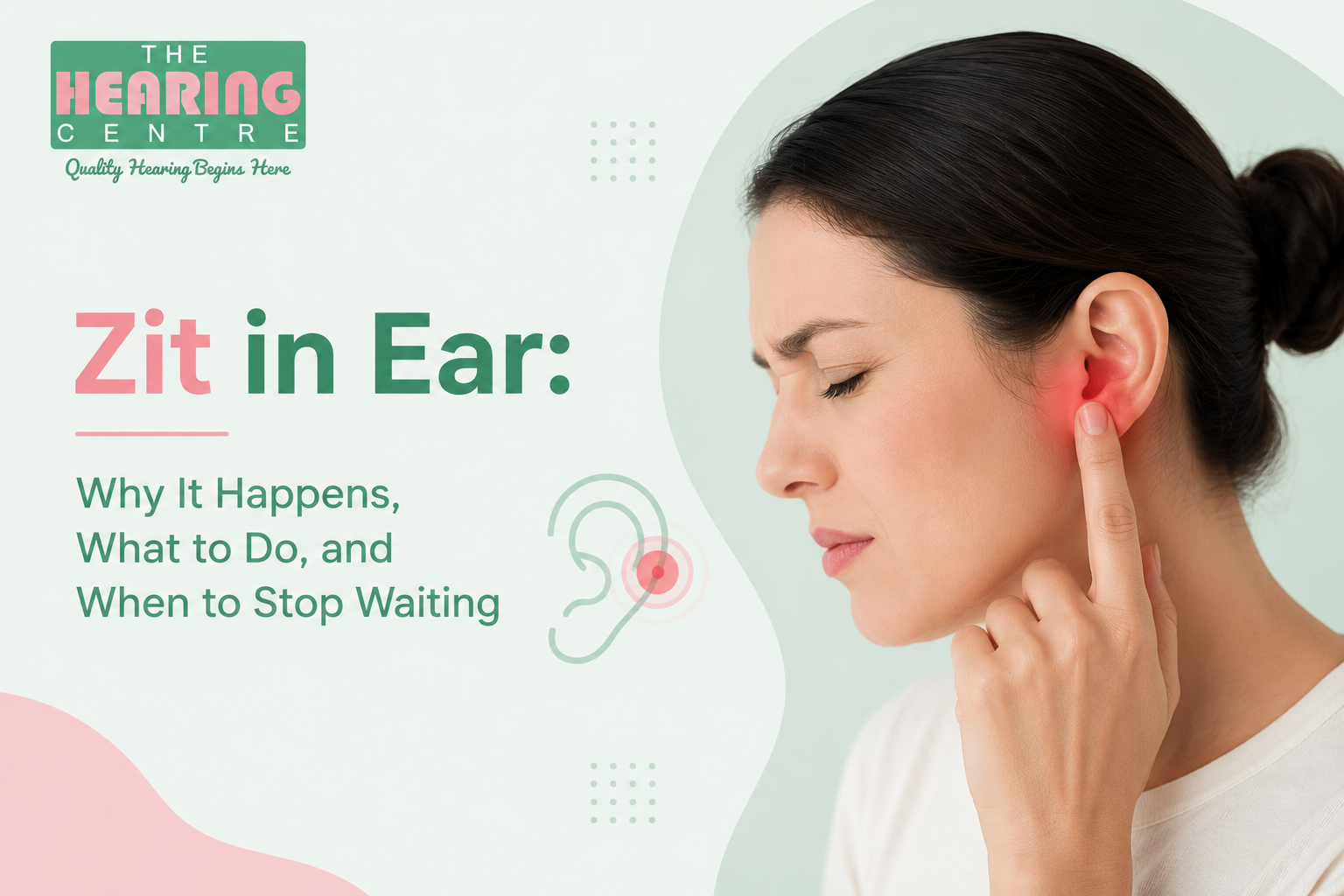
A Zit in Ear is one of those things that catches you off guard. You’re washing your face, you brush your ear, and there’s a tender little lump that wasn’t there yesterday. Or you put your earphone in and something feels wrong — a bit of pressure, a bit of soreness, and you realise something’s sitting right where the tip of the bud normally goes.
Most of the time it’s nothing serious. Ears get zits for the same reasons your face does — oil, bacteria, sweat, blocked pores. But because the ear canal is narrow, the skin is thin, and the whole area sits close to cartilage with no room to expand, even a small Zit in Ear tends to hurt more than one on your cheek would.
At The Hearing Centre in Singapore, our audiologists deal with ear skin questions regularly — not just hearing concerns. Here’s a clear guide to what’s causing your Zit in Ear, how to deal with it without making things worse, and when it actually needs professional attention.
What Is a Zit in Ear?
A Zit in Ear is essentially the same thing as a pimple anywhere else on your body. A pore or hair follicle gets blocked by a mix of oil, dead skin cells, bacteria, and sweat. That blockage creates inflammation underneath the skin, which turns into a red, raised bump — sometimes with a visible white or yellow head, sometimes without.
The ear has sebaceous glands and hair follicles throughout the outer ear, the earlobe, and the entrance to the ear canal. That means it’s just as capable of breaking out as your forehead or back. The difference is location. The skin in and around the ear canal has very little give — it sits directly against cartilage and bone with minimal fat beneath it. That’s why an ear zit tends to hurt disproportionately to its size.
Where Do Ear Zits Show Up?
A Zit in Ear can appear in several different spots, and the location affects both the pain level and how you can treat it.
On the outer ear — the visible cartilage of the pinna. Usually visible, accessible, and easier to manage. Pain is typically mild unless the zit sits directly on the cartilage where the skin is tightest.
On the earlobe — a very common spot, particularly for people who wear earrings regularly. Friction, bacteria from jewellery, and nickel allergies all contribute to zits forming here.
Behind the ear — where sweat and hair product residue tend to collect, especially in Singapore’s heat. Easy to miss because you can’t see it directly.
At the entrance to the ear canal — more painful than outer ear zits because of the tight skin. Visible if you look closely with good lighting.
Inside the ear canal — the most uncomfortable location. The canal skin sits directly against the canal wall, so even a small Zit in Ear canal creates noticeable pressure. Hard to see and hard to reach, which is exactly why you shouldn’t try.
What Causes a Zit in Ear?
There’s almost always a reason a zit forms where it does. Understanding yours helps stop the cycle of recurring ones.
Dirty earphones. This is probably the most common trigger in Singapore right now, and most people don’t connect it. Earbuds pick up oil, bacteria, and earwax every time you wear them. When you put them back in without cleaning them, all of that transfers straight into the ear environment. People who wear in-ear earphones for long commutes, workouts, or late-night listening tend to get recurring zits in the ear canal for exactly this reason.
Singapore’s heat and humidity. The combination of warmth and moisture means the ear canal stays damp for long periods, particularly when you’re wearing in-ear devices on top of it. Bacteria thrive in warm, moist environments. Sweat mixes with oil in the outer ear and earlobe. The conditions here genuinely make ears more prone to breakouts than they would be in drier climates.
Fingers and cotton buds in the ear canal. Every time something goes into the ear canal, it risks scratching the delicate skin inside. Bacteria enter through those tiny abrasions and set off a zit or, worse, an infection. Cotton buds are the most common culprit — they don’t clean your ears, they just move debris around and create micro-scratches.
Hormonal changes. The same hormonal fluctuations that trigger facial acne — puberty, menstrual cycles, pregnancy, stress — affect oil production throughout the body, including in the ear.
Sharing earphones or earrings. Sharing earphones transfers bacteria from someone else’s ear canal directly into yours. It’s a more direct route to ear acne than most people realise.
Hair products. Dry shampoo, hairspray, conditioner, and styling products that touch the outer ear or run down into the ear canal can clog pores. This is particularly common for zits that form on the outer ear bowl or behind the ear.
Eczema or skin conditions. People with eczema, psoriasis, or dermatitis have skin that’s more vulnerable to bacterial entry. Dry, cracked skin around the ear gives bacteria an easier path in.
Hearing aid materials. For hearing aid wearers, the device sits against the ear canal skin for most of the day. If the material causes a mild allergic reaction, or if the device isn’t cleaned regularly, recurring zits in the ear canal are a real risk. More on this below.
Symptoms of a Zit in Ear
You’ll know something’s there before you can see it. The main signs:
A small, raised lump that appeared over one or two days. It’s tender when you press on it or when anything touches the area — earphone tips, earrings, a pillow at night. There may be a white or yellow head visible on the surface, or it may feel like a bump with no visible head yet.
A mild throbbing feeling, especially in the hours after the zit forms. The ear canal version tends to create a feeling of fullness or pressure, similar to having something lightly blocking the canal.
Slight redness around the bump and warmth in the surrounding skin when it’s inflamed.
Itching is common in the early stages before the zit fully develops.
What a Zit in Ear doesn’t usually do: grow significantly over several days, become extremely hot to the touch, cause fever, or produce a large amount of pus with a foul smell. Those signs point toward something deeper than a standard ear pimple — most likely a boil, which needs different treatment.
Zit in Ear vs Ear Boil — How to Tell Them Apart
People mix these up because they look similar at first glance. Getting it right matters because the treatment approach is different.
A Zit in Ear starts as a blocked pore. It’s small, mildly painful, develops quickly, and usually resolves within a week or so. The pain is annoying but manageable.
An ear boil is a bacterial infection of a hair follicle — deeper, bigger, and significantly more painful. The pain is intense and throbbing, the surrounding skin is visibly red and warm, and it grows over several days rather than staying roughly the same size. Boils often need antibiotics or professional drainage.
The simplest test: if the pain is genuinely intense, if the lump is growing day by day and feels warm to touch, and if it’s still getting worse after five days — that’s a boil, not a zit. Get it assessed.
Can a Zit in Ear Affect Hearing?
Usually not, but sometimes yes.
A small zit on the outer ear or earlobe doesn’t affect hearing at all — it’s nowhere near the ear canal and doesn’t interfere with sound.
A larger zit inside the ear canal is a different story. If it’s big enough, it can physically narrow the canal and partially block how sound travels through. The result is a muffled, blocked feeling on that side — similar to having water in your ear. This is temporary. Once the zit clears, hearing returns to normal.
If hearing on one side stays muffled after the zit has fully healed, that’s worth investigating separately. A hearing assessment at The Hearing Centre would tell you whether the blockage has fully resolved or whether something else is going on. Understanding how to improve your hearing starts with understanding what’s actually causing any hearing change — and sometimes it’s as simple as a lingering ear skin issue.
What to Do About a Zit in Ear
Warm Compress — Do This First
Soak a clean face cloth in warm water, wring it out, and hold it gently against the zit for 10 to 15 minutes. Do this three or four times a day. The warmth draws blood to the area, encourages the zit to come to a head naturally, and genuinely reduces the pain. It’s the most useful thing you can do at home and it doesn’t involve putting anything inside the ear.
Keep the Area Clean
Wash the outer ear gently with mild soap and water during your normal routine. Pat dry. If the zit is on the earlobe or outer ear, a gentle cleanse with a cotton pad is fine. Don’t scrub and don’t use harsh products around the ear canal.
Topical Treatments for Outer Ear Zits
For zits on the outer ear, earlobe, or behind the ear, a small amount of benzoyl peroxide or salicylic acid on a cotton swab can help. Apply only to the zit itself. Keep it well away from the canal opening — these ingredients aren’t suitable for use inside the ear canal.
Over-the-Counter Pain Relief
Paracetamol or ibuprofen takes the edge off the pain while you wait for the zit to resolve. Ibuprofen also has mild anti-inflammatory effects which can help reduce swelling.
Clean Your Earphones
If you wear in-ear earphones, wipe them down with an alcohol swab right now. Then make it a habit before every use. A clean pair of earbuds going into a healing ear canal is meaningfully different from a bacteria-covered pair. This one step dramatically reduces the chance of the same thing happening again in the same spot.
Leave It Alone Otherwise
This is the instruction most people struggle with. Don’t squeeze, poke, or try to drain the zit yourself — especially inside the ear canal where you can’t see clearly and where the risk of making things worse is genuinely high. A squeezed ear zit pushes bacteria deeper into the tissue, risks spreading infection to surrounding skin, and can turn a minor issue into something that needs antibiotics.
What NOT to Do
Don’t use cotton buds. Ever. Not to clean the zit, not to apply cream, not to try to reach something inside the canal. Cotton buds scratch the skin, push debris deeper, and are one of the most common causes of recurring ear zits and infections.
Don’t pop it. The ear canal is not the place to attempt extractions. You can’t see what you’re doing, the skin is fragile, and the eardrum is much closer than most people realise.
Don’t wear earphones in the affected ear while the zit is healing. Giving the canal a break from in-ear devices speeds up recovery considerably.
Don’t wear earrings in an earlobe zit until it’s fully healed. The friction and pressure slow healing and risk infecting the area further.
Zits in the Ear and Hearing Aids
If you wear hearing aids, a Zit in Ear canal needs a bit of extra management.
A hearing aid sitting in the canal all day creates warmth and moisture — ideal conditions for a zit to develop or worsen. If you notice a tender spot appearing in the ear where your device sits, remove the device from that ear and leave it out until the zit has fully healed.
Use the time to clean the device properly. Earwax, oil, and skin residue on the receiver or earmold are frequently what cause a zit to form in the first place. Our audiologists at The Hearing Centre check this as part of regular hearing aid care and can advise on cleaning routines specific to your device type.
Understanding how hearing aids work helps you understand why keeping them clean matters so much — the receiver sits directly against the canal skin and acts as a transfer point for anything on its surface. And if you’re in the market for a new device that minimises skin contact issues, our guide to the best hearing aids in Singapore covers options across different styles and fits.
Once the zit is fully healed, resume wearing the device normally. If you notice recurring zits in the same spot, that’s a conversation worth having at your next audiologist appointment — it often comes down to fit, material, or cleaning habits. For context on what goes into making these devices and why material choice matters, how hearing aids are made explains what’s involved.
When to See a Doctor
Most zits in the ear don’t need medical attention. But a few situations genuinely do.
The zit is getting significantly bigger over several days rather than staying the same size or shrinking.
The pain is intense and throbbing — not mild soreness but genuine, constant pain. That pattern points toward a boil rather than a pimple.
You have a fever alongside the ear zit. This suggests the infection may be spreading beyond the local area.
The zit has been there for more than two weeks without changing. A zit that isn’t resolving after two weeks isn’t a standard ear pimple.
Pus is draining from the ear that smells bad or looks green or brown. Normal pimple drainage is white or yellowish. Foul-smelling or discoloured discharge from the ear canal needs assessment.
Your hearing feels muffled on that side and isn’t clearing up as the zit heals.
You keep getting zits in the same spot. Three or more in the same location over a few months means there’s a consistent trigger — whether that’s a hearing aid material issue, dirty earphones, a skin condition, or something else. Worth finding out rather than treating each one in isolation.
At The Hearing Centre, our audiologists can examine the ear canal, confirm what you’re dealing with, and advise on whether antibiotics or further treatment are needed. If there’s any concern about hearing impact, we assess that in the same appointment.
How to Stop Them Coming Back
Clean your earphones before every use. Wipe them with an alcohol swab. Let them dry. Don’t share them.
Give your ears time without devices. If you wear in-ear earphones for hours daily, giving your ear canals time to air out each day reduces moisture and bacteria buildup.
Keep cotton buds out of your ear canal. Your ears clean themselves through a natural wax migration process. Interfering with that process — and scratching the canal skin in the process — is what causes recurring ear skin issues.
Dry your ears after swimming or showering. Tilt your head, let water drain, pat the outer ear dry. Don’t try to dry the canal by inserting anything.
Clean earrings regularly if you wear them. Wipe the posts and backs with an alcohol swab. Choose hypoallergenic materials — titanium, surgical steel, or 18k gold — if you get recurring irritation at piercing sites.
Wash the area behind your ears during your normal face-washing routine. It’s easy to forget that spot and product residue and sweat collect there.
If you wear hearing aids, build device cleaning into your daily routine. It’s not complicated — a quick wipe with a dry cloth, regular wax guard replacement, and storing the device with a drying capsule overnight. The team at The Hearing Centre includes a cleaning demonstration at every fitting and can refresh you on the routine at any follow-up. For anyone still choosing their first device, reading about how hearing aids are made helps you understand what materials sit against your skin and why some people react differently to different device types.
Manage underlying skin conditions. If eczema, psoriasis, or oily skin is a consistent factor for you, keeping that under control reduces how often your ears break out. A dermatologist can help with the skin side of things while an audiologist at The Hearing Centre handles the ear health side.
When to Come to The Hearing Centre
A straightforward ear zit that’s healing on its own doesn’t need a clinic visit. But if you’re dealing with recurring zits in the same location, a zit that’s affecting your hearing, pain that’s getting worse rather than better, or you wear hearing aids and want to understand whether the device is contributing — that’s what we’re here for.
Our audiologists across Singapore examine the ear canal properly, assess whether hearing is affected, and work through what’s driving recurring problems. For hearing aids Singapore users specifically, we can check device fit, material, and cleaning routine in the same appointment.
Frequently Asked Questions
Blocked pores from oil, dead skin cells, bacteria, and sweat. In Singapore, dirty earphones, heat and humidity, hormonal changes, cotton bud use, and sharing ear devices are the most common triggers.
No. Especially not inside the ear canal where you can’t see clearly. Squeezing pushes bacteria deeper, risks infecting surrounding tissue, and can turn a minor ear zit into something that needs antibiotics.
Most clear up within five to ten days with warm compress treatment and basic care. Canal zits sometimes take a little longer because they’re in a more enclosed environment. Anything still present after two weeks needs assessment.
A small outer ear zit won’t. A larger zit inside the ear canal can partially block sound, causing temporary muffled hearing on that side. This resolves once the zit clears. If muffled hearing persists after the zit heals, get it checked.
Yes. Give the affected ear a break from in-ear devices until the zit has fully healed. Clean your earphones with an alcohol swab before using them again.
Recurring zits in the same location usually have a consistent trigger. Dirty earphones are the most common cause. Hearing aid materials, cotton bud use, or a skin condition can also cause this pattern. Finding and addressing the trigger is what breaks the cycle.
They can contribute — particularly if the device isn’t cleaned regularly or if there’s a mild reaction to the earmold material. If you’re getting recurring zits where your hearing aid sits, mention it at your next audiologist appointment.
If it’s getting bigger over several days, the pain is intense and throbbing, you have a fever, hearing is muffled and not recovering, pus has an unusual colour or smell, or the zit has been present for more than two weeks.