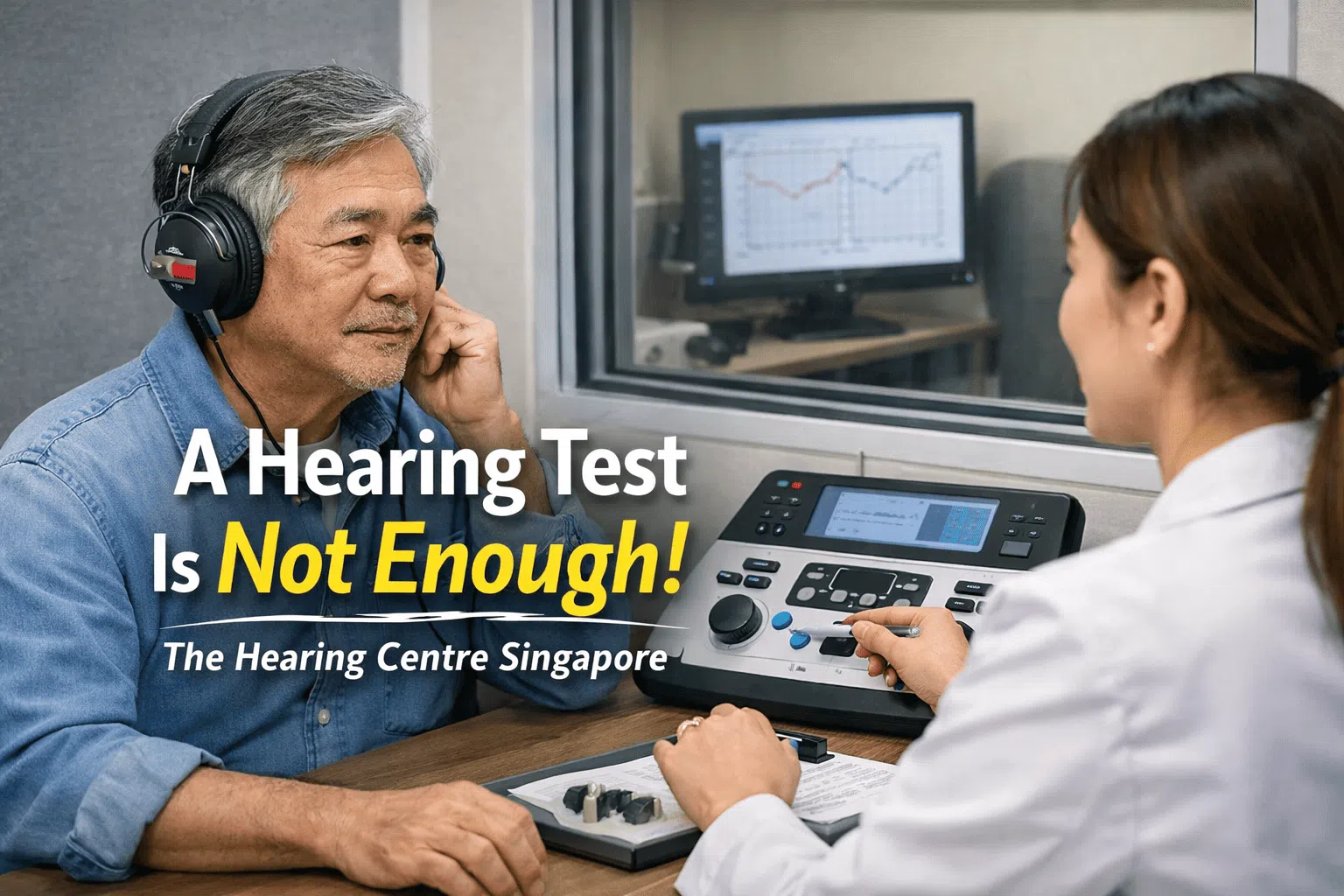
Hearing is a vital sense that connects us to the world, our loved ones, and our environment. Many people assume that a simple hearing test is sufficient to identify all hearing problems. While a hearing test is an essential first step, it is not enough to fully understand your hearing health or determine the right treatment options.
At The Hearing Centre Singapore, we provide comprehensive hearing assessments, in-depth consultations, and personalised management plans to ensure your hearing needs are fully addressed. Our approach goes beyond a basic hearing test to deliver meaningful solutions for better hearing, communication, and overall quality of life.
Why a Hearing Test Alone Is Not Enough
A standard hearing test often measures your ability to hear pure tones at different frequencies, typically ranging from 250 Hz to 8000 Hz. While this test is valuable for detecting hearing loss, it does not provide a complete picture of your auditory health.
A basic hearing test may miss:
- Detailed case history and lifestyle review
- Pure-tone audiometry
- Speech audiometry for real-world understanding
- Tympanometry
- OAE and ABR/ASSR testing
Without a thorough evaluation, relying solely on a hearing test may lead to incomplete diagnoses, inappropriate hearing solutions, or missed opportunities for early intervention.
Comprehensive Hearing Assessments at The Hearing Centre
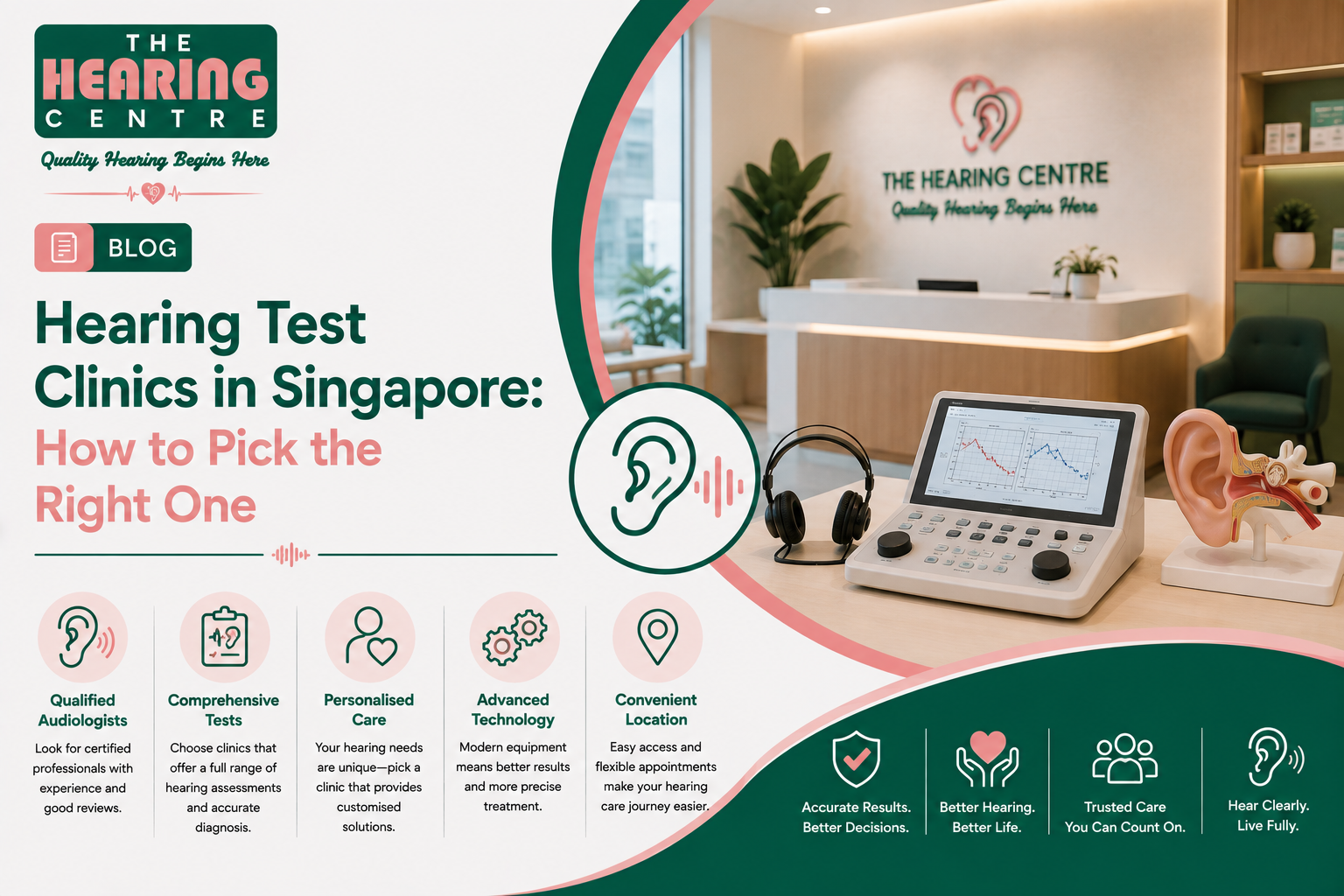
Our audiologists use a combination of advanced diagnostic tests to understand your hearing health fully. A comprehensive assessment includes:
- Detailed case history: Understanding your symptoms, lifestyle, work environment, and medical history
- Pure-tone audiometry: Measures hearing thresholds across frequencies and identifies hearing loss patterns
- Speech audiometry: Evaluates how well you understand speech, especially in challenging listening situations
- Tympanometry: Assesses middle ear function and detects issues like fluid, pressure changes, or eardrum problems
- Otoacoustic emissions (OAE): Measures cochlear (inner ear) health and detects early-stage hearing damage
- Auditory brainstem response (ABR): Checks how sound signals travel from the ear to the brain, useful for detecting neurological issues
- Vestibular/balance testing: Evaluates inner ear balance function when dizziness or vertigo is present
This multi-faceted approach ensures that your hearing health is assessed from every angle, providing a clear understanding of both current issues and potential future risks.
Who Needs More Than Just a Hearing Test
Those struggling in noise, with tinnitus, seniors, children with speech delays, or noise-exposed workers benefit from detailed evaluation at The Hearing Centre.
- Individuals who struggle in noisy environments despite “normal” hearing test results
- People experiencing tinnitus (ringing, buzzing, or hissing in the ears)
- Seniors with age-related hearing changes and cognitive challenges
- Adults and children with speech or language delays
- People exposed to high noise levels at work or in recreational settings
- Individuals with balance, vertigo, or chronic ear infections
A detailed evaluation helps identify problems that a simple hearing test alone cannot reveal, ensuring that any interventions are effective and personalised.
Benefits of Comprehensive Hearing Assessment
By going beyond a basic hearing test, patients receive:
- Accurate diagnosis: Detect subtle hearing loss or hidden auditory issues that may be missed otherwise
- Tailored treatment recommendations: Personalised solutions including hearing aids, assistive devices, therapy, or medical referrals
- Early intervention: Identify issues before they worsen, preventing long-term hearing damage
- Better understanding of your hearing: Clear explanation of your hearing health and what it means for your lifestyle
- Ongoing support: Continuous monitoring and adjustments to ensure optimal hearing performance
Why Hearing Aids Are Not One-Size-Fits-All
Selection considers loss type, lifestyle, and connectivity needs. Professional fitting ensures comfort after ear cleaning services if wax blocks accurate testing.
- Type and degree of hearing loss
- Lifestyle and work environment
- Daily listening challenges (e.g., phone calls, meetings, noisy spaces)
- Comfort and ergonomics of device design
- Connectivity preferences (smartphones, TV, remote devices)
- Budget and insurance or subsidy options
Without a comprehensive assessment, you risk selecting a hearing aid that does not meet your communication needs or is uncomfortable to wear.
How The Hearing Centre Goes Beyond Hearing Tests
At The Hearing Centre, we provide a holistic approach to hearing care, combining clinical precision with patient education and ongoing support. Our services include:
- Personalised hearing evaluations: Detailed tests to map your hearing profile accurately
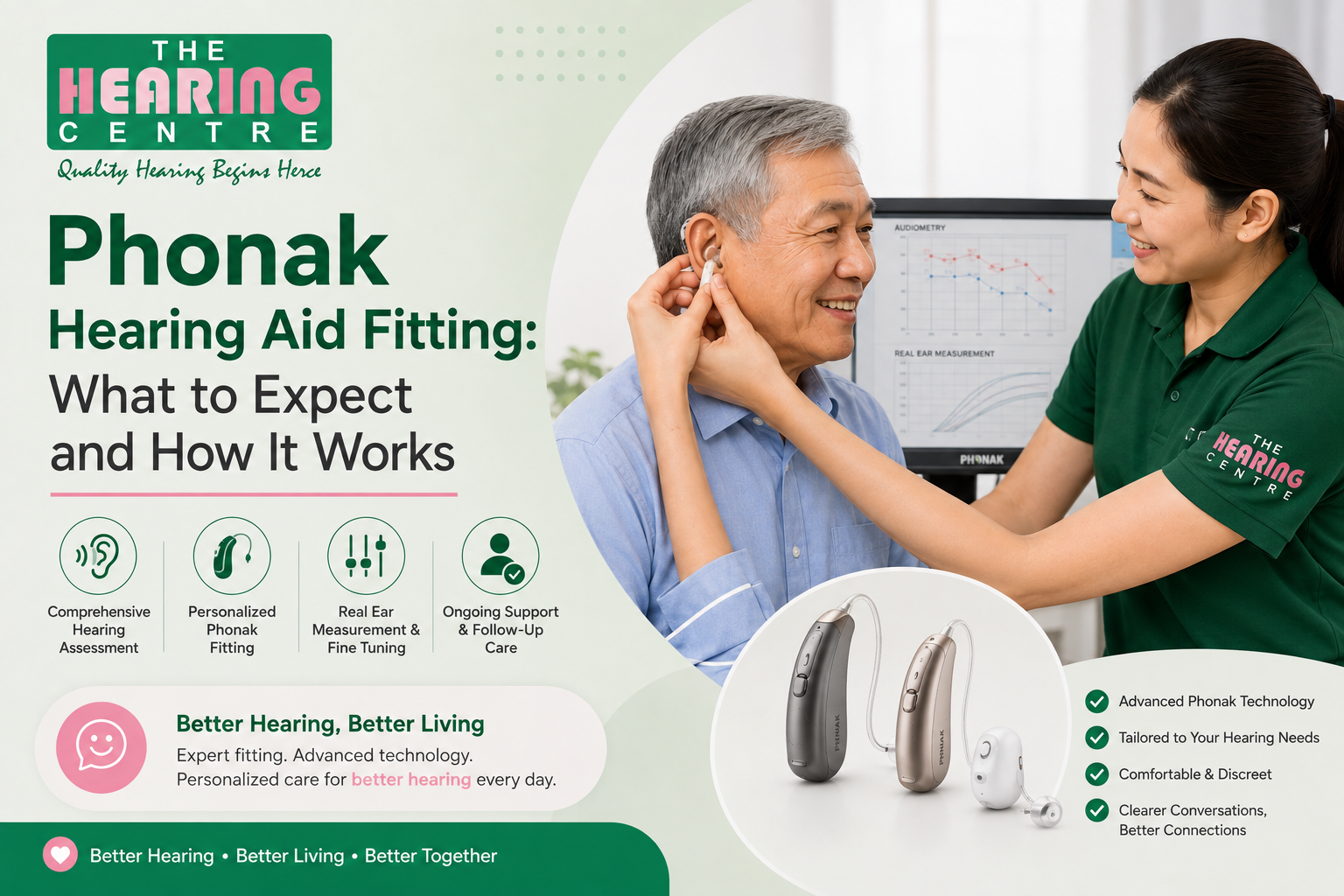
- Hearing aid consultations: Guidance on brand, style, and technology based on your specific needs
- Assistive listening device support: Solutions for phone calls, television, or noisy environments
- Tinnitus management: Strategies and devices to reduce ringing or buzzing in the ears
- Balance and vestibular support: Assessments and referrals for dizziness or vertigo
- Follow-up care and hearing aid adjustments: Regular check-ups to optimise device performance
This patient-focused model ensures long-term hearing health rather than providing a quick, generic solution.
The Role of Audiologists in Comprehensive Hearing Care
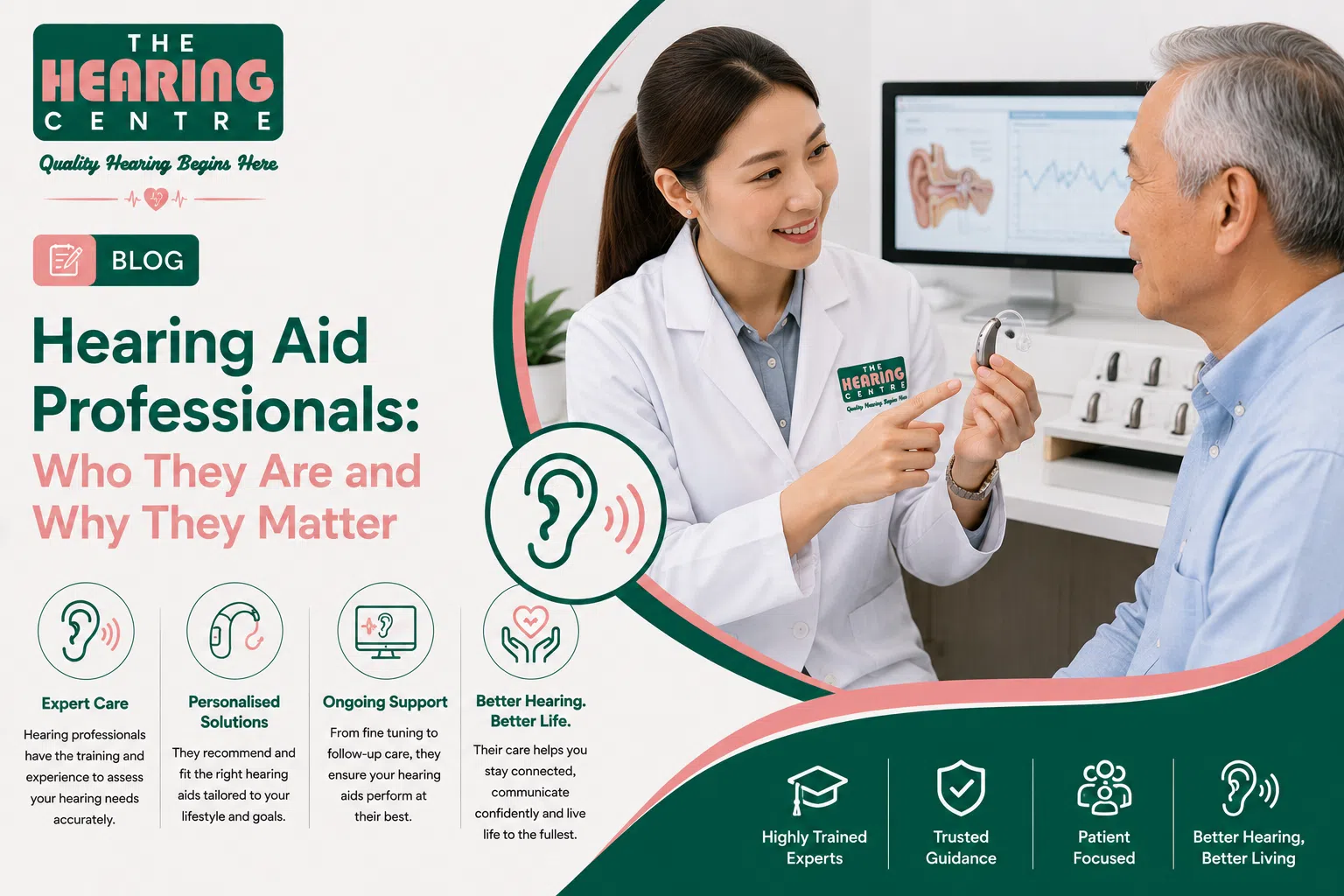
Audiologists play a crucial role in delivering personalised hearing care. They are trained to:
- Conduct accurate and thorough hearing assessments
- Interpret test results and diagnose underlying issues
- Recommend appropriate interventions, including hearing aids, assistive devices, or medical referrals
- Fit and program hearing aids precisely
- Provide ongoing follow-up care, adjustments, and support
Working with a qualified audiologist ensures that your hearing care plan addresses both current challenges and potential future needs.
Long-Term Hearing Health Management
Regular check-ups, aid adjustments, and preventive strategies maintain performance, especially for progressive loss cases needing cochlear implant evaluation.
- Regular check-ups to monitor changes in hearing
- Timely adjustments to hearing aids or devices
- Preventive strategies to reduce noise exposure
- Lifestyle guidance to support auditory health
- Early intervention for age-related or progressive hearing loss
Consistent follow-up ensures that your hearing aids and treatment continue to meet your evolving needs.
Conclusion
A hearing test is an important first step, but it is not enough to fully understand your hearing health. Comprehensive assessments conducted by qualified audiologists provide a complete picture of your auditory system, detect subtle or hidden issues, and guide personalised treatment plans. By going beyond a basic hearing test, you can address hearing loss effectively, improve communication, and maintain long-term hearing health. Early intervention and professional guidance ensure that you receive the right solutions for your lifestyle, needs, and wellbeing.
Frequently Asked Questions:
A basic hearing test only measures your ability to hear certain tones. It doesn’t assess speech understanding in noise, balance issues, tinnitus, or inner ear health.
For adults, at least once every one to two years, or sooner if you notice hearing changes. Seniors or individuals at risk may need more frequent assessments.
While possible, it is not recommended. Proper fitting and programming require a detailed audiological evaluation to ensure effectiveness and comfort.
Yes. Children benefit from comprehensive assessments to detect subtle hearing loss that may affect speech, language, and learning.
Yes. It can identify hearing loss patterns, assess tinnitus impact, and guide treatment strategies.
Online tests can provide a rough indication but cannot replace professional, in-person assessments or personalised recommendations.
They consider your hearing loss type, lifestyle, listening needs, comfort, and technology preferences to select the most suitable device.
Yes. Vestibular or balance testing is included when dizziness or vertigo is present.
Most sensorineural hearing loss is permanent. Early intervention with hearing aids or treatment can prevent further deterioration and improve quality of life.
Regular cleaning, safe storage, battery care, and follow-up appointments with an audiologist ensure optimal performance and longevity.