Can you buy a hearing aid while travelling in Singapore? Yes, in most cases. Hearing aids can be purchased by visitors to licensed clinics, hospital audiology clinics, and some retail shops; there was no rule found that forbids tourists from purchasing hearing aids. The difficult part is follow up, as new aids typically require testing, fitting, and a couple minor adjustments.
This is a guide to the places where you can purchase it, the varieties available, how long it should take, the action to take if an aid breaks in the middle of a trip, and some things to inspect prior to paying. Examples are provided that are simple enough to allow the traveller to quickly determine if it is better to purchase on the trip or at home. Plain language and brief, easy steps are employed in each section.
Most patients buy for one of these three reasons. An old aid breaks down, an aid is misplaced, or hearing has declined enough during the trip that it becomes apparent. Missed tour guides, difficulties in noisy food courts, and missed announcements at the airport are some possible triggers.
Indicators that it is time to act include asking people to repeat themselves, increasing the volume, and becoming tired after conversations. Even if you decide to complete the purchase back home, scheduling an evaluation for hearing loss while travelling gives you immediate clarity.
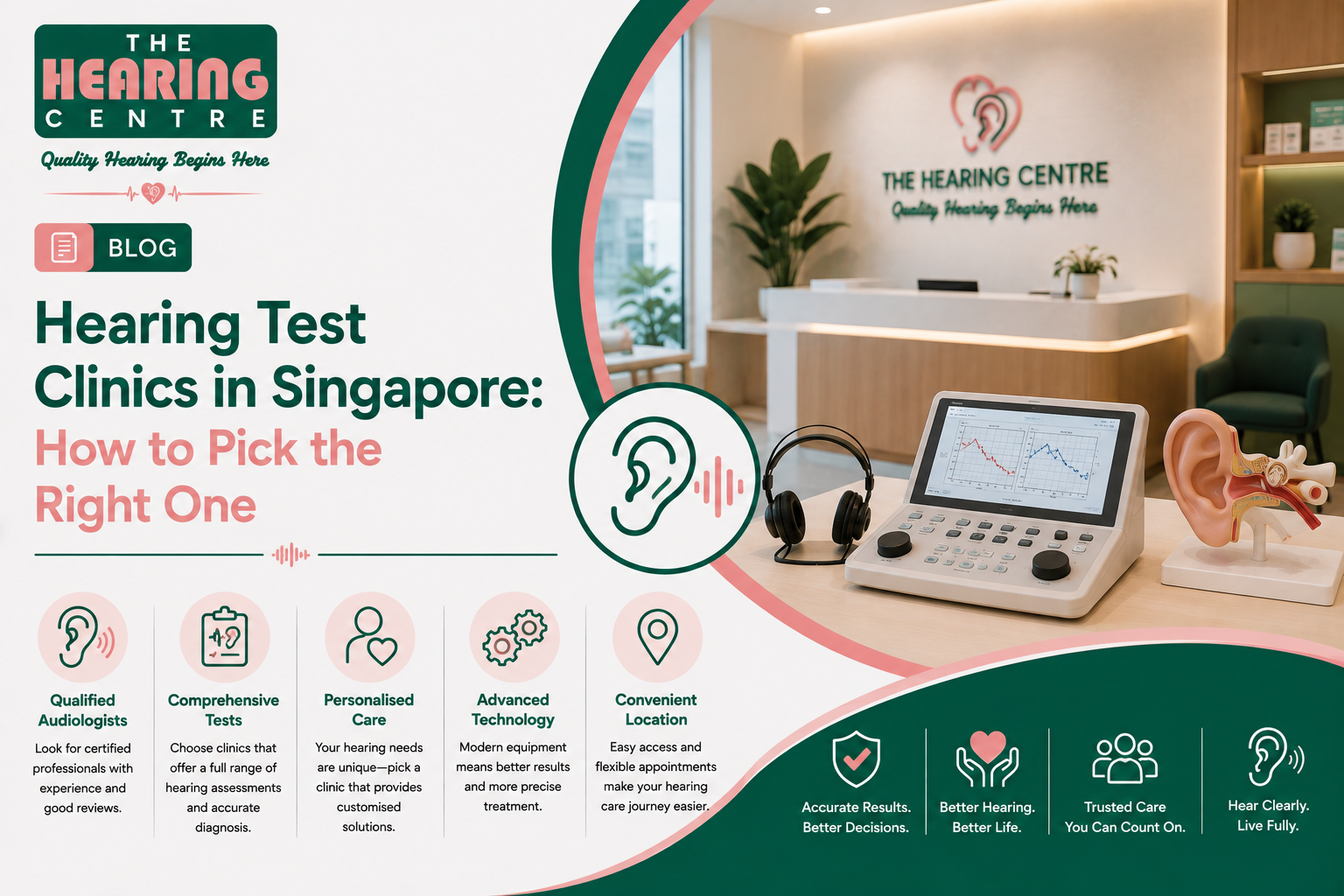
These are a typical selection for travelers. Specialized providers, such as The Hearing Centre, operate network locations across the island equipped with soundproof testing suites. Bookings are frequently available online or over the phone.
Audiology services are available in public hospitals as well. These may be busier and could be serving out-of-town patients, and you may have to wait longer if you are a visitor.
There are basic models for sale in stores. They are not as expensive but offer less testing and less personal setup and therefore are good for light needs only.
Purchasing online and used items on marketplaces seem to be less expensive but have their risks. According to a hospital leaflet in Singapore, a hearing aid is a complicated instrument and an audiologist can assist in selecting the appropriate hearing aid and allow the person to experience the instrument. The aid a buyer has, may not be the same as the seller’s aid.
Clinics in Singapore sell the same main styles found in most countries. Not every clinic stocks every brand, so the range on the shelf can differ from one shop to the next. Here is what a visitor will usually see.
Choosing the right one depends on a few things: how strong the hearing loss is, how well the hands can handle small parts, the budget, and how often the person travels. An audiologist can narrow this down after a hearing test. Picking by looks alone is a common mistake
A first visit to a hearing clinic is not as scary as it sounds. It is mostly talking, listening, and a short test. Here is how it usually goes.
The first through fourth steps can be taken care of in one appointment, the steps five and six is where trips get cut short due to the time constraints of the adjustment period. A tourist with a weekend to spare may not have time to fully adjust to their aids before they return home.
There is no single price, and any article that gives one fixed number is guessing. Cost changes with the brand, the features, and the clinic. These are the things that move the price most.
A simple tip works well. Visit two clinics, ask for a written quote at each, and compare them side by side before deciding. It takes a little time but often shows a real difference.
Factor | Buying in Singapore | Waiting Until Home |
Speed | Faster if hearing is a daily struggle | Slower |
Follow-up care | Hard after leaving | Easy with a local clinic |
Warranty and repairs | May need to be handled abroad | Simple and close |
Model choice | Wide range in clinics | Depends on the local market |
Best for | Longer stays, urgent needs | Short trips, first-time users |
Is it possible to buy a hearing aid while I’m transiting through Singapore? There are licensed clinics and shops that provide hearing aids to customers.
Whether it’s a wise investment is a matter of time; many people who are on short-term business visas find it unfeasible to get fitted and purchase a hearing aid. However, if you’re on a longer visa or have a medical emergency, buying a hearing aid is a viable option.
At the majority of clinics, yes. The test usually lasts less than an hour and is the initial step prior to any purchase. Please note that the fees vary from one booking to another, so it is recommended to ask the necessary questions while booking.
Not always. These prices are subject to change based on the brand, the features and the clinic. A written quote with local prices at home provides a better answer than a guess.
The hearing test and selection of suitable hearing aids may take a few hours. The initial fitting is usually quick, but fine-tuning may be needed after wearing the hearing aids for a few days. Depending on the hearing aid model, these adjustments can be made remotely online, offering greater convenience without the need for an additional clinic visit.
A lot of them do, particularly large clinics. Some smaller businesses might accept some cards or cash. Don’t wait until the appointment to ask, it can be awkward at the counter.
Often yes, if the model is in stock. A clinic may offer a basic replacement the same day. Matching old settings may need the earlier test results.
They carry more risk. Without a proper test and fitting, the sound may feel off. Registered products from licensed dealers are the safer choice.
Bring the passport, the latest hearing test, details of current aids, and a list of daily sound problems. Notes like “TV is too quiet” help the audiologist a lot.
Sometimes, but not always. The overseas warranty policies differ per brand, so it’s advisable to get it in writing from the clinic you’re paying before making the payment.
Hearing aids are usually programmed to a specific individual, and second-hand aids may also be damaged or unregistered. It’s safer to get a new hearing aid that is properly registered and programmed to your hearing.
A first-time fitting requires multiple appointments, which is more convenient to do at home. Getting a hearing test is a good start if you’re travelling.

Evlin holds a Bachelor of Health Science (Honours) in Audiology from the University of Science Malaysia. She is accredited to conduct comprehensive hearing assessments for patients from newborns to the elderly, and began her clinical training at Hospital University of Science Malaysia before working as a Resident Audiologist at Jesselton Medical Centre, Malaysia (2021–2023).