TL;DR
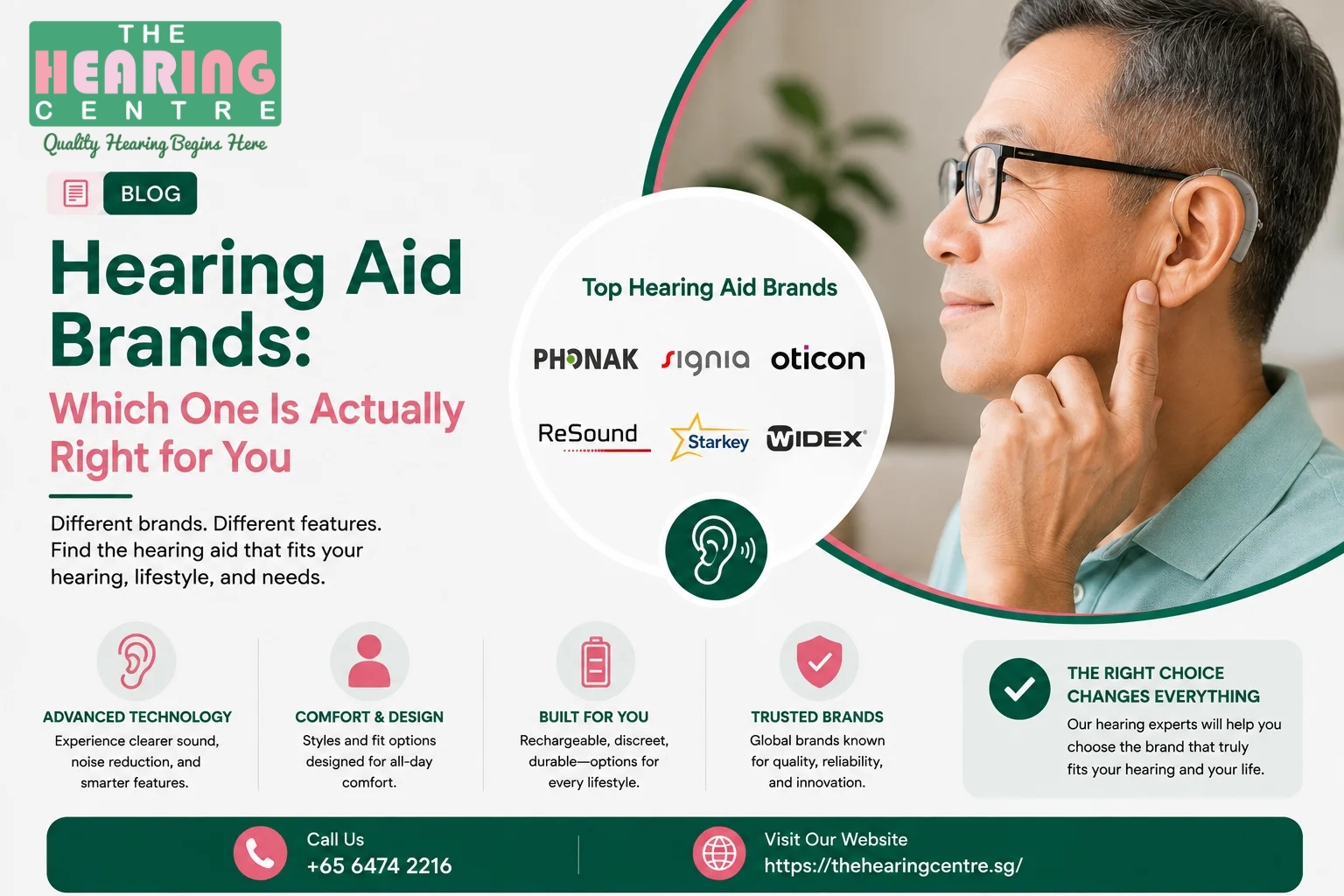
- Six names matter most in Singapore. Phonak, Signia, Starkey, ReSound, Oticon, Widex.
- Each one’s good at something different. Clarity, natural sound, wellness tracking, whatever.
- Nobody wins for everyone. Depends on your ears, not the logo on the box.
- Comes down to your hearing test, your daily life, and what you actually care about.
- The Hearing Centre in Singapore stocks a few of these, so you can compare instead of guess.
Walk into any hearing clinic and the same names keep coming up. Phonak. Signia. Oticon. Starkey. Gets confusing fast, especially when every single one insists it’s the best. Here’s the truth nobody tells you upfront: no brand wins for everyone. What actually matters is lining up a brand’s strengths with your hearing loss and how you actually live. This one covers the big names in Singapore, what each is genuinely good at, and how to pick without falling for marketing copy.
Why the Brand You Pick Actually Matters
These aren’t just logos glued onto the same hardware. Each company builds its own chips, its own software, its own way of handling noise. A few things that really do differ:
Sound processing, some lean toward clarity, others toward full, natural sound. Battery life swings a lot too, especially once you turn on streaming. App quality and Bluetooth aren’t the same across brands either. Some do tiny and invisible well, others stick to sturdy behind-the-ear builds. And local support matters, aftercare’s a lot easier when a brand’s actually got a real presence here.
Because of all that, a hearing test comes first, always. The Hearing Centre runs pure tone audiometry, ABR/ASSR, and tympanometry, so your audiologist knows what they’re actually working with before suggesting a single brand.
Top Hearing Aid Brands in Singapore
Quick side-by-side before going deeper.
Brand | Known For | Best For |
Phonak | Dedicated AI chip (Infinio Ultra Sphere), speech clarity, strong connectivity | People struggling most with noisy environments |
Signia | Sleek design, tinnitus features, long battery life | Users who want style plus performance |
Oticon | Natural sound, BrainHearing technology | Complex, noisy environments |
Widex | Clear, lifelike sound with minimal distortion | Music lovers and sound purists |
Starkey | Health tracking, fall detection | Tech-savvy and elderly users |
ReSound | Smartphone integration, spatial sound | Heavy smartphone users |
At The Hearing Centre, we carry Phonak, Signia, Starkey, and ReSound. Oticon and Widex are covered here too, just for comparison — we don’t stock those two, but it’s good to know your full options before choosing.
Phonak
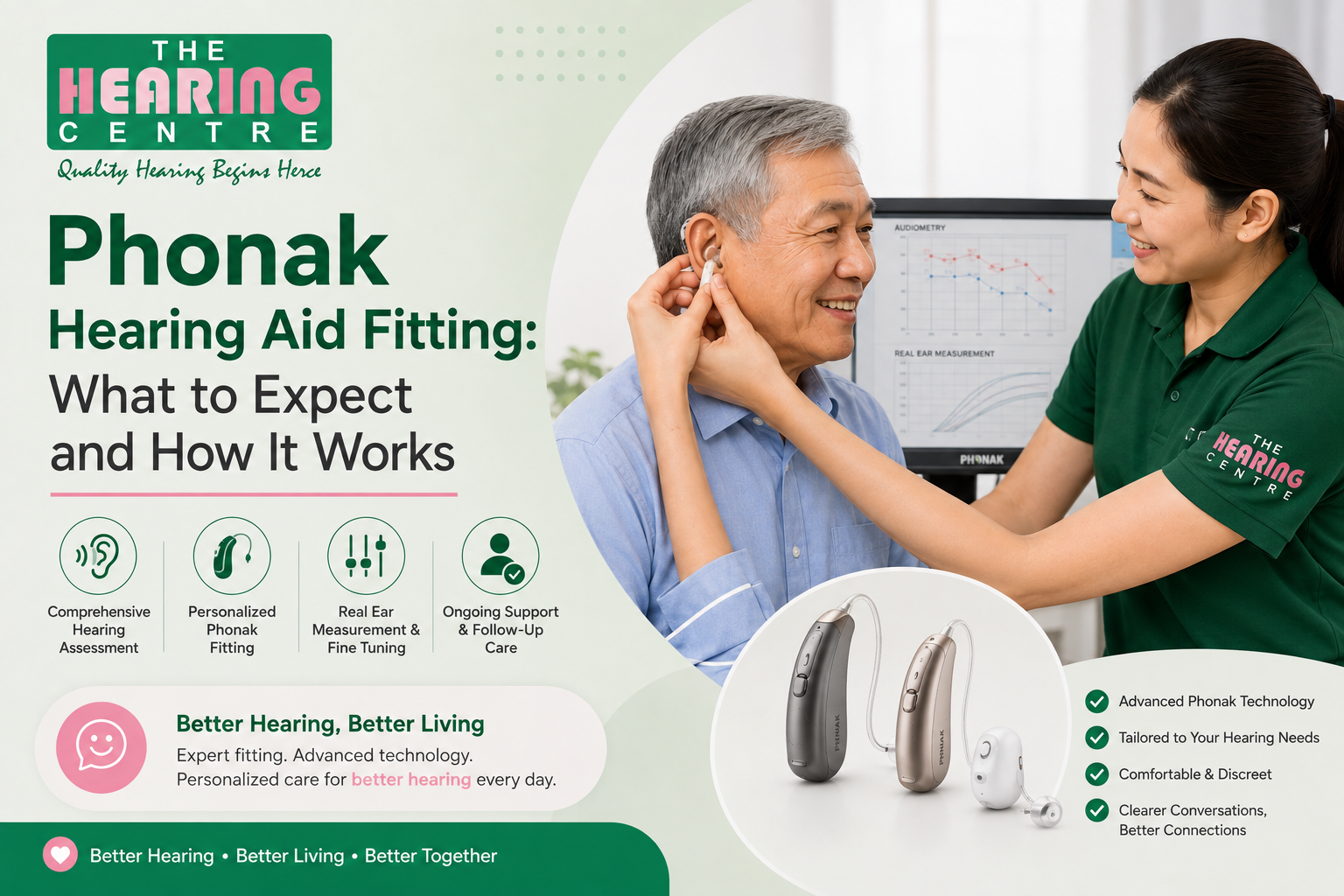
Probably the most recognised name out there, and often the most fitted brand here too. Phonak’s current flagship, the Infinio Ultra Sphere, is the one hearing aid in this list that runs a dedicated AI chip — a deep neural network built to separate speech from background noise in real time, rather than just adjusting settings around you.
For anyone whose biggest struggle is following conversation in noisy places, this is the sharpest tool available right now. Standard AutoSense OS still handles the everyday side well across the range, automatically adjusting as your surroundings shift, with streaming to phones and TVs that just works.
Signia
Signia’s IX platform is basically built for chaos — noisy dinners, everyone talking at once, voices moving around the room. It tracks multiple speakers at the same time and keeps re-focusing on whoever’s talking, so you’re not lost when three people jump in at once.
It also fixes something people don’t expect to be a problem until it happens — your own voice sounding weird through a hearing aid. Signia sorts that out so you still sound like you. Throw in built-in tinnitus relief, over 36 hours of battery with streaming on, and a smart app that learns your habits, and Signia’s less “one big party trick” and more “just really well put together.”
Fun fact — Signia’s regional headquarters and R&D team are actually based right here in Singapore, and about one in seven hearing aids worn anywhere in the world are made here too. That’s not just trivia, either. It means when something needs fixing or adjusting, you’re not shipping it overseas and waiting weeks to get it back. The people and parts are close by, so repairs tend to move a lot faster
Starkey
Leans hard into wellness. The Omega AI backs that up with some serious brainpower under the hood, way more processing than earlier models, on top of activity tracking, heart rate monitoring, and fall detection. Genuinely useful if you’ve got an older parent living alone. Battery life’s some of the best out there too.
ReSound
One of the first to do direct iPhone streaming, and that early lead still shows in how smooth the app feels today. Their newest flagship, Vivia, throws a dedicated AI chip into the mix too — trained on millions of real conversations to help pull speech out of background noise. Still does spatial sound well on top of that, so it’s easier to tell where a sound’s actually coming from.
Oticon
Built its whole reputation around natural sound. The newest one, Intent, takes that further — it’s the first hearing aid that actually tries to figure out what you’re trying to listen to, not just what’s around you. It picks up on things like where your head’s turned or whether you’re mid-conversation, and adjusts on the fly. Still does especially well in chaotic, noisy rooms with a lot going on.
Widex
Goes for clarity without over-processing everything, which is why people who found other brands sounding fake or robotic often land here instead. Also makes some of the smallest rechargeable models around, handy if you’d rather nobody notice.
Understanding Hearing Aid Names
Something that trips people up constantly. Those model names, strings of letters and numbers, actually mean something. Usually packed in there somewhere: the brand, the style, the chip, the tech tier, sometimes even battery type, all crammed into one confusing label. No shared standard across brands either, which is exactly why comparing two names side by side rarely tells you much on its own. Getting your audiologist to just translate it into plain English is honestly one of the more underrated parts of a good fitting appointment.
A Bit of History Behind These Brands
Most of these companies go back way further than people assume. Phonak started in Zurich, 1947. ReSound’s roots stretch back even earlier, to 1943. Decades of engineering sit behind these names, and that’s part of why audiologists keep recommending them over newer, cheaper brands with barely any track record. The Hearing Centre sticks with brands carrying this kind of history for a reason. Long-term reliability and real local support count for just as much as flashy new features.
How to Choose the Right Brand for You
A few honest questions worth asking yourself first. How bad is your hearing loss, really? Some brands handle severe cases better than others. What does your day actually look like? Active, social lifestyles need stronger noise handling. What tech do you genuinely want, Bluetooth, AI tweaks, health tracking, not everyone needs all of it. What’s your budget? Premium models cost more but usually come with better warranties. And what’s aftercare actually like? A brand with real presence here makes repairs way less of a hassle.
If budget’s the thing holding you back, The Hearing Centre’s guide on how to choose the right hearing aid for your budget breaks down what you actually get at each price point.
Style Matters as Much as the Brand
Every major brand offers a handful of styles, and the style you pick affects comfort and how visible it is just as much as the brand itself does. Behind-the-ear, receiver-in-canal, in-the-ear, completely-in-canal, they all behave differently depending on your hearing loss and how much you care about being seen wearing one. A tiny invisible model might look great but won’t always suit severe hearing loss the way a slightly bigger behind-the-ear device would, so weigh style and function together, not just looks. Our breakdown of hearing aid types and costs covers how style affects price across brands, and if you’re still unsure what fits, our guide on what kind of hearing aid suits you walks through it properly.
Where to Try These Brands in Singapore
At The Hearing Centre, we carry Phonak (including the Infinio Ultra Sphere), Signia, Starkey, and ReSound., so you’re not stuck with whatever one brand a single clinic happens to push that month. Every fitting starts with an actual hearing test, not a sales pitch, and our audiologists match you to whatever genuinely fits your hearing and your life, not whatever’s easiest to move that day.
Weighing bigger options too? We also offer cochlear implants for cases where hearing aids alone just aren’t cutting it. The approach stays the same either way, test first, then match the tech to you. For anyone comparing hearing aid brands side by side, that’s genuinely the only fair way to do it. Check out hearing aids singapore for more on how The Hearing Centre handles all of this.
Final Thoughts
Picking between hearing aid brands was never about finding the one everyone agrees is “the best.” It’s about matching a brand’s actual strengths, sound processing, battery life, app features, style, to your hearing loss and how you actually live. Get a real hearing test first, ask real questions, try before you commit. The Hearing Centre will walk you through that comparison honestly, instead of pushing whatever’s easiest to sell that day.
Frequently Asked Questions
At The Hearing Centre, we carry Phonak, Signia, Starkey, and ReSound. We’re covering all six major brands here so you understand the full landscape — including Oticon and Widex — even the ones we don’t personally stock, so you’re comparing with full information, not just what’s on our shelf .
Not universally. Each brand has different strengths, and the right one depends on your specific hearing loss, lifestyle, and what features actually matter to you.
Most major brands now offer rechargeable options, though battery life and charging speed vary between brands and specific models.
Signia has strong built-in tinnitus therapy features, though several other brands, including Widex and Starkey, offer their own tinnitus management tools too.
Starkey stands out for wellness features like fall detection and health tracking, though the right choice also depends on ease of use and physical comfort, not brand alone.
Yes. Pricing depends on the brand, specific model, technology tier, and included features like Bluetooth streaming or AI sound processing.
Yes. Most clinics, including The Hearing Centre, offer trial periods so you can compare a few brands in real-life situations before committing.
A full hearing test is the only reliable way. Your audiologist reviews your results and lifestyle needs before recommending specific brands and models.
Sometimes, for simpler cases. But cheaper models often skip features like noise reduction or app connectivity, so it depends on how much support you actually need.
The Hearing Centre carries multiple major brands and offers hearing tests and trial fittings, so you can compare options directly rather than relying on marketing alone.