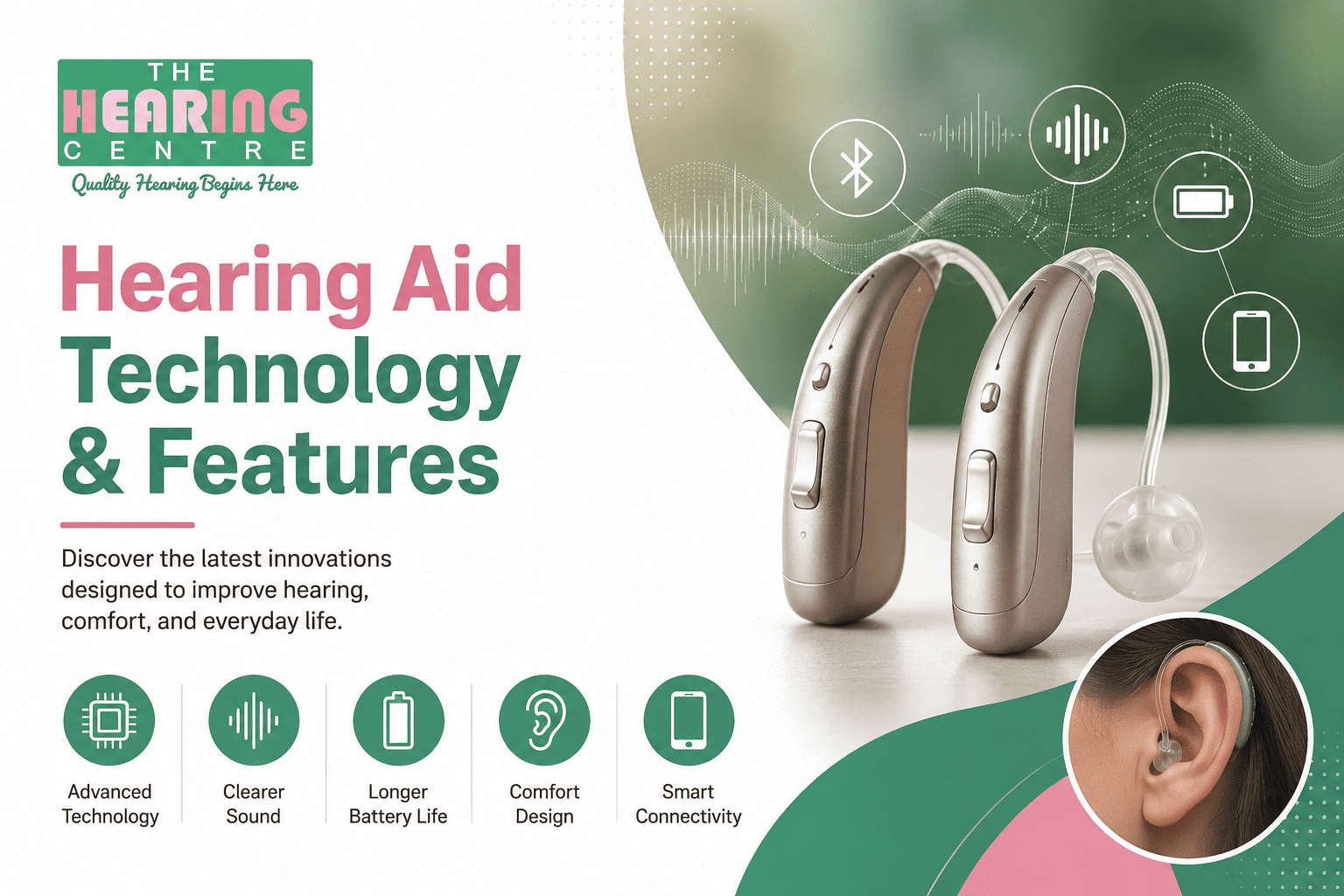
Discover the latest hearing aid technology and features: from AI processing and Bluetooth to rechargeable batteries and health tracking. Find what matters most.
Hearing Aid Technology & Features: What’s Actually Inside Your Hearing Aid in 2026
Remember what your phone could do back in 2015? Compared to now, it almost feels like a different device. Well, something very similar has happened with hearing aid technology & Features 2026 — quietly, without much fanfare, and most people have completely missed it.
Nobody’s talking about it the way they talk about smartphones. But they probably should be.
Today’s hearing aid devices in Singapore are nothing like what existed even a decade ago. Inside those tiny shells sitting in or behind your ear right now — AI chips running millions of calculations every single second. Bluetooth systems linking you wirelessly to your phone, your TV, your laptop. Sensors counting your steps. Processors trained on actual human conversations, not just lab recordings.
And yet most people still picture the old beige box when someone says “hearing aid.”
If that’s where your head is — if you’ve been avoiding this whole conversation because you imagine something obvious and clunky and limited — read this first. Every major feature, every piece of technology worth actually caring about. What makes a real difference in daily life and what’s just a bullet point on a spec sheet.
What is Hearing Aid Technology
Hearing aid technology refers to the advanced systems inside a hearing aid that process sound — capturing it, amplifying it, cleaning it up. Things like digital signal processing, noise reduction, AI-based sound adjustment, Bluetooth connectivity, rechargeable batteries. All of it working together so that hearing feels less like a struggle and more like just… hearing.
Why Hearing Aid Technology & features in Singapore Has Changed So Dramatically
For most of the last century, hearing aids did one thing. Made everything louder. Which sounds useful until you think about what actually happens when you turn up a noisy room.
You don’t just hear speech better. You hear everything more loudly. Cutlery on plates. Music from a speaker in the corner. The conversation at the next table that has nothing to do with you.
Volume was never really the point. The actual problem — the thing hearing loss takes from people — is selective clarity. That ability to lock onto the voice of whoever is talking to you and tune out everything else. That’s specifically what modern hearing aid technology & Features has spent years being built to solve.
Today’s advanced hearing aids combine artificial intelligence, neural processing, and seamless Bluetooth connections to deliver a clearer, more natural listening experience — transforming what it actually means to hear well in a noisy world.
Artificial Intelligence (AI) Processing — The Biggest Game Changer
How AI Works in Hearing Aids
Old hearing aids ran on fixed programs. Restaurant mode. Outdoor mode. Music mode. You’d manually flip between them depending on where you were. They weren’t stupid devices — but they weren’t smart either. They couldn’t tell the difference between a noisy food court and a crowded bus on their own. You had to tell them.
AI algorithms enable machines to carry out tasks such as recognizing patterns and making decisions — and over time, AI-powered machines can learn from data and adapt their behavior without the need for additional reprogramming.
Modern AI hearing aids scan your listening environment continuously — sometimes millions of times a day — adjusting on their own without you doing anything. Step out of a quiet office into a packed hawker centre? The device picks up the shift and changes its processing before you’ve consciously noticed the noise difference.
What AI Actually Does in Your Ear
The most significant advancement in hearing aid technology & Features is the integration of sophisticated artificial intelligence processing. Modern hearing aids now feature dedicated AI chips that can perform trillions of operations per day, analyzing your listening environment and making real-time adjustments to optimize your hearing experience.
Three types of AI are being used across devices today:
- AI-Designed Algorithms (most common)
- Real-Time AI Processing (cutting edge)
- Deep Neural Networks (DNN)
Bluetooth Connectivity — Turning Your Hearing Aids in Singapore into Personal Earphones
Bluetooth Streaming: Direct to Your Ears
Modern hearing aids often include Bluetooth technology, allowing you to connect directly to smartphones, tablets, and televisions. With this feature, you can stream phone calls, music, or other audio straight into your hearing aids for clearer sound.
Picture what that looks like practically. A call comes in. Instead of pressing the phone against your ear and leaning toward it, the audio just appears — in both hearing aids simultaneously, at the right volume, clear. TV in the evening. Sound goes straight to your ears at whatever level works for you, without the TV being loud enough to bother everyone else in the room.
Bluetooth LE Audio — The Next Generation
The latest generation of hearing aids features Bluetooth Low Energy (LE) Audio and Auracast. Bluetooth LE Audio keeps hearing aids connected to phones, tablets, and TVs while using less power, and delivers higher-quality sound through the new LC3 audio codec — with universal compatibility across iOS, Android, and many smart TVs.
Battery efficiency is the part people don’t talk about enough here. Older Bluetooth drained hearing aid batteries at a pace that genuinely bothered people. Bluetooth LE gets better audio quality out of a fraction of the power. Stream all day. Don’t watch the battery.
Auracast — Public Spaces Become Accessible
Most people haven’t come across this one yet. But it’s worth paying attention to.
Auracast expands Bluetooth’s reach beyond personal devices, allowing hearing aids to connect directly to live broadcasts in public places. With Auracast, users can tune into theatre, airport, or gym announcements directly through their hearing aids, or join group audio from one phone or TV without extra accessories — enjoying crystal-clear public sound without background interference.
A cinema where the film audio streams directly to your ears at the exact volume your hearing needs. An airport where you catch gate announcements without tapping the person next to you. That’s the direction this is heading — and it’s closer than most people think.
Smartphone App Control
Most premium hearing aids today pair with a companion smartphone app that puts comprehensive control at your fingertips. Hearing aids are becoming smarter with app connectivity, allowing users to adjust settings, manage profiles, and stream audio — creating a seamless, connected experience.
Through the app, you can typically:
- Adjust volume and bass/treble independently in each ear
- Switch between listening programs manually
- Set up custom programs for locations you visit regularly
- Monitor battery level in real time
- Access remote support from your audiologist
AI Noise Reduction & Speech Enhancement
This is where everything becomes real for daily use. The number one complaint from hearing aid 2026 users — especially first-timers — isn’t about fit or looks. It’s that everything sounds too noisy. Background sound drowns out speech. Social situations stop being enjoyable and start being exhausting.
Directional Microphone Systems
Better hearing aids use multiple microphones — typically two or more per device — to figure out where sounds are coming from. More amplification goes toward whatever’s in front of you. Less toward the noise at your sides and behind you.
Some devices go well beyond that basic approach. The Signia IX splits sound into discrete streams to improve hearing in noise — using Augmented Focus split processing technology with dual speech processors and binaural beamforming microphones for processing speech and background noise separately, creating a clear contrast between the two — achieving up to 24% more speech clarity than competing dual-processor AI-driven hearing aids.
Binaural Processing (Ear-to-Ear Communication)
Premium hearing aids don’t operate as two separate, independent devices. They talk to each other. AI-powered hearing aids now isolate and prioritize sounds with enhanced noise filtering, Bluetooth integration, and binaural processing — offering a more natural, personalized hearing experience.
When both devices share what they’re picking up, direction becomes clearer. Settings stay consistent across both ears. The speech you want gets separated from the noise you don’t — better than either device could manage working alone.
Automatic Scene Recognition
AI is reshaping hearing aids with real-time adjustments that reduce noise and enhance speech clarity, offering a more personalized listening experience. Binaural advancements replicate natural hearing by helping wearers identify the direction of sounds, improving spatial awareness and conversation clarity in noisy environments.
Phonak’s AutoSense OS 7.0 was trained with 18 times more sound environments than the previous generation, boosting speech understanding in noise — and it does all of this automatically, without you touching a button.
Rechargeable Battery Technology — No More Fumbling with Tiny Batteries
Ask someone who’s worn hearing aids for ten years what annoyed them most about older devices. Almost every time, batteries come up first. Tiny zinc-air cells lasting a few days. Needing tweezers to swap them. Dying at dinner. Dying before a flight. Dying at the exact wrong moment, consistently.
Rechargeable technology now charges overnight for a full day of uninterrupted use, offers quick-charge options that deliver several hours of use in minutes, reduces waste by removing the need for disposable batteries, and simplifies travel with portable charging cases.
How Today’s Rechargeable Systems Work
Lithium-ion cells now pack more energy into a smaller space than ever before. Bluetooth LE technology keeps battery drain low during streaming. Intelligent charging circuits stop overcharging and protect long-term lifespan. Automatic low-power modes kick in the moment the hearing aid isn’t being used.
Most premium rechargeable hearing aids today deliver 16–24 hours of use from a full overnight charge — streaming included. Some push further. The Starkey Edge AI maintains an impressive 51-hour battery life across its charge cycle, with varying daily usage.
Quick charge is now standard on many models. Thirty minutes in the case gives you several hours of use. Useful when you’ve forgotten to charge overnight — which happens.
The growing use of lithium-ion batteries in rechargeable hearing aids represents an eco-friendly and potentially wallet-friendly shift in the industry, because you’re no longer purchasing packs of disposable batteries every few weeks.
Health & Wellness Tracking — More Than a Hearing Device
This is probably the feature that surprises people most. Most people don’t even know it exists until they’re already wearing the device.
High-end hearing aids from brands like Starkey and Audibel now include sensors that go well beyond anything to do with hearing.
Fall Detection
Using built-in sensors, hearing aids can detect sudden changes in orientation or impacts that indicate a fall. If a fall is detected, an alert is immediately sent to emergency contacts for assistance. This life-saving technology offers an extra layer of safety and peace of mind for anyone who wants to live an independent and active lifestyle.
Activity & Fitness Tracking
The same hearing aid sensors that enable automatic fall detection also provide activity tracking — counting daily steps and tracking engagement. This technology turns hearing aids into a comprehensive health and wellness tool.
Balance Assessment
Hearing loss is closely linked to balance issues and stability concerns. AI-powered hearing aids now use built-in sensors to help assess balance — allowing users to monitor their stability at home and stay proactive in reducing the risk of falls by identifying potential issues early.
Feedback Cancellation — Solving the Whistling Problem
You’ve probably heard it before. Standing near someone with an older hearing aid and catching that sharp, high-pitched whistle. That’s feedback — sound from the hearing aid speaker looping back into its own microphone. It was one of the most complained-about problems with older devices.
Hearing aids in 2026 offer improved feedback management systems that help reduce whistling or squealing sounds. Feedback happens when sound from the hearing aid speaker gets picked up by its microphone. Advanced feedback control quickly adjusts the sound output before feedback starts.
Water Resistance & Durability — Built for Real Life
Hearing aids go everywhere. Sweat during exercise. Humidity all year round in Singapore. The odd caught-in-the-rain moment. Daily life is rougher on small electronics than people realise, and manufacturers have been building toward that reality.
The latest hearing aid models feature improved durability with IP68 ratings becoming standard across most premium devices. This means hearing aids can withstand dust, moisture, and even brief submersion in water. Some models, like the Starkey Edge AI, are waterproof up to one meter depth.
Tinnitus Masking Technology — Relief for Ringing Ears
A significant number of people with hearing loss also live with tinnitus — a persistent ringing, buzzing, or low hum that doesn’t stop. It’s disruptive in a way that’s hard to explain to someone who hasn’t experienced it. Several hearing aid brands have built dedicated tinnitus management features directly into the device itself.
These features typically work by generating soft, customizable sounds — ocean waves, white noise, gentle tones — that help mask the perception of tinnitus and allow the brain to gradually habituate to the ringing over time.
If tinnitus is part of your experience alongside hearing loss, this isn’t a nice-to-have. Make it a deciding factor when you’re comparing devices.
Hearing Aid Technology Levels — Entry, Mid-Range, and Premium
Technology Level | Key Features | Best For |
Entry Level | Basic amplification, few programs, disposable batteries | Quiet environments, mild loss |
Mid-Range | Noise reduction, Bluetooth, rechargeable batteries | Working adults, moderate loss |
Advanced | AI processing, auto scene detection, health tracking, tinnitus masking | Active lifestyles, demanding environments |
Premium | Real-time AI, binaural processing, Auracast, full app control | Complex hearing needs, maximum performance |
The right level isn’t the most expensive one by default. It’s the one that fits your actual listening life. Someone attending meetings, making calls, and eating out regularly will get far more value from premium AI features than someone working quietly from home. Be honest about where you actually spend your time.
hearing aid technology & Feature by Brand — What Each Does Best
Different manufacturers genuinely lead in different areas. Here’s what actually separates them:
Signia — Best known for Own Voice Processing (OVP), which fixes the weird, booming quality of your own voice that throws off so many new wearers. Their IX platform with split-stream processing is particularly strong in group conversations.
Phonak — The benchmark for speech-in-noise performance. AutoSense OS switches between environments on its own, and their SmartSpeech technology holds up consistently well in clinical testing for speech understanding.
Oticon — Their brain-friendly approach works differently from most brands — instead of narrowing the sound scene artificially, it gives your brain access to a fuller, more natural audio environment. Their 4D Sensor technology monitors head movement, body movement, conversation activity, and acoustic environment simultaneously.
Starkey — Health-tech leader, nothing close to competition. Fall detection, activity tracking, balance assessment, language translation — all in one device. No other brand packages this comprehensively.
ReSound — Natural sound quality and genuinely strong app integration. Their Vivia platform uses a deep neural network trained on real conversational data, which shows in everyday performance.
How Technology Level Affects Your Hearing Aid Fitting Service
Here’s something people consistently miss when comparing devices online — even the best hardware in the world won’t work properly if it isn’t fitted correctly to your specific ears and hearing loss.
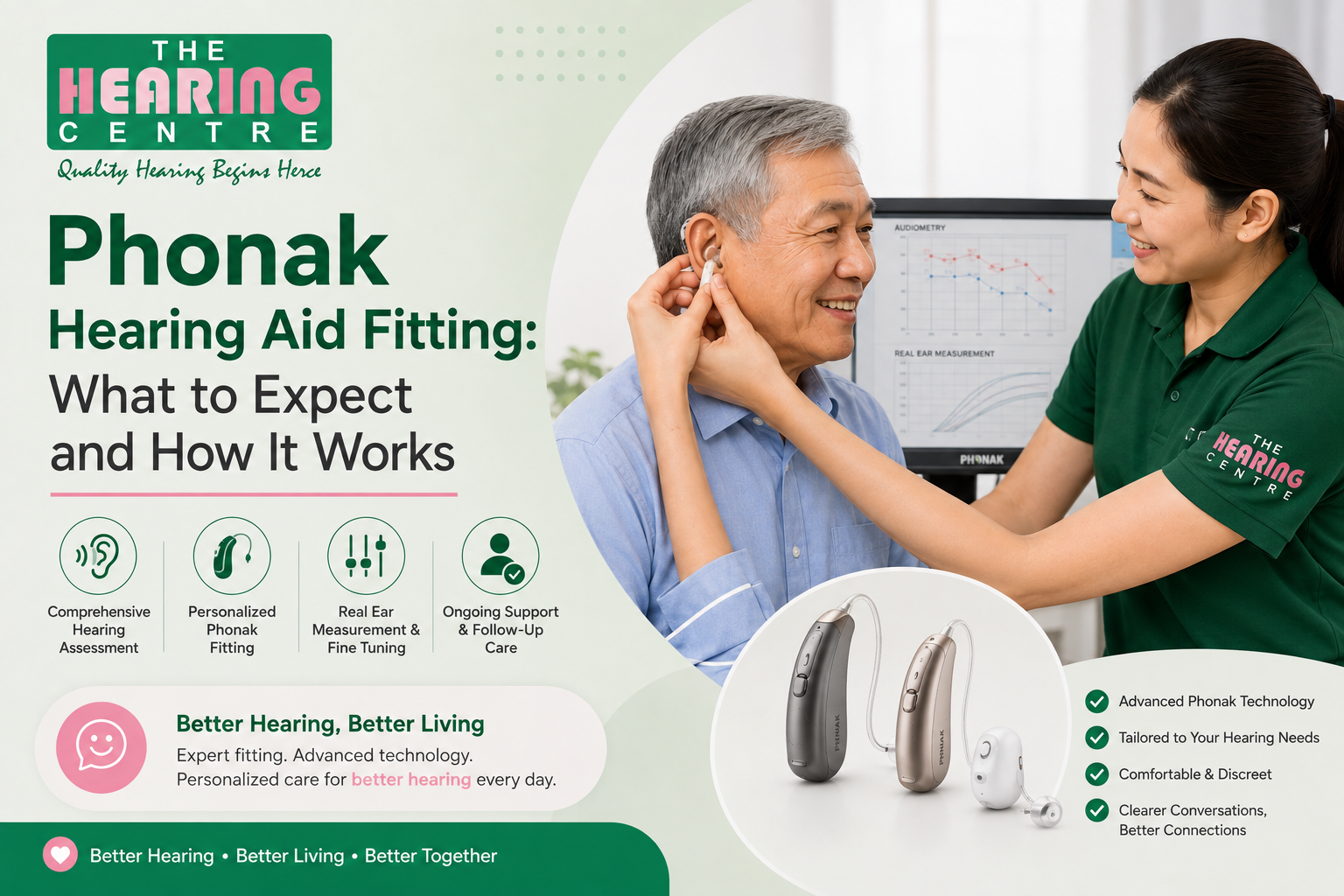
Real Ear Measurement (REM) is the gold-standard verification method used by audiologists to confirm that a hearing aid is actually delivering the right amplification at each frequency for your individual ears. Two people can have identical audiograms and completely different ear canal shapes — REM is what accounts for that difference and makes the fitting personal rather than generic.
Modern fitting software now incorporates machine learning algorithms that can predict optimal settings based on your lifestyle, listening preferences, and hearing loss pattern — resulting in better first-time fits and fewer follow-up adjustments.
Features That Are Often Overlooked (But Shouldn’t Be)
Everyone focuses on AI, Bluetooth, rechargeability. Understandable — those are the headline features. But a few things get quietly skipped over and shouldn’t be:
Telecoil (T-Coil): A small coil inside the hearing aid picking up magnetic signals from loop systems installed in cinemas, theatres, and public buildings. In compatible venues, the audio comes through dramatically cleaner — directly to your hearing aids, no background noise mixed in.
Number of Frequency Bands: More bands means more precise tuning. A 24-band equalizer lets an audiologist adjust amplification across a far wider frequency range than a 6 or 8-band system allows. For anyone with a complex or uneven hearing loss profile, this distinction matters more than most people realise.
Custom Earmolds: Hearing aids usually ship with generic silicone domes. Custom earmolds — made from a physical impression of your actual ear canal — can change how a device feels and sounds dramatically. There are people who went from hating their hearing aids to genuinely loving them after switching to a custom earmold. That’s not an exaggeration.
Ear-to-Ear Synchronization: Change a setting on one hearing aid — volume, program — and both update instantly. Small thing. Makes daily use noticeably less annoying over time.
Is the Most Expensive Hearing Aid Always the Best?
No. Straightforwardly, no.
Don’t build your decision around AI feature lists alone. Start with comfort, real-world sound quality, and the quality of professional support behind the fitting. The technology is impressive genuinely impressive but it doesn’t change what matters most for every single person wearing one.
The right hearing aid fits your specific hearing loss. Sits comfortably in or behind your ear across a full day. Matches how you actually live. And gets programmed correctly by a qualified audiologist who knows what they’re doing. A mid-range device fitted properly by someone experienced will beat an expensive premium device fitted poorly — in real life, every time.
Frequently Asked Questions:
Noise reduction and speech clarity in difficult environments — because that’s where hearing loss causes the most daily difficulty. AI processing and directional microphones are the core technologies driving this.
Yes, genuinely. AI hearing aids outperform traditional fixed-program devices in noisy places, reduce listening fatigue noticeably, and adapt to changing situations far more naturally. The gap is most obvious in busy social environments where older devices would simply struggle.
It streams audio directly from your smartphone, TV, tablet, or computer into your hearing aids — calls, music, videos, all at the right volume for your hearing. No earphones needed. No phone pressed awkwardly against your ear.
Most premium rechargeable models deliver 16–24 hours from a full overnight charge, including streaming time. Drop them in the charging case before bed and they’re ready each morning.
It’s a clinical verification step where a probe microphone placed in your ear canal confirms the hearing aid is delivering the correct amplification for your specific hearing loss — not just a close approximation. The most reliable way to know the device is actually working as intended for your ears.
Many do. Built-in tinnitus masking features generate soft sounds that reduce how prominently the ringing registers in your perception. Combined with hearing rehabilitation, this can meaningfully improve daily quality of life.
An emerging Bluetooth standard that allows hearing aids to connect to audio broadcast systems in public venues — cinemas, airports, conference rooms — receiving audio directly without background noise interference.
The highest rating for dust and water resistance. The device handles dust, sweat, and everyday moisture reliably. Not designed for swimming — but Singapore’s humidity and the occasional rain? Not a problem.
AI-designed devices use machine learning during development to build better noise reduction algorithms — but the device itself doesn’t think on the fly while you’re wearing it. Real-time AI hearing aids actively process your actual environment using AI while you wear them, adjusting instantly as things change around you.
For people with active social lives, demanding work environments, or complex hearing needs — yes, the improvements in speech clarity and listening comfort are real and meaningful. For someone in quieter, simpler environments, the jump from mid-range to premium may not justify the cost difference.
Ready to explore what modern hearing aid technology & Features can do for you? Book a comprehensive hearing evaluation with our team today.