TL;DR
- Cochlear implant infections are rare. Roughly 2 to 6 percent of cases. But they need quick attention when they show up.
- Watch for redness, swelling, pain, discharge, or fever near the implant. Any of that means call your doctor.
- Cochlear implant infection treatment usually starts with antibiotics. Worse cases might need drainage, hospital care, or pulling the device out for a while.
- Left alone, infections can spread and turn into meningitis. That’s exactly why speed matters here.
- The Hearing Centre in Singapore works with ENT specialists to help you keep an eye on your implant and catch trouble early.
Getting a cochlear implant changes how you hear the world. But like any surgery, it comes with some risk. Infection is the one people worry about most, and fair enough. It doesn’t happen often, but when it does, sitting on it is never the move. Here’s what actually causes these infections, how to catch one early, and what cochlear implant infection treatment actually looks like at each stage.
What Is a Cochlear Implant?
A cochlear implant is built for people with severe to profound hearing loss. Unlike a hearing aid, which just makes sound louder, it skips the damaged part of the ear entirely and sends signals straight to the auditory nerve.
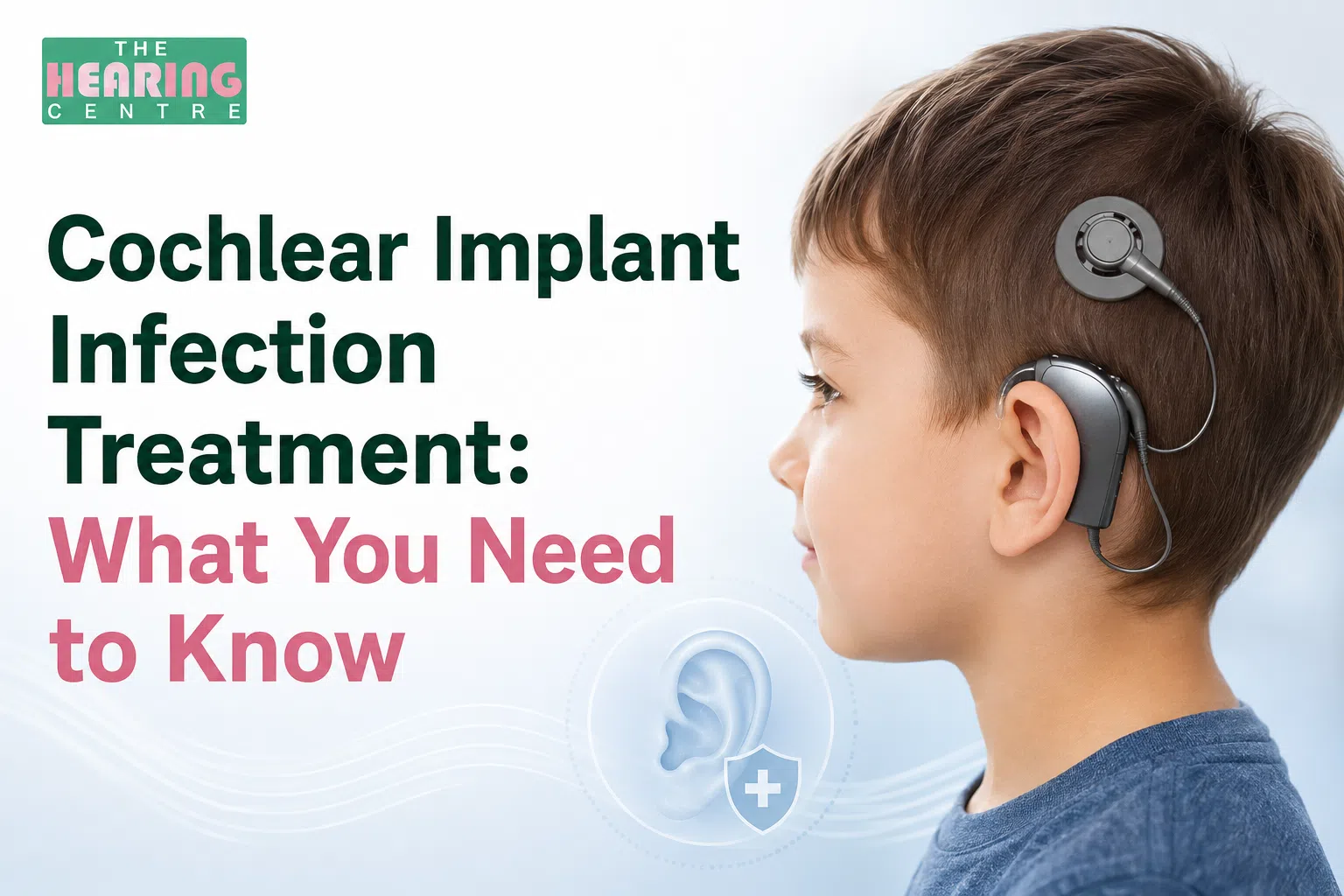
Two parts make it up. The external piece sits behind your ear, holding a microphone, a speech processor, and a transmitter. The internal piece gets placed surgically under the skin and into the cochlea itself. Our guide on what a cochlear implant actually is goes into more detail on how it all works.
Most people do fine with their implant long term. But the surgery, like any surgery, carries a small infection risk afterward.
How Common Are Cochlear Implant Infections?
Not very. Research puts the rate somewhere between 2 and 6 percent, depending on surgical technique, aftercare, and a person’s general health.
Infections can show up at different times.
- Within the first few weeks after surgery.
- Several months later.
- In rare cases, even years down the line.
Good news though, most infections respond well to cochlear implant infection treatment when caught early. Left alone, they can lead to real problems, device failure, bone damage, sometimes needing the implant removed altogether. The Hearing Centre sees this play out often, patients who act fast almost always have an easier time of it.
What Causes Infection After Implant Surgery?
A few things tend to be behind these infections.
Cause | What Happens |
Surgical site contamination | Bacteria gets in during surgery, even in a sterile setting |
Poor wound healing | Diabetes, weak immunity, other conditions slow healing and raise risk |
External trauma | Bumps, falls, or pressure on the site can disrupt healing |
Improper aftercare | Not keeping the wound clean and dry like instructed |
Middle ear infections | Especially in kids, untreated ear infections spread toward the implant |
Mostly it comes down to basic aftercare and being a bit careful in the weeks after surgery.
Signs and Symptoms of a Cochlear Implant Infection
Knowing the early signs matters a lot. Watch for redness or swelling near the implant. Pain or tenderness that won’t settle. Warmth in the surgical area. Discharge or pus from the wound. Fever or chills. Hearing changes or discomfort with the device. Headache or dizziness, especially in worse cases.
Notice any of this? Get checked right away. Don’t wait to see if it clears up.
How to Treat a Cochlear Implant Infection
Cochlear implant infection treatment depends on how bad it is and how early it gets caught. Roughly, it goes like this.
- Examination and diagnosis. Doctors check the site, maybe order blood work, wound cultures, or a CT scan. ABR and ASSR testing can help check for hearing changes too.
- Antibiotic therapy. Mild infections usually respond to oral or IV antibiotics, picked based on the bacteria involved.
- Wound care and drainage. Fluid built up under the skin? Minor drainage might be needed, plus keeping things clean and dry.
- Hospitalisation for severe cases. Infections reaching the bone, mastoiditis, or hitting the implant device directly sometimes need hospital care and closer watching.
- Surgical revision or removal. Antibiotics not working? The implant might need to come out temporarily until things clear up.
Most cases get handled at step one or two. It’s the delayed ones that tend to escalate.
Cochlear Implant Infection and Meningitis Risk
Worth taking seriously, this part. An untreated infection around a cochlear implant can, in rare cases, spread and turn into meningitis, a serious infection hitting the brain and spinal cord.
That’s why doctors repeatedly recommend the pneumococcal vaccine before cochlear implant surgery, since it lowers this specific danger. Vaccination is typically arranged through your ENT team or GP in the weeks leading up to surgery, so it’s worth raising early during your pre-surgical work-up rather than leaving it to the last minute. If you or your child has a cochlear implant and gets a fever with no clear cause, plus symptoms like a stiff neck, bad headache, or vomiting, treat it as important. Get checked instantly; don’t delay around.
Cochlear Surgery Complications Beyond Infection
Infection gets the majority of the attention, but a few other complications are quality knowing too.
- Facial nerve injury is unusual but possible, given how near the nerve settles to the surgical site.
- Balance issues or vertigo can occur briefly after surgery.
- Tinnitus, ringing in the ears, sometimes shows up or gets worse after transplant.
- Device malfunction happens occasionally and might need hearing aid repairs to sort out.
- Cerebrospinal fluid leak is uncommon but serious, normally needing further surgery.
Catching any of these early really shifts how things turn out long term.
Long-Term Impact of Untreated Implant Infection
Skip treatment for an infection after implant surgery, and it can lead to loss of implant function, needing the device removed, permanent hearing loss, or in very rare cases, the infection spreading toward the skull or brain.
Catching things early and treating them properly cuts these risks down a lot.
Prevention Tips
A few habits genuinely lower your infection risk after implant surgery, and The Hearing Centre’s audiologists go through these with every patient we support post-surgery.
- Follow post-surgical instructions carefully.,
- keep the wound pure clean and dry, avoid moving it excessively.
- Skip submerging your head in water, pools or bathtubs before your doctor gives the green light.
- Report redness, swelling, or fever soon rather than waiting.
- Complete the full course of any prescribed antibiotics, even once you feel fine.
- Keep normal follow-up appointments so your audiologist or ENT can catch anything early.
- Prevent bumping or pressing the implant site, specifically in the first few weeks.
Continuing pure tone audiometry also helps track hearing show status after surgery, split up from infection monitoring.
Pediatric Cochlear Implant Infections
Kids get ear infections more repeatedly than adults, and those can sometimes extend near the implant site. Parents need to watch for
- tugging at the ear,
- crying or unusual irritability,
- fever, or
- discharge from the ear.
Routine checkups and tympanometry help catch essential issues before they turn into something bigger.
When to See a Specialist
Get checked if you notice signs of infection around the implant, a change in hearing performance, pain or swelling at the site, or fever showing up after surgery with no clear cause.
Don’t wait this one out. Acting early makes cochlear implant infection treatment easier and recovery smoother.
Where to Get Help in Singapore
At The Hearing Centre, we work closely with ENT specialists across Singapore to support patients through cochlear implant infection treatment and recovery. Surgery and antibiotics come from your ENT team. The Hearing Centre helps monitor hearing performance through diagnostic testing and ongoing device support once the medical side is handled.
Still deciding between a cochlear implant and a hearing aid? Our guide on cochlear implant vs hearing aid breaks down how that decision usually gets made, and our piece on cochlear implant cost covers what to expect financially. For general support with hearing aids singapore, The Hearing Centre is a good place to start no matter where you are in your hearing journey.
Final Thoughts
Cochlear implants genuinely change how people experience sound. But infection is a real risk worth understanding, not ignoring. Most cases respond well to cochlear implant infection treatment when caught early, and the steps to prevent one are fairly simple. Notice a warning sign? Don’t wait around hoping it clears up on its own. Reach out to your ENT specialist right away, and lean on The Hearing Centre for ongoing hearing support once the medical side is under control.
Frequently Asked Questions
Look for swelling, redness, discharge, pain, or fever around the implant site. Any sudden change in hearing should also prompt a check-up.
Yes, in most mild to moderate cases. Antibiotics and proper wound care can clear the infection without needing to remove the implant.
Depends on severity. Anywhere from a few days to several weeks. More serious cases might need hospitalisation.
Yes, mostly. Following post-op instructions, keeping the site clean, and attending follow-up visits are the biggest factors.
Somewhere between 2 and 6 percent, based on surgical technique, aftercare, and individual health factors.
In rare cases, yes, if left untreated. That’s why doctors often recommend vaccination before surgery and urge quick action if fever or neurological symptoms show up.
A bit, mainly because middle ear infections are more common in kids and can spread toward the implant site if untreated.
Most cases start with a clinical exam and antibiotics. Worse infections might need drainage, hospitalisation, or temporary device removal.
Treatment itself comes from an ENT specialist. The Hearing Centre supports ongoing hearing monitoring and device care alongside that medical treatment.
Could happen within the first few weeks, several months later, or in rare cases, years after the original surgery.
Not necessarily. Infections can happen even with careful aftercare, since surgical-site factors, individual healing, and general health all play a role. Following aftercare instructions lowers the risk, but it doesn’t guarantee it won’t happen — what matters most is catching it early and getting treated promptly.