
TL;DR: Hearing Aid Benefits do a lot more than help you hear louder sounds. They help you follow conversations again, feel less wiped out by the end of the day, stay connected to people, and just feel more like yourself. Wait too long, and the adjustment gets harder. At The Hearing Centre, our audiologists fit the device to you, your hearing and your actual life, not just a number on a chart.
What Hearing Aid Benefits Actually Do
A hearing aid picks up sound through a tiny microphone, processes it, then sends it into your ear through a speaker. That’s the short version.
But modern devices do way more than just turn the volume up.
- They separate speech from background noise.
- They adjust as your surroundings change.
- They can even get set to boost the exact sounds you struggle with, sharp consonants, softer voices, whatever it is for you.
A few styles you’ll run into:
Style | Where It Sits | Best For |
Behind-the-Ear (BTE) | Behind the ear | Mild to profound loss, all ages |
Receiver-in-Canal (RIC) | Behind ear, receiver in canal | Mild to severe, natural sound |
In-the-Ear (ITE) | In outer ear | Easy handling, moderate loss |
In-the-Canal (ITC) | Partly in canal | Discreet, mild to moderate |
Completely-in-Canal (CIC) | Deep in canal | Most discreet option |
The Hearing Centre carries Phonak, Signia, Starkey, and ReSound, Oticon, and Rexton. Different tech, different styles, different budgets.
1. You Can Actually Follow Conversations Again
This is the one people bring up most. Not the tech. Not the features. Just sitting at dinner and following what’s being said without it feeling like work.
Hearing loss usually hits consonants first. /S/, /F/, /Th/, /K/, the sounds that actually carry meaning. So you hear something, but can’t always tell what. You guess based on context instead. Guessing takes energy.
A few things that change once hearing aids come into the picture.
- Following group conversations, not just one-on-one ones.
- Catching words the first time instead of the third.
- Keeping up in noisy spots, hawker centres, restaurants, open offices.
- Not needing the TV loud enough that everyone else complains.
The Hearing Centre sets up every device around your actual hearing test, not some generic setting. Matters a lot, since two people with the exact same degree of hearing loss can have totally different hearing profiles underneath.
2. Less Listening Fatigue
Catches people off guard, this one. They don’t realise how tired hearing loss made them until suddenly they’re not tired anymore.
When the brain isn’t getting clear sound, it works overtime filling gaps. Lip reading, context, facial expressions, memory, all firing at once, all day. That takes real effort. Drains you.
Get hearing aids in, and the brain finally gets clearer sound. Doesn’t have to work as hard. People say they feel less worn out after busy days, more able to focus, more actually present in conversations instead of scrambling just to keep up.
3. Better Hearing in Noisy Environments
Older hearing aids just made everything louder, background noise included. Newer ones are smarter than that.
- Directional microphones focus on whoever’s in front of you, the person you’re actually talking to, while turning down sound from the sides and behind.
- Noise reduction features pick out and soften background sound.
- Some devices shift automatically the second you walk from a quiet room into a busy one.
Matters a lot day to day here. MRT stations, hawker centres, open-plan offices, these used to wear people out completely. Right device, and they get a lot more manageable.
4. Real Mental Health Benefits
Untreated hearing loss and mental health connect in ways that get overlooked a lot.
Can’t follow conversations, and you start avoiding situations where you’ll struggle. Social gatherings feel stressful. Work meetings feel risky. Phone calls become something to dread. Over time, that avoidance quietly turns into isolation.
Research links untreated hearing loss to higher rates of depression and anxiety. People feel embarrassed asking others to repeat themselves. Feel like a burden. Stop speaking up in conversations because they’re not sure what’s actually being said.
A few shifts people notice on the mental health side.
- Less anxiety around social situations.
- Less isolation, less embarrassment.
- More confidence in everyday conversations.
- Better mood, day to day.
A proper pure tone audiometry test is where it starts. Once the hearing loss gets understood and treated, the mental health side often shifts too.
5. Brain Health and Cognitive Benefits
Real research behind this one. Untreated hearing loss links to faster cognitive decline. The brain regions handling sound and memory overlap quite a bit, so less sound coming in means those areas get used less.
Work out of Johns Hopkins found people with untreated hearing loss developed dementia at a higher rate than those who got help. Wearing hearing aids keeps the brain engaged with sound.
Doesn’t mean hearing aids prevent dementia outright. But treating hearing loss is genuinely part of looking after your brain long term. Worth taking seriously.
If tinnitus is part of the picture too, The Hearing Centre offers tinnitus treatment in Singapore, since the two often show up together.
6. Better Safety and Environmental Awareness
Hearing is a safety sense, whether people think of it that way or not. You hear a car before you see it. Someone calling your name across a car park. A smoke alarm, a kettle, a dog barking before it gets too close.
People with hearing loss miss these things a lot. Not just inconvenient, either. Genuinely unsafe, especially for elderly people living alone or anyone navigating busy streets and stations.
Hearing aids sharpen awareness of what’s around you.
- Catching warning sounds faster.
- Reacting to what’s around, not just what’s directly ahead.
- May help support fall prevention in seniors as spatial awareness improves
For older patients, The Hearing Centre fits hearing aids for senior citizens with ease of use built in from the start.
7. Work Performance
Hearing loss messes with work in ways that are easy to underestimate. Missing a key point in a meeting. Mishearing an instruction. Needing a colleague to repeat themselves yet again. Chips away at confidence over time, even when nobody says anything about it.
People in customer-facing roles feel this even more. Miss what someone says, your response suffers. Asking for repeats gets embarrassing after a while, even when it shouldn’t.
Hearing aids in, and work gets easier.
- Meetings are simpler to follow.
- Phone calls come through clearer.
- You stop second-guessing what was just said.
- Confidence climbs back up.
Matters at every career stage. Not just for older workers heading toward retirement.
8. Relationships Improve
Hearing loss affects the people around you too. Partners end up repeating things, raising their voice, working around situations their loved one finds hard. Gets tiring on both sides, quietly.
Once hearing gets treated, a lot of that tension lifts. Conversations feel more equal. You don’t miss the punchline of a story anymore. You get to actually be present instead of just managing your way through it.
People who get hearing aids often say their relationships improved. Not because anything changed between them and the other person. Because they could finally take part again.
9. Emotional Confidence
Stop being scared of misunderstanding people, and something shifts. You start speaking up more. Stop dodging situations that used to stress you out. Go to that dinner. Join that meeting. Pick up that call.
Hard to explain how much energy goes into managing hearing loss before treatment. Just as hard to explain how much of that energy comes back once it’s sorted.
Modern hearing aids are also way less noticeable than most people expect going in. Plenty of models sit fully inside the canal, not visible at all. Even behind-the-ear devices are far smaller now than what most people picture. Wearing one doesn’t have to be something anyone notices.
Hearing Aid Benefits by Age Group
Looks a bit different depending on where you are in life.
Children and teenagers
- Support language development and clearer speech.
- Improve focus and learning at school.
- Help with social confidence during growing years.
Working adults
- Better performance in meetings and phone-heavy work.
- Less listening fatigue over long days.
- More confidence in social and work situations.
Older adults and seniors
- Less isolation, less depression.
- Lower risk of cognitive decline.
- More independence and better awareness of surroundings.
What the Fitting Process Looks Like
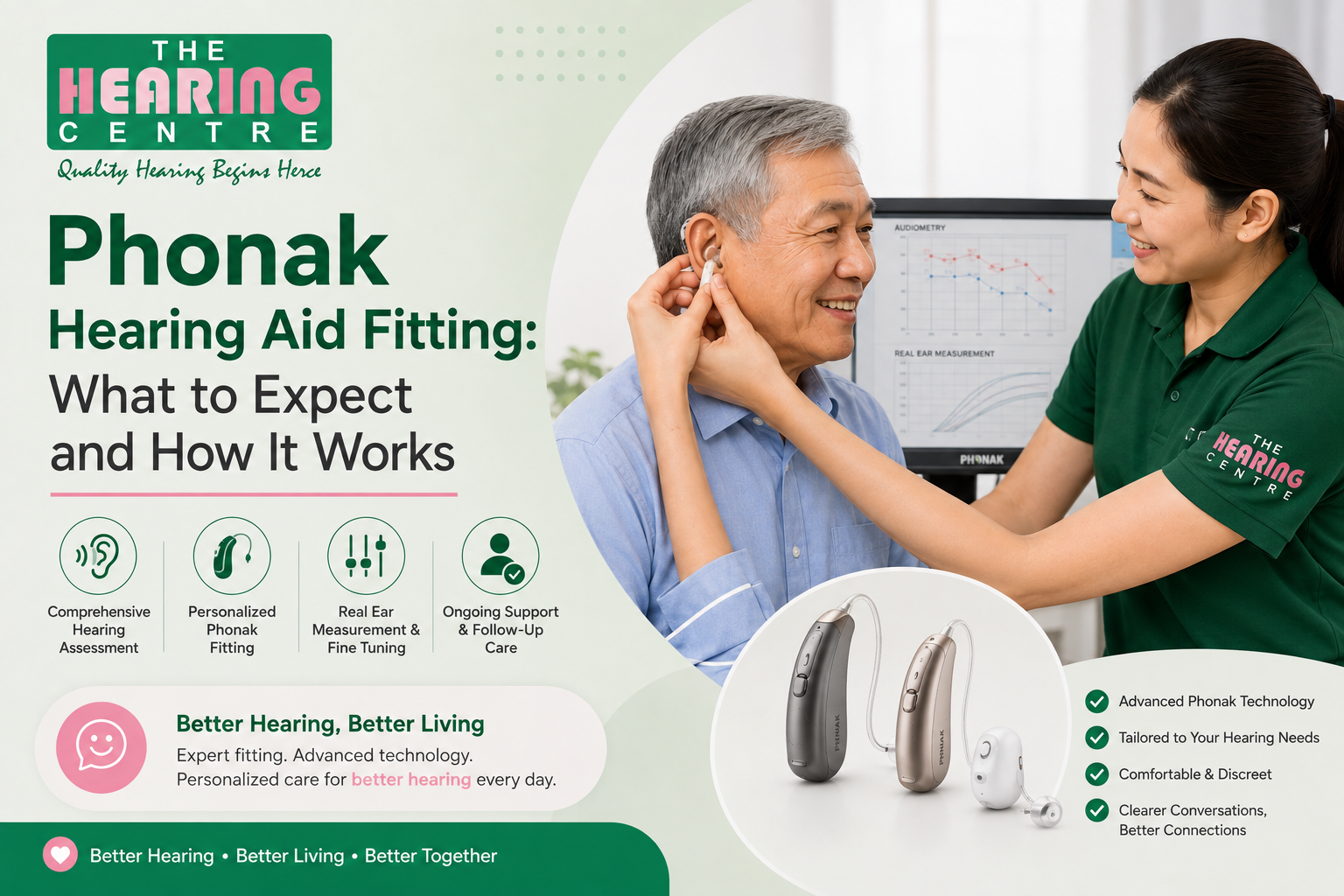
Getting hearing aids isn’t just grabbing one off a shelf. A proper fitting usually goes:
- Hearing test – pure tone audiometry, mapping your hearing across different frequencies
- Lifestyle check-in – where do you spend time, what situations are hardest for you
- Device selection – matching the right type and tech to your actual needs
- Fitting and programming – device gets set up around your specific results
- Follow-up – small tweaks over the first few weeks as you settle in
At The Hearing Centre, hearing aid repairs and adjustments are part of ongoing care, not a one-off thing. A device that worked fine at first might need tweaking a few months later, once your listening habits are better understood.
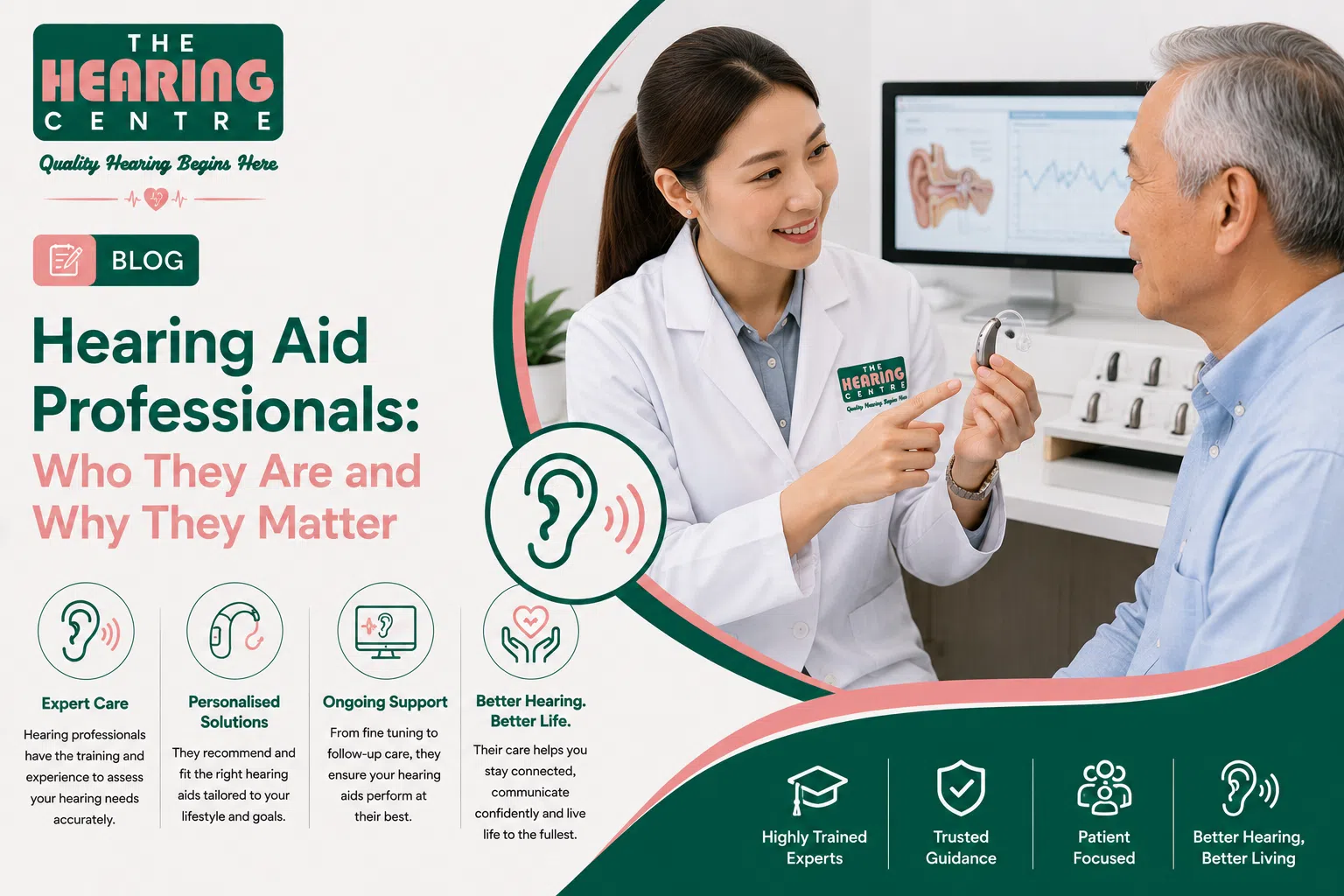
Our hearing specialist team sticks with you through all of this. Not just the first appointment, then silence.
Are There Any Downsides?
A few things worth knowing upfront.
- Adjustment takes time. Most people need a few weeks to get used to a hearing aid. Sounds you haven’t heard in a while can feel sharp at first. Normal. Settles down.
- They need a bit of care. Cleaning, battery changes or charging, occasional servicing. Not a lot, but not nothing either.
- They’re not a cure. Hearing aids don’t bring hearing back to exactly what it was. They improve it. Limits exist.
- Cost is real. Good devices cost money. Hearing aid government subsidies exist in Singapore for those who qualify, which helps take the edge off.
None of this is a reason to put treatment off. Just things worth knowing before you start.
Final Thoughts
Hearing aid benefits reach further than most people expect before they actually try one. Less fatigue. Better mental health. Stronger relationships. A safer day to day life. A brain that keeps working well for longer. More confidence in situations that used to feel like too much.
None of that happens on its own though. Starts with a proper hearing test and a fitting built around your specific needs, not some generic setting pulled off a shelf.
Been putting it off? Worth booking that first appointment. The Hearing Centre, known for hearing aids in Singapore, is MOH-approved and has helped thousands of patients hear better and live a bit more fully. Our audiologists stick with you from the first test right through to long-term follow-up and can also refer you to an ENT specialist if your hearing loss needs medical or surgical evaluation beyond hearing aids.
Frequently Asked Questions
Yes. They enhance speech clarity, reduce background noise, and help you follow conversations easily.
Modern hearing aids are designed for better hearing in noise, using noise-reduction and directional microphones.
They reduce isolation, improve mood, and lower the risk of depression and cognitive decline.
Absolutely. They support learning, socialisation, and development in children and teenagers.
While they don’t cure hearing loss, they greatly improve hearing and overall quality of life.
Yes, many models are small and discreet, including CIC (completely-in-canal) styles.
It depends on your hearing test results. Most people with hearing loss in both ears benefit from using two.
With proper care, hearing aids can last 5 to 7 years or more.
Some insurance plans and national healthcare schemes offer partial coverage. Check with your provider.
Visit The Hearing Centre Singapore for a complete hearing evaluation and expert guidance.