Weird thing about tinnitus most people who have it tired weeks thinking it would just go away. A bit of booming after a loud day, maybe some buzzing in one ear. No big deal. Except it didn’t go away.
If that sounds familiar, you’re in good company. A huge number of people in Singapore and globally live with some form of this. It’s not dangerous in itself, but it can wear you down over time if you don’t know what’s driving it or what to do about it.
Here’s a plain-language rundown — the causes, what it feels like, and what actually works for managing it.
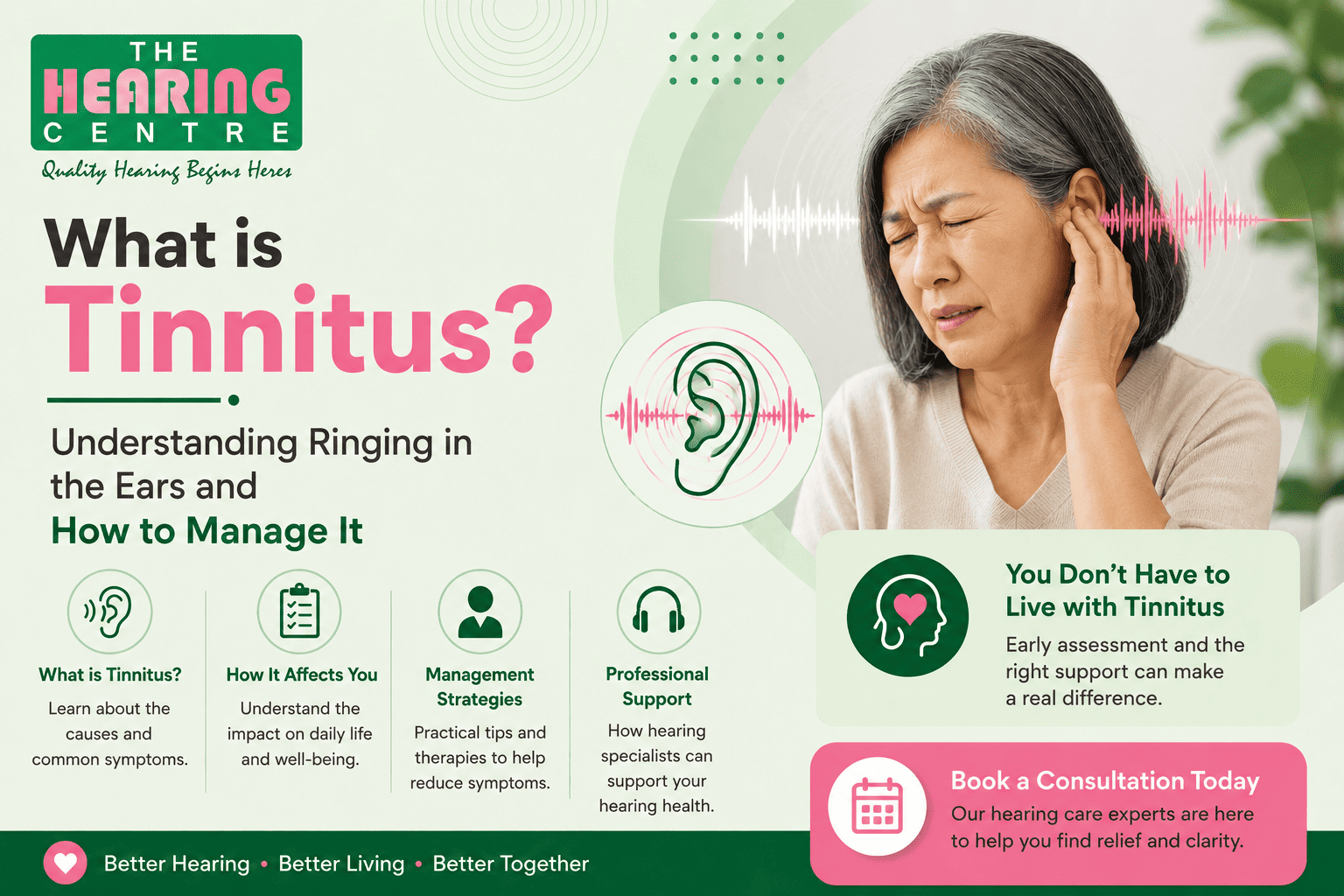
What is Tinnitus?
Put simply — it’s sound that comes from inside your auditory system, not from outside. No one else hears it. There’s no noise in the room. But you hear something.
What that something sounds like varies a lot:
Ringing in the ears — the version most people picture. High-pitched, tends to get louder when surroundings go quiet. Bedtime is when a lot of people first really notice it. For some it’s there all day, for others it comes and goes unpredictably.
Buzzing in the ear — lower in pitch than ringing, almost like a mild vibration or hum sitting underneath everything. People often describe this as harder to ignore because it feels physical, not just auditory.
Hissing or roaring — less common but really disruptive for those who have it. Some describe it like static on a radio, others like water moving through pipes. It doesn’t really let up.
There are two broad types worth knowing about. Subjective tinnitus is the most common only you can hear it. No instrument in the room picks it up, no one else is aware of it. Objective tinnitus is rare an examiner with the right equipment can actually detect the sound too. It usually points to something structural, like a blood vessel issue or muscle movement near the ear, and tends to be more directly treatable than the subjective kind.
How bad it gets depends entirely on the person. Plenty of people have mild tinnitus they barely think about. Others struggle with sleep, focus, even anxiety because the sound is just always there. It varies that much.
Pulsatile Tinnitus
Pulsatile tinnitus is its own type and deserves to be understood individually. The sound pulses in beat with your heartbeat not a stable ring but a whooshing or beating pattern. It’s one of the best common forms of goal tinnitus and often has a recognisable cause that’s treatable. Blood flow issues around the ear, high blood pressure, or blood vessel abnormalities are the usual culprits. If this matches what you’re experiencing, mention it; especially when you see someone, it shifts the direction of the investigation
Causes of Tinnitus
Tinnitus rarely shows up for no reason. Something is usually behind it, even if that something takes a while to pin down.
1. Hearing Loss
By far the most frequent trigger. When the inner ear is hurt by age, noise, or injury the brain sometimes compensates by producing its own sound signals. That’s the ringing you hear. Noise-induced hearing loss sits behind a large number of tinnitus cases, specifically in people whose work or culture involved years of loud atmospheres without proper ear security.
2. Ear Infections or Blockages
Earwax packed in deep, fluid behind the eardrum, a middle ear infection — any of these change pressure in the ear in ways that register as sound. If this turns out to be the cause, clearing the blockage or treating the infection often clears the tinnitus with it. Not always, but often enough to rule out early.
3. Loud Noise Exposure
Years of loud workplaces, daily headphone use at high volume, repeated concerts without ear protection — the hair cells inside the cochlea that absorb this damage don’t regenerate. Tinnitus is frequently one of the first signs damage has accumulated, sometimes before any actual hearing loss shows up on a test.
4. Medical Conditions
High blood pressure, diabetes, thyroid problems, circulatory issues — all linked to tinnitus. There’s a specific type called pulsatile tinnitus where the sound pulses in rhythm with your heartbeat. That kind almost always points to blood flow issues near the ear.
5. Medications
Many medications list tinnitus as a possible side effect. High-dose aspirin is one of the better-known ones. Some antibiotics, certain chemotherapy drugs, a few anti-inflammatories. If tinnitus activated shortly after a new formula, mention it to whoever prescribed it.
6. Stress and Lifestyle
Stress probably doesn’t generate tinnitus from scratch. But it makes existing tinnitus louder — and the louder tinnitus creates more stress, which makes it louder still. People who’ve had this a while often spot the pattern clearly. Hard week at work, worse ringing. Bad night’s sleep, same thing.
- Meniere’s Disease
An inner ear condition caused by abnormal fluid pressure. Tinnitus is often one of the first signs it’s developing, usually alongside episodes of vertigo and a feeling of fullness in the ear. Worth raising with an audiologist if your tinnitus comes with balance issues.
- Jaw and Neck Issues (TMJ)
Temporomandibular joint problems — the jaw joint — are a less obvious but real cause. Some people find their tinnitus shifts when they move their jaw or neck. If you notice this pattern, an ENT or dental specialist should assess the joint alongside your ears.
Symptoms of Tinnitus
The sound is the obvious one. But there’s more:
Persistent or intermittent ringing — high-pitched, more noticeable in quiet settings, gets in the way of focus and sleep more than people expect.
Buzzing or hissing sounds — lower and steadier than ringing, less like a tone and more like background noise that never quite switches off.
Sound sensitivity (hyperacusis) — ordinary noises start feeling too sharp or intense. Cutlery clattering, a car horn, someone raising their voice — things that shouldn’t be uncomfortable suddenly are. Not everyone with tinnitus gets this, but it’s fairly common.
Sleep problems and concentration dips — this is where the real wear happens. Tinnitus gets loudest when everything else goes quiet. Night after night of that builds into fatigue, which then feeds back and makes the symptoms feel heavier.
Ear pressure or fullness — a blocked sensation that doesn’t match any physical blockage. Shows up often alongside sound symptoms, particularly when fluid or infection is involved.
Tinnitus might be in one ear or both. The pitch and intensity shift — sometimes across a single day. An audiologist maps all of this before recommending anything.
Diagnosis of Tinnitus
Tinnitus that only appears in one ear and stays there gets specific attention. An MRI scan is typically ordered to rule out an acoustic neuroma, which is a benign tumour on the auditory nerve. It’s rare, but it’s one of the things audiologists and ENT specialists want to exclude before settling on a management plan.
Standard evaluation includes:
- Audiometry test — checks hearing across frequencies, establishes whether hearing loss is part of the picture
- Ear examination — physical check inside for wax, fluid, infection, or structural issues
- Medical history review — medications, noise exposure history, stress levels, other conditions
Seeing an audiologist in Singapore sooner is worthwhile. If there’s a fixable cause underneath — an infection, a blocked canal, blood pressure running high — catching it early leaves more options open.
Treatment Options for Tinnitus
No single treatment works for everyone. That’s just the reality of it. But the options below genuinely help, and most people find at least one that makes a meaningful difference.
1. Sound Therapy
Continuous background sound — white noise, rain recordings, a bedside fan, or a dedicated masking device — gives the brain something external to focus on. The internal ringing gets pushed to the background. It doesn’t disappear, but for many people this is what makes nights actually manageable.
2. Tinnitus Hearing Aids
When hearing loss is also present — which is common — hearing aids help in two ways at once. They restore proper external sound input, which makes the internal ringing relatively quieter by comparison, and many current models have built-in masking modes specifically for tinnitus management.
The guide on hearing aids and tinnitus gets into how this works practically and what features matter.
3. Cognitive Behavioral Therapy (CBT)
CBT doesn’t change the volume of the sound. It addresses the emotional response to it — the anxiety, the constant awareness, the frustration that accumulates. A lot of the suffering in chronic tinnitus is the mental response more than the sound itself. People who complete a proper CBT programme often say the tinnitus is the same, but it takes up far less mental space.
4. Lifestyle Adjustments
Reducing caffeine, alcohol, and nicotine helps some people noticeably. Protecting sleep quality and keeping stress under control makes a more consistent difference across the board. Tinnitus is sensitive to lifestyle — small changes done consistently do shift things.
5. Medical Treatments
When there’s a specific identifiable cause — an ear infection, elevated blood pressure, a jaw joint issue — treating it directly can reduce or in some cases resolve the tinnitus. Which is why diagnosis comes before treatment. For ongoing cases that don’t respond to other options, professional tinnitus treatment in Singapore is where to go next.
Tinnitus in Children and Adults
Children
Less common in kids, but it happens. Ear infections and congenital hearing conditions are the most frequent causes in younger age groups. Children often can’t describe what they’re experiencing — they might just seem distracted or complain their ear feels odd. Left unaddressed it can interfere with speech pickup and concentration at school. Early assessment and appropriate support makes a real difference at this age.
Adults
In adults the pattern is usually years of noise exposure or gradual age-related hearing changes. Sleep and sustained concentration take the biggest daily hit. When tinnitus goes unmanaged long-term, anxiety and low mood often follow. Getting on top of it before those secondary effects take hold is easier than dealing with everything together later.
Preventing Tinnitus
Protect your ears near loud noise. Earplugs at live events, proper hearing protection at noisy worksites. Loud noise damage doesn’t announce itself — it accumulates quietly until something is obviously wrong.
Keep headphone volume reasonable. If someone sitting next to you can hear your audio, it’s too loud. Regular breaks from in-ear listening help too.
Take stress and sleep seriously. Both affect tinnitus more directly than most people expect. A rough week at work often shows up as louder ringing within days. Managing these has real, measurable effects on symptoms.
Treat ear and health issues when they come up. Infections left to drag, unmanaged blood pressure, poorly controlled diabetes — all raise the risk of tinnitus developing or worsening. Dealing with them promptly is part of long-term hearing health.
Get regular hearing check-ups. Gradual hearing changes are easy to miss. By the time most people notice something is off, they’ve already lost more than they realise. Routine checks catch things early. Why regular hearing tests are important explains when to go and what to expect.
Frequently Asked Questions
Hearing loss is the most common driver. Ear infections, repeated noise exposure, certain medications, and conditions like high blood pressure also contribute regularly. Often it’s more than one thing at once.
No. They often coexist but they’re different things. Some tinnitus is temporary and clears on its own. Getting assessed is the only way to know which situation you’re actually in.
Yes. Ear infections are the main cause in younger kids. Worth addressing early — it can quietly affect their language development and attention at school.
Ringing is the most common description. But hissing, buzzing, humming, and a low roaring sound are all reported too. It varies quite a bit between people.
No universal one. Sound therapy, hearing aids, CBT, and lifestyle changes all reduce the impact meaningfully for most people. Managing it well is a realistic goal even when eliminating it completely isn’t.
Yes, pretty reliably. High-stress periods push symptoms up noticeably. Poor sleep does the same.
Through hearing tests, a physical ear examination, and a detailed look at your medical history. The focus is on finding the cause, not just confirming the symptom exists.
Nothing treats it directly. Managing whatever’s contributing to it — a health condition, a drug side effect — often helps though.
Sometimes. Tinnitus from a single loud event or a short ear infection often fades within days. If it’s lasted more than a few weeks, get it looked at properly rather than waiting it out.
Yes, especially when hearing loss is also present. They bring in external sound that makes the internal ringing less dominant. Many current devices have built-in tinnitus features. Can hearing aids help with tinnitus covers what to look for when choosing one.