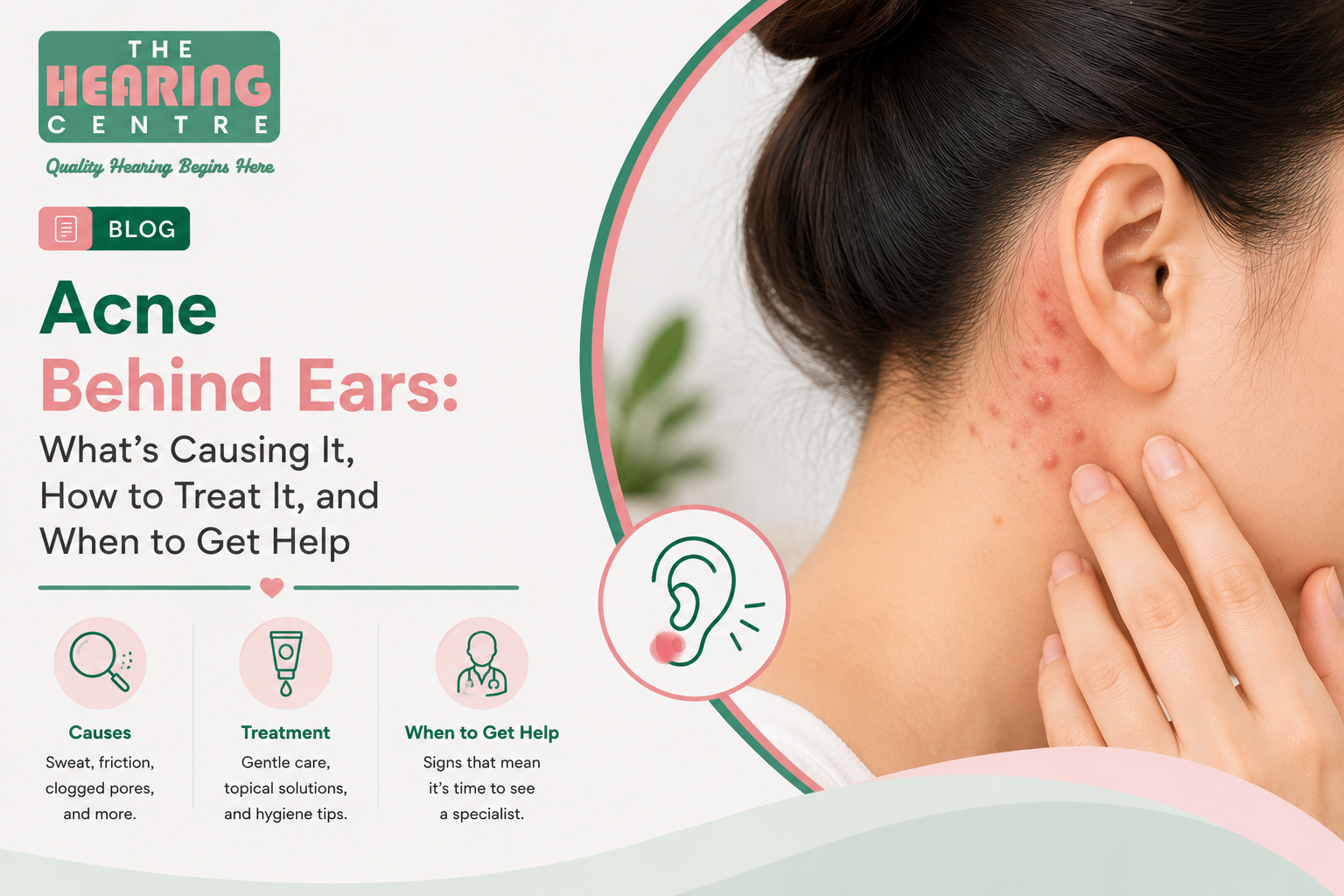
TLDR: Acne Behind Ears is blocked pores — from oil, sweat, dead skin, bacteria, hair products, glasses, hats, or hearing aids sitting against the skin all day. Most clear up with warm compresses and better hygiene in the area. Cystic bumps, anything that’s been there for weeks, or spots that keep coming back in the same place need a doctor. Don’t squeeze. The skin there is thin and close to cartilage and things escalate faster than they do on your face.
You don’t usually notice the skin behind your ear until something hurts. You reach back to adjust your glasses, or you’re washing your face and your fingers brush that spot, and there’s a tender lump sitting there that definitely wasn’t there yesterday.
Sometimes it’s one. Sometimes the same spot keeps flaring up every few weeks, and by the third or fourth time you’re genuinely frustrated because you can’t figure out what’s causing it.
The area behind the ear gets ignored in most people’s skincare routine. It’s easy to miss. But it has oil glands, hair follicles, and the same capacity for blocked pores as your forehead. Add Singapore’s heat, the fact that things constantly press against that area — glasses, hats, hearing aids, headphones — and you’ve got a spot that’s actually quite prone to breaking out.
At The Hearing Centre in Singapore, we deal with this more than you might expect, particularly from patients who wear hearing aids. Here’s what’s actually behind Acne Behind Ears and what to do about it.
What Is Acne Behind Ears?
It’s essentially the same thing as a pimple on your face. Oil, dead skin, sweat, and bacteria combine in a blocked pore and cause inflammation. What makes this location different is the skin structure — it’s thin, sits close to cartilage, and gets friction throughout the day from whatever’s resting against it.
That friction, combined with an area that’s easy to forget to clean, creates conditions where acne forms readily and tends to escalate faster than it would on your cheek.
Types of Acne Behind Ears
Whiteheads are small, closed bumps — blocked pores where nothing has opened at the surface yet. Usually painless, often barely visible, and they tend to clear without much intervention.
Blackheads are open comedones where the blocked material has oxidised and turned dark. Not dirt — just the chemical reaction of sebum meeting air. Painless but stubborn.
Papules are those small, red raised bumps that sting when you touch them. No pus head yet, just inflammation.
Pustules are the classic pimple — red base, white or yellowish head. More obvious and uncomfortable but often easier to resolve once they drain naturally.
Nodules and cystic acne sit deep under the skin with no visible head. Hard, painful, and they hang around for weeks. The ones people feel before they see. Behind the ear specifically, cystic spots can feel alarming because the area is so narrow — there’s nowhere for the pressure to go.
Sebaceous cysts are different from acne entirely. Slow-growing, smooth, firm lumps that don’t really hurt unless they get infected. They don’t go away on their own and they need proper medical assessment, especially if they’ve been there for months.
What’s Actually Causing It
There’s almost always a specific reason acne forms behind the ear rather than somewhere else. Finding that reason is what stops it coming back.
Oil and sweat sitting on the skin. The skin here produces sebum like everywhere else. In Singapore’s humidity, that area stays warm and damp for long stretches — especially after commutes, workouts, or just being outside. Oil and sweat left sitting against skin for hours is a reliable recipe for clogged pores.
Hair products. This is probably the most underestimated trigger. Shampoos, conditioners, dry shampoo, hair oils, serums, and sprays all run down the back of the neck and behind the ears — during showering and during application. Ingredients that work beautifully for your hair can sit in those pores and cause recurring breakouts. If you use leave-in products and can’t explain why your ear acne keeps coming back, this is worth looking at.
Glasses and sunglasses. The arm of your glasses rests on that exact piece of skin all day. Pressure, friction, trapped sweat. If the acne behind your ear is on one side only, or specifically at the contact point of your glasses, this is almost certainly the cause.
Hats, headbands, and helmets. Anything that sits against the ears traps heat and pressure. Gym headbands are a particularly common culprit — they soak up sweat and hold it against the skin behind the ear for the whole workout.
Hormonal changes. Acne Behind Ears follows the same hormonal patterns as facial acne — puberty, menstrual cycles, pregnancy, stress-related cortisol spikes all push sebum production up. Breakouts that appear predictably around your period or during stressful stretches are usually hormonal rather than hygiene-related.
Touching the area. Hands carry bacteria. Every time you push your glasses up, adjust your earphones, scratch behind your ear, or hold your phone against it, you’re introducing bacteria to that skin. Most people don’t realise how frequently this happens until they start paying attention.
Hearing aid materials. Behind-the-ear hearing aids rest against this skin for most of the day. The device creates warmth, some moisture retention, and prolonged skin contact. If acne has started appearing in the exact spot your hearing aid rests, there’s a direct connection. Sometimes it’s hygiene — the device needs regular cleaning. Sometimes it’s a mild reaction to the material.
Eczema and skin conditions. People with eczema, psoriasis, or dermatitis frequently see flares behind the ear — it’s actually one of the common sites for these conditions. Compromised skin barrier means bacteria enter more easily and pore problems worsen.
Earwax and ear drainage. Occasionally, excess earwax or minor discharge from the ear can migrate to the skin just outside the canal and contribute to irritation nearby. If you’re dealing with skin issues behind the ear alongside anything feeling off inside the ear itself, it’s worth getting both assessed. Can an audiologist detect inner ear problems? Yes, and they can help piece together whether the two things are connected.
Symptoms to Look For
Surface-level whiteheads and blackheads are usually found by touch — a small bump when you wash your face or adjust your glasses. Barely noticeable until you’re looking for them.
Papules and pustules make themselves known. The area is tender, the bump is raised, and anything pressing on it is uncomfortable. Pustules often develop a visible head, which at least makes them easier to identify.
Nodular or cystic bumps are the ones that genuinely worry people. Hard, sitting deep under the skin, no visible head, painful when you sleep on that side or put on headphones. They can sit for weeks without appearing to change on the surface, which is exactly what makes them alarming.
If anything behind the ear is growing rapidly, feels very hot, is producing discharge with an unusual smell, or you have a fever alongside it — that’s past the point where home care is appropriate. Get it assessed.
Acne Behind Ears vs Sebaceous Cyst vs Boil
These get confused regularly because they all show up as bumps in roughly the same location.
Acne behind the ear develops quickly — a day or two — has a visible head when it matures, responds to standard treatment, and clears within a week or so.
A sebaceous cyst grows slowly over weeks or months. It’s smooth, firm, painless unless infected, and has no visible head. It doesn’t go away. If something has been sitting behind your ear for months and hasn’t really changed, it’s probably a cyst, not acne.
A boil is an intense bacterial infection. Deep, extremely painful, growing over several days, with the surrounding skin clearly red and warm. The pain is disproportionate to the size. Boils behind the ear often need antibiotics — home treatment alone usually isn’t enough.
Home Treatment That Actually Works
For ordinary pimples and whiteheads behind the ear, home care sorts most cases.
Warm compress, consistently. A clean cloth soaked in warm water, held against the spot for 10 to 15 minutes, three or four times a day. This is genuinely the most useful thing you can do. The heat draws blood to the area, helps the spot come to a head naturally, and reduces the pain. Simple, free, effective.
Wash the area daily. It sounds obvious but this area gets genuinely missed. Include behind your ears in your daily face-washing routine — gentle cleanser, fingertips, thorough rinse. That alone removes a significant amount of the oil and sweat buildup that causes the problem.
Topical treatment for surface spots. Benzoyl peroxide (2.5 to 5%) or salicylic acid applied with a cotton bud to the affected area helps surface-level breakouts. Keep it on the skin only, nowhere near the ear opening.
Paracetamol or ibuprofen for painful spots. Ibuprofen is particularly useful because it also reduces inflammation.
Don’t squeeze. Behind the ear has thin skin sitting directly over cartilage. Squeezing pushes bacteria into that tissue, dramatically worsens inflammation, and increases the risk of scarring. The temptation is understandable. Don’t.
Clean whatever’s touching the area. Glasses arms, earphone tips, hat bands — wipe them regularly with an antibacterial wipe. If you wear a hearing aid, clean it daily. These are often the things reintroducing bacteria to already-sensitive skin.
Acne Behind Ears and Hearing Aids
This is a connection most people aren’t aware of but that makes complete sense.
A behind-the-ear hearing aid sits against that skin for 12 or more hours daily. Warmth, moisture, prolonged contact — all the conditions that contribute to blocked pores and skin irritation. Earmold tubing or thin receiver wires also contact the skin. Day after day.
If recurring acne behind the ear started at roughly the same time as a new hearing aid, or appears specifically where the device rests, the connection is almost certainly direct. Clean the device daily with a dry cloth. Replace tubing and earmolds on the schedule your audiologist recommends. Store the device with a drying capsule overnight.
If you’re weighing device options and skin contact is a concern, comparing how different brands approach design is worth doing — our breakdown of Signia vs Philips hearing aids covers design differences that actually affect how the device sits against the ear.
And if you’re not sure yet whether you need a hearing aid at all, starting with how to know if you need a hearing aid makes more sense than jumping straight to brand comparisons.
Medical Treatment Options
When home care isn’t enough, or the acne is clearly deeper than surface-level, Singapore has good options.
Topical prescription treatments — a GP or dermatologist can prescribe retinoids or higher-strength topical antibiotics that reach deeper inflammation than over-the-counter products can manage.
Oral antibiotics — for inflamed, recurring acne that isn’t responding to topical treatment, a short course of doxycycline reduces the bacterial component driving breakouts.
Hormonal treatment — for women whose Acne Behind Ears tracks with their cycle, hormonal options address the underlying driver rather than just the surface symptoms.
Isotretinoin — for severe, persistent, or scarring acne that hasn’t responded to other approaches. Requires specialist supervision and regular monitoring, but highly effective.
Cortisone injections — for a single large, painful cystic spot, a direct cortisone injection by a doctor reduces inflammation within 24 to 48 hours. Genuinely useful for that one stubborn spot rather than a general breakout.
Sebaceous cyst removal — persistent, growing, or infected cysts need either a steroid injection to reduce inflammation or minor surgical excision under local anaesthetic.
When Ear Acne Connects to Something Inside the Ear
This doesn’t come up in most acne guides, but it’s worth knowing.
Occasionally, recurring skin issues near the ear coexist with something happening inside the ear — excess earwax migrating outward, minor discharge, or chronic moisture issues that affect both the canal and the surrounding skin. If your Acne Behind Ears comes alongside why your ear keeps popping, a feeling of fullness, or anything else that feels off inside the ear, those symptoms together are worth getting assessed properly rather than assuming they’re unrelated.
For hearing aids Singapore users especially, The Hearing Centre assesses both the hearing side and the ear environment in the same appointment. Recurring skin irritation around a hearing aid isn’t just a cosmetic nuisance — it can affect how the device fits and performs over time.
Prevention: Stopping It Coming Back
Wash behind your ears every day. Genuinely. Include it in your face wash routine. This one habit removes the buildup that causes most cases.
Rinse hair products thoroughly. When you rinse out shampoo and conditioner, make sure the water runs clean behind the ears too. Leave-in products and hair oils should be kept away from that area.
Clean your glasses frames. Weekly at minimum, more if you’re breaking out at that exact contact point. The arm of your glasses sits on that skin all day.
Keep earphones and headphones clean. Wipe tips and ear cups with an alcohol swab before each use. Over-ear headphones that cup the ear rather than pressing directly against the skin behind it might help if headphones are consistently a trigger.
Manage hearing aid hygiene. Daily wipe down, regular dome and tubing replacement, overnight drying. Not complicated but genuinely important.
Non-comedogenic products only for anything that might touch the skin near the ear — moisturiser, sunscreen, any skincare that runs down the face.
See a doctor early for cystic spots. The longer a nodular spot sits untreated, the higher the scarring risk. One cortisone injection in the first week beats three months of a lingering mark.
When to See a Doctor
Most surface-level acne behind the ear sorts itself out. These are the situations to stop waiting on:
The bump has been there for more than two weeks with no real change. It’s getting bigger over several days. The pain is genuinely intense. You have a fever alongside the ear skin issue. There’s unusual discharge with a bad smell. The bump is hard, smooth, and has been there for months — that’s a cyst, not a pimple. The same spot keeps coming back every few weeks despite consistent cleaning.
At The Hearing Centre across Singapore, our audiologists can assess both the skin area around the ear and the ear itself in the same appointment. If recurring acne behind the ear is connected to hearing aid use, ear canal issues, or anything else in that area, we work through it together rather than sending you to a separate clinic for each piece.
Frequently Asked Questions
Blocked pores from oil, sweat, dead skin, and bacteria — triggered most often by hair products, glasses friction, hat bands, hearing aids, earphones, hormonal shifts, and Singapore’s heat.
Surface spots usually aren’t. Cystic bumps, anything that’s been there for more than two weeks, infected spots, and lumps that have been present for months are worth getting properly assessed.
Warm compress three to four times daily, washing the area every day, topical benzoyl peroxide or salicylic acid for surface spots, and removing whatever’s triggering it. Don’t squeeze.
Yes. A device resting against that skin for 12+ hours daily creates warmth and moisture. Keeping the device clean and replacing worn components regularly significantly reduces this risk.
Surface spots, usually five to ten days with consistent care. Cystic spots take much longer — sometimes weeks — and benefit significantly from medical treatment rather than waiting.
No. Thin skin, close to cartilage, bacteria pushed deeper, faster escalation than on your face. Leave it.
Two weeks without improvement. Growing fast. Intense pain. Fever. Unusual smell or discharge. Hard smooth lump present for months. Same spot recurring repeatedly.
Absolutely. The arm resting against the skin all day creates friction, traps sweat, and introduces bacteria. If acne is specifically on the side where glasses contact the skin, that’s almost certainly the cause.