
TLDR: Some(Temporary)hearing loss can be reversed — earwax blockage, ear infections, and fluid in the middle ear often clear up fully with treatment. Sudden sensorineural hearing loss can partially recover if caught within 72 hours. Most permanent hearing loss — from age, noise damage, or inner ear problems — cannot be biologically reversed. What it can be is well-managed with modern hearing aids, cochlear implants, or bone-anchored devices. The sooner you act, the more options you have.
This is one of the questions our audiologists at The Hearing Centre hear most often. Someone notices their hearing has changed and wants to know — is this fixable, or is it gone for good?
The honest answer depends on what type of hearing loss it is and what caused it. Some types are completely reversible. Some can partially recover with the right treatment at the right time. And some are permanent — but even those can be managed far better than most people realise with today’s technology.
Here’s the straightforward version.
2 Types of Hearing Loss — and Why the Difference Matters
All hearing loss falls into one of two categories. Which one you have determines whether reversal is possible.
Conductive hearing loss happens when something physically blocks or disrupts sound getting through the outer or middle ear. The inner ear is fine — it’s just that sound can’t reach it properly. This type is often treatable, and many cases are fully reversible.
Sensorineural hearing loss happens when the hair cells in the inner ear (cochlea) or the auditory nerve are damaged. Hair cells don’t regenerate in humans. Once they’re gone, they don’t grow back. This type is usually permanent — though it can be managed well.
Mixed hearing loss is a combination of both. The conductive component may respond to treatment. The sensorineural component generally won’t.
Knowing which type you have is the whole game when it comes to answering the reversal question. That’s why a proper hearing test comes before any conversation about treatment.
What CAN Be Reversed
Earwax Blockage
This is the most common reversible cause of hearing loss. When wax builds up and presses against the eardrum, sound can’t pass through normally. Hearing drops, often noticeably, on the affected side.
Professional earwax removal — microsuction or irrigation at The Hearing Centre — clears the blockage and hearing typically returns immediately. Full, complete reversal. No device needed. This is why audiologists always check for earwax before concluding anything about permanent hearing loss.
Ear Infections
Middle ear infections cause fluid and inflammation that block sound transmission. As the infection clears with antibiotics, hearing usually returns. It can take a week or two after the infection resolves for full recovery, but in most uncomplicated cases it comes back completely.
Repeated untreated infections over years are a different story — they can cause lasting damage to the middle ear structures. Getting infections treated early protects long-term hearing.
Fluid in the Middle Ear (Glue Ear)
Common in children and not rare in adults. Fluid behind the eardrum — called otitis media with effusion or glue ear — creates a conductive hearing loss that usually clears on its own. For persistent cases, a small ventilation tube inserted by an ENT surgeon drains the fluid and hearing returns.
Perforated Eardrum
A torn eardrum causes temporary hearing loss in one ear. Small perforations often heal within a few weeks. Larger ones may need surgical repair — tympanoplasty — but hearing returns once the eardrum is intact again.
Otosclerosis
Abnormal bone growth in the middle ear causes progressive hearing loss. A surgical procedure called stapedectomy — replacing the affected bone with a prosthesis — can restore hearing significantly. One of the few cases where sensorineural-adjacent loss has a surgical fix.
Ototoxic Medication
In some cases, Some drugs — certain antibiotics, diuretics, chemotherapy agents — can cause hearing loss as a side effect. When the medication is stopped, hearing sometimes recovers partially or fully depending on how much damage occurred. Catching this early and flagging it to your doctor matters.
What Probably CAN’T Be Reversed (But Can Be Managed)
Age-Related Hearing Loss (Presbycusis)
Gradual hearing loss from ageing is caused by the natural wearing out of hair cells in the cochlea over decades. Currently, there is no medical treatment that regenerates those cells. Age-related hearing loss cannot be reversed.
What it can be is well-managed. Modern hearing aids from Phonak, Signia, Oticon, ReSound, Starkey, and Widex are genuinely sophisticated devices that restore meaningful hearing function for most people with age-related loss. A Singapore study found that using hearing devices reduces the risk of long-term cognitive decline by around 20%. That’s not a trivial benefit.
Noise-Induced Hearing Loss (Permanent)
Noise-induced hearing loss is caused by sound damaging the delicate hair cells in the inner ear. A single extremely loud event or years of noise exposure both cause this. The damage is permanent — hair cells that die from noise trauma don’t regenerate.
What can be done is stopping it from getting worse. Avoiding further noise exposure, using hearing protection, and treating what’s there with well-fitted hearing aids prevents additional decline. Signia and Phonak’s SmartSpeech technology BrainHearing approach both significantly improve speech clarity for people with noise-related high-frequency loss.
Sensorineural Hearing Loss from Illness or Genetics
Sensorineural hearing loss from viral infections, genetic conditions, or Meniere’s disease is generally permanent. The inner ear structures affected don’t repair themselves.
Management with hearing aids or cochlear implants — depending on severity — gives most people meaningful improvement in daily hearing function even when the underlying condition cannot be reversed.
The Special Case: Sudden Hearing Loss
Sudden sensorineural hearing loss deserves its own section because the time factor is critical.
Sudden hearing loss — a rapid hearing drop in one ear, often within hours, sometimes on waking — is treated as a medical emergency. Corticosteroids given within the first 72 hours significantly improve the chance of recovery. Some patients recover fully. Many recover partially. Those who wait a week or more before seeking help have significantly worse outcomes.
If you wake up with one ear sounding different from the previous day, or experience a sudden change during the day — go the same day, not next week. The window for treatment is short and closing.
What About Supplements, Acupuncture, and Natural Cures?
This comes up a lot and deserves a direct answer.
Supplements (vitamins A, C, E, magnesium, alpha-lipoic acid): No strong repeatable clinical evidence that any supplement reverses established hearing loss in humans. Some early research suggests certain antioxidants may reduce noise damage when taken before exposure, but that’s not the same as reversing existing loss.
Acupuncture: Hearing Partners, one of Singapore’s leading audiology groups, specifically notes that despite beliefs about tinnitus and circulation, there is no scientific evidence that acupuncture reverses hearing loss.
Stem cell clinics and “cure” clinics: Some clinics — particularly overseas — market stem cell treatments for hearing loss. Most of these are experimental, unproven in reliable clinical trials, and can be expensive. The Singapore regulatory environment takes a cautious position on unproven medical claims for good reason.
Sound therapy: Not a reversal approach but can help manage tinnitus and maintain auditory processing. Not the same as recovering lost hearing.
The honest position: if a treatment isn’t backed by peer-reviewed evidence and approved by relevant health authorities, treat the claims with real scepticism.
Emerging Treatments: What’s Coming
This is genuinely exciting territory, even if it’s not available in clinics yet.
Gene therapy for hearing loss is in clinical trials. Researchers at major institutions have successfully restored hearing in animals with genetic hearing loss by delivering corrected genes directly to the cochlea. A trial in 2023 in China showed a child with a specific genetic deafness regain measurable hearing after gene therapy. This is early but real.
Hair cell regeneration: Certain drug compounds are being investigated for their ability to stimulate the growth of new hair cells in the cochlea. Birds regenerate cochlear hair cells naturally — scientists are working out how to trigger the equivalent in humans.
Biological hearing implants: Still in early research, but cochlear prosthetics that interface more naturally with the auditory nerve are being developed.
None of these are available in Singapore clinics today. But the field is moving faster than it has at any point in history. Regular check-ins with your audiologist at The Hearing Centre keep you updated as options develop.
If It Can’t Be Reversed — What Actually Helps?
Most people asking whether hearing loss can be reversed are really asking a second question underneath: if it can’t be fixed, what can I do?
The answer is: more than most people think.
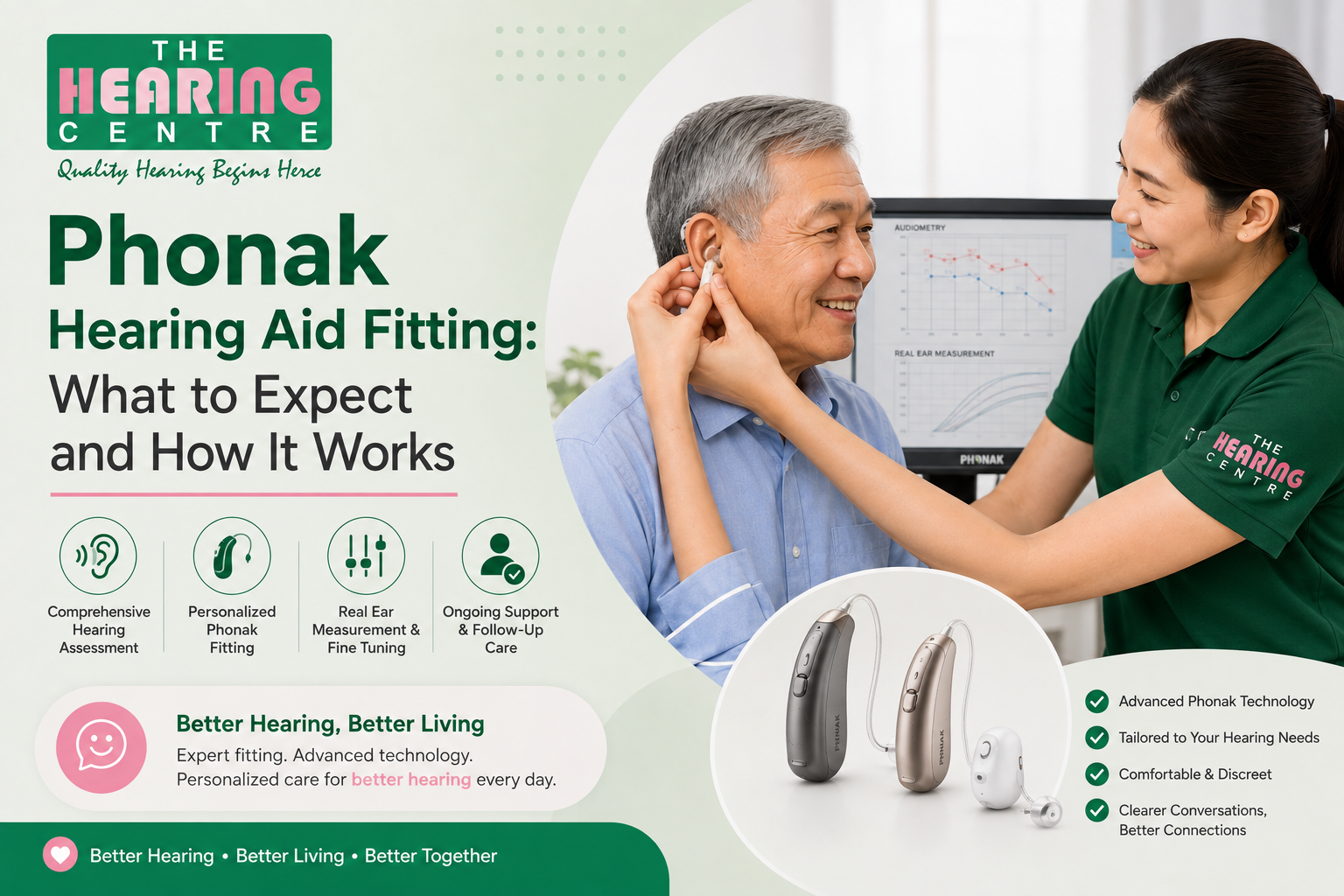
Hearing aids are the most common and most effective management tool for permanent hearing loss. Modern devices from Signia, Phonak, ReSound, Starkey, and use AI processing that makes a genuine difference in complex environments — noisy restaurants, group conversations, phone calls. These aren’t amplifiers that make everything louder. They’re sophisticated devices that selectively boost the frequencies you’re losing while managing background noise in real time.
For anyone navigating hearing aids Singapore options, The Hearing Centre carries all the major brands and matches devices to your specific audiogram rather than recommending the same product to everyone.
Cochlear implants are for severe to profound sensorineural hearing loss where hearing aids no longer provide enough benefit. They bypass the damaged cochlea entirely and stimulate the auditory nerve directly. Outcomes for adults who receive cochlear implants after years of hearing loss continue to improve as technology advances.
Bone-anchored hearing aids (BAHA) suit specific types of conductive hearing loss and single-sided deafness, bypassing the outer and middle ear entirely.
Why Early Action Matters Even for Permanent Loss
Even when hearing loss itself can’t be reversed, treating it early matters for reasons beyond just hearing.
A study cited by Amazing Hearing Group Singapore found that hearing device use reduces the risk of long-term cognitive decline by around 20%. The brain’s auditory cortex needs stimulation. When it doesn’t get it through untreated hearing loss, that processing capacity declines — and that decline is associated with increased dementia risk in older adults.
Beyond cognition, untreated hearing loss is consistently linked to social withdrawal, increased anxiety, depression, and reduced quality of life. None of these are small things.
Waiting until hearing loss is severe before doing anything about it is one of the most common and most consequential delays our audiologists see. The average person in Singapore waits around seven years between first noticing hearing changes and getting a proper hearing test. That’s seven years of the brain getting less auditory input than it needs.
Getting a Proper Assessment
The single most useful thing you can do if you’re wondering whether your hearing loss can be reversed is get a proper hearing test.
An audiogram tells you which type of hearing loss you have — conductive, sensorineural, or mixed. That determines what treatment options exist. Without it, everything is guesswork.
At The Hearing Centre, a full assessment covers pure tone audiometry, speech audiometry, tympanometry, and a clinical review that gives a complete picture of your hearing and what’s driving any changes.
Frequently Asked Questions
Some causes — earwax blockage, fluid, minor infections — can clear up naturally or with simple treatment. Sensorineural hearing loss from age or noise cannot be reversed naturally or medically with current treatments.
Sometimes, yes — if treated within 72 hours with corticosteroids. This is why sudden hearing loss in one ear needs same-day assessment, not watching and waiting.
No. Age-related hair cell loss in the cochlea is permanent with current medicine. It can be managed very effectively with modern hearing aids, but the underlying biology cannot currently be reversed.
Not currently. Noise-damaged hair cells do not regenerate. What can be done is stopping further damage with protection and managing existing loss with appropriate hearing devices.
No reliable clinical evidence supports supplements reversing established hearing loss. Some research suggests antioxidants may reduce future noise damage, but this is not the same as reversing existing hearing loss.
Depends on severity. Mild to moderate: well-fitted hearing aids from brands like Phonak, Signia, or Oticon. Severe to profound: cochlear implant assessment. Conductive or single-sided: bone-anchored hearing aid options.
Conductive causes — infections, fluid, blockages — often resolve with treatment. Sensorineural hearing loss in children from genetic or other causes is generally permanent, but early fitting with appropriate devices significantly improves speech and language development outcomes.