Getting told you have hearing Aid for mild hearing loss is a strange experience. For most people, it lands somewhere between “well, I kind of suspected” and “wait, really?” Because your hearing doesn’t feel dramatically bad. You’re not missing entire conversations. You’re just. catching less than you used to. Asking people to repeat themselves a bit more than feels comfortable. Finding that group settings leave you more tired than they should.
That’s what hearing aid for mild hearing loss actually looks like for most people in Singapore — not a sudden, dramatic change, but a slow, quiet shift that you keep finding ways to explain away.
This guide is for people at that exact point. Not sure whether to get a hearing aid. Not sure what the options even are. Not sure whether it’s worth the cost. The team at The Hearing Centre hears these questions constantly, so let’s go through them properly.
What Hearing Aid for mild hearing loss actually means day-to-day
Clinically, it sits between 21 and 40 decibels — the softer end of the hearing loss spectrum. In daily life though, those numbers don’t tell you much. What it tends to feel like is this: you can hear that people are talking, but catching every single word takes more effort than it used to. Soft voices, people speaking from across a room, conversations in noisy places — these are where the gaps show up first.
Singapore makes this harder than average. Think about where most people here spend their time. A busy kopitiam is running at 75 to 85 decibels on a normal day. MRT stations during morning rush hit similar levels.
Most offices in Singapore are open-plan, which means you’re working in a constant background of keyboard sounds, colleagues talking, the aircon, everything blending together. Even someone with normal hearing finds these environments tiring. For someone with hearing aid for mild hearing loss, the effort required to follow a conversation in these settings is meaningfully higher — and that adds up over the course of a day.
Around 1 in 6 people in Singapore live with some form of hearing loss, and that number has been growing faster than most people realise. Between 2013 and 2023, self-reported hearing loss among adults jumped from 1.3% to 9.2%. That’s not just more people getting tested. That’s a real increase, and mild hearing loss accounts for a large chunk of it.
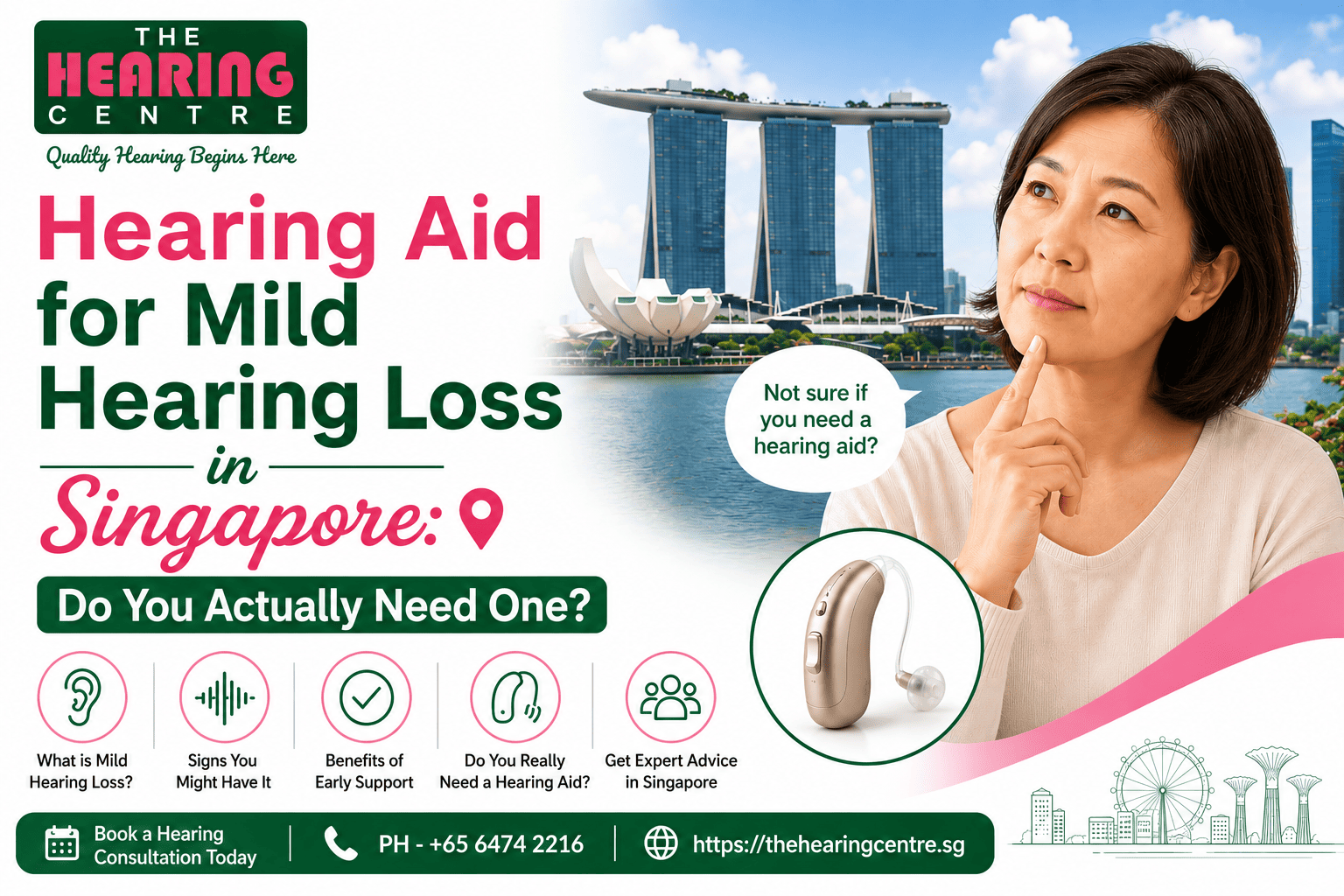
Do You Actually Need a Hearing Aid for Mild Hearing Loss?
Most people assume they’ll know when they need one — that there’ll be a clear point where hearing gets bad enough that it’s obvious. That’s not usually how it works.
The case for getting a hearing aid earlier is less about how bad the hearing loss is and more about what your brain is doing in the background. When you’re not receiving clear sound input, your brain doesn’t just passively accept the gap. It works overtime trying to fill it in — pulling from context, lip-reading without realising it, using memory of what words typically sound like.
That’s cognitive effort being spent every time you’re in a conversation. Research has linked sustained untreated hearing loss — even at mild levels — to faster cognitive decline and a higher risk of dementia over time. That’s not a scare tactic, it’s just what the studies consistently show.
People in Singapore wait an average of seven to ten years after noticing hearing difficulties before doing anything about it. The problem with waiting is that the brain adapts to functioning with reduced input. When you eventually do get a hearing aid, the adjustment takes longer — sometimes much longer — because the brain has to essentially relearn how to process fuller sound. Starting earlier means the adaptation is faster and more complete.
A hearing aid for mild hearing loss isn’t about being unable to manage without one. It’s about not spending the next decade making your brain work harder than it needs to. If you’re not sure whether your hearing has actually changed, a proper hearing test in Singapore is the right first step. Takes about an hour. Gives you actual data.
Why Singapore’s environment specifically matters here
A hearing aid that performs well in a quiet suburban environment doesn’t necessarily perform well in a hawker centre at lunchtime. The noise management features that matter most here are directional microphone systems and background noise suppression — the ability to focus on the voice directly in front of you while reducing the wall of sound coming from everywhere else. This is where the difference between a basic entry-level device and a mid-range one becomes very obvious, very quickly.
The humidity here is also a consideration. Singapore’s climate is genuinely tough on hearing aids — sweat and moisture can affect the electronics over time. Devices with higher IP ratings (water and dust resistance) last longer and require less maintenance in this climate. Rechargeable models tend to be more moisture-resistant than battery-operated ones because they have fewer openings.
These aren’t the kinds of things most people think to ask about when they walk into a clinic for the first time. But they make a practical difference to how well a device works in actual daily life here.
The types available — and which tends to suit hearing aid for mild hearing loss
There are a few main styles, and the right one depends on your audiogram, your lifestyle, and honestly, your personal preferences about comfort and visibility.
RIC (Receiver-in-Canal) is the most commonly fitted style for mild to moderate hearing loss in Singapore. The main body sits behind the ear — smaller than most people picture — with a thin wire running to a small speaker that sits in the ear canal. It’s the style that tends to offer the best combination of discretion, features, and sound quality at a reasonable size. Bluetooth connectivity, rechargeability, AI noise processing — all of this is available in RIC models. For most people with mild hearing loss who are living an active life in Singapore, this is where audiologists usually start the conversation.
CIC (Completely-in-Canal) sits entirely inside the ear canal. If visibility is your main concern and you’re in relatively quieter environments day-to-day, this works well for hearing aid for mild hearing loss. The tradeoff is that a smaller shell means fewer features — typically no Bluetooth, less noise processing, and shorter battery life. Some people find the tradeoff worthwhile. Others try it and realise they want the extra features more than they expected.
IIC (Invisible-in-Canal) goes even deeper into the canal and is about as discreet as hearing aids get. Similar feature limitations to CIC. Suits mild hearing loss well, but not every ear anatomy accommodates this fit — your audiologist will tell you during the fitting process whether it’s viable for your ears.
Mini BTE (Behind-the-Ear) sits behind the ear with a thin tube running into the canal. Slightly more visible than RIC but easier to handle, more durable, and often a better choice for people whose dexterity makes smaller devices fiddly. Also a sensible choice if there’s any expectation that hearing loss might progress — it has more room for more powerful processing.
Top Hearing Aid Brands Available in Singapore
Signia is one of the more popular choices for hearing aid for mild hearing loss, partly because of their Own Voice Processing technology. When you first wear a hearing aid, your own voice can sound unnatural — amplified and slightly odd. Signia’s OVP addresses this specifically, which makes the adjustment period more comfortable for a lot of first-time users. Their Silk IX is a good CIC option; the Pure Charge&Go IX covers the RIC end well.
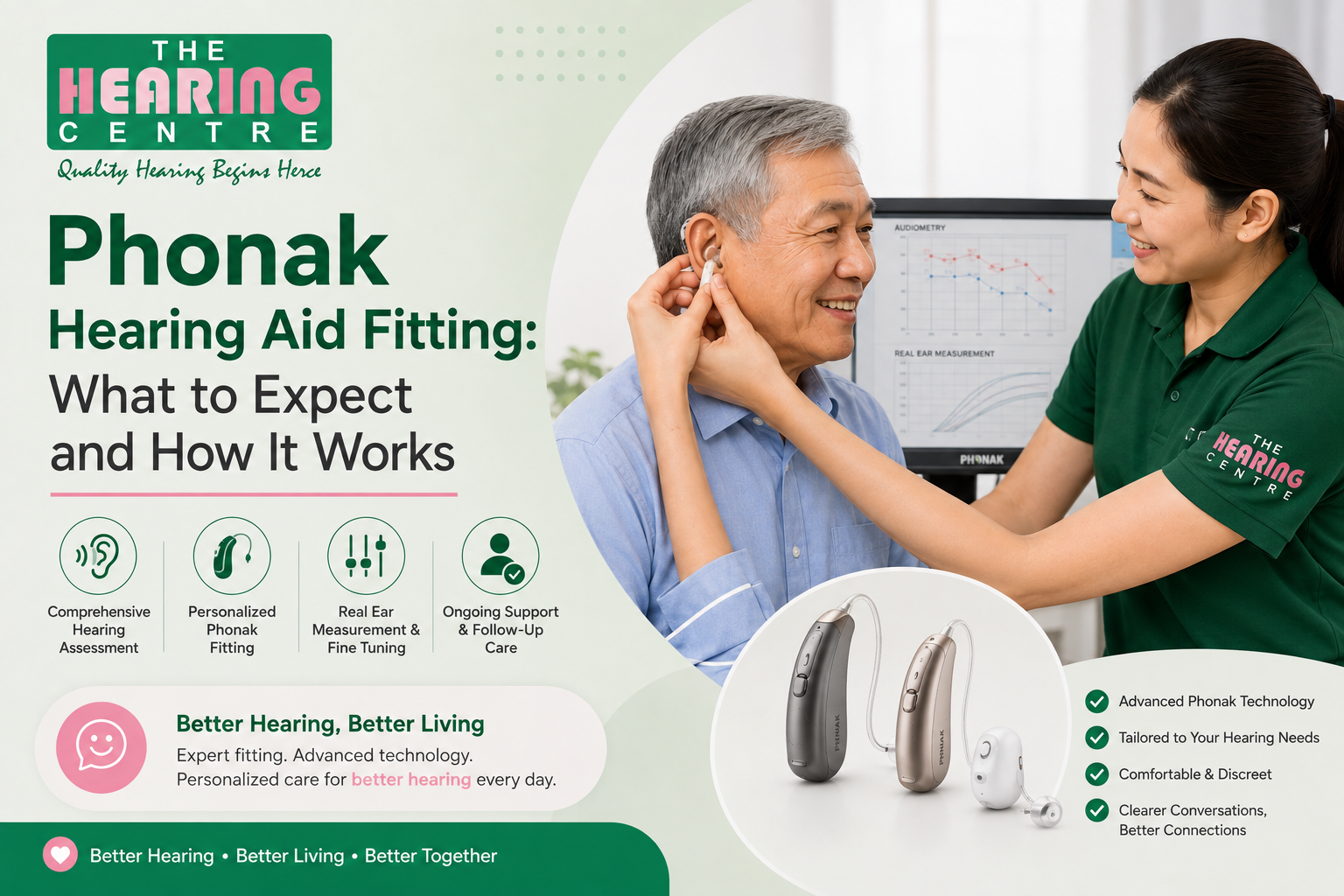
Phonak is a Swiss brand with a strong reputation for handling noisy environments. Their AutoSense OS detects what kind of listening environment you’re in — quiet room, busy restaurant, outdoor noise — and adjusts the device settings automatically. For someone spending a lot of time in varied Singapore environments, this kind of automatic adaptation is genuinely useful rather than just a marketing feature.
Starkey comes from the US and has pushed further than most brands into health tracking features — fall detection, activity monitoring, heart rate. Their Edge AI models are among the most technologically advanced currently available. If the idea of combining hearing support with broader health monitoring appeals, Starkey is worth looking at. If you just want reliable hearing in noisy places without the extra features, there are simpler choices at lower prices.
ReSound tends to produce very natural-sounding audio. Their Vivia model is particularly compact for an AI-powered RIC device, and their Bluetooth LE Audio connectivity is among the better implementations currently available.
Oticon takes an approach focused on what they call BrainHearing — the idea that the goal isn’t just amplifying sound but giving the brain access to a complete sound scene and letting it do its own processing. Their deep neural network technology has gotten meaningful improvements in recent generations.
Rexton offers solid performance at a lower price point. For someone whose primary constraint is budget and whose hearing loss is straightforward mild loss, Rexton can be a sensible practical choice.
How Much Do Hearing Aids Cost in Singapore?
Prices per device in Singapore generally run like this: entry-level devices from around SGD $800 to $1,500, mid-range from $1,500 to $3,500, and premium from $3,500 up to $8,000. Most people with mild hearing loss find that a mid-range device covers what they actually need — the noise management and connectivity features that make a real difference in Singapore’s environments, without the more advanced processing designed for more severe loss levels.
What a lot of people don’t realise is how significant the available subsidies can be.
The SMEF (Seniors’ Mobility and Enabling Fund) is available to Singapore citizens aged 60 and above and can cover up to 90% of the device cost, subject to income assessment and per-device caps. The ATF (Assistive Technology Fund) is open to both citizens and Permanent Residents of any age and also covers up to 90% of costs, capped at $40,000 total. CHAS Blue and Orange cardholders may qualify for additional support as well. MediSave can’t be used for the hearing aid itself but covers related consultations and diagnostic tests.
What happens during a proper hearing assessment
Before any hearing aid recommendation is made, you need a proper audiological assessment. This is what that involves.
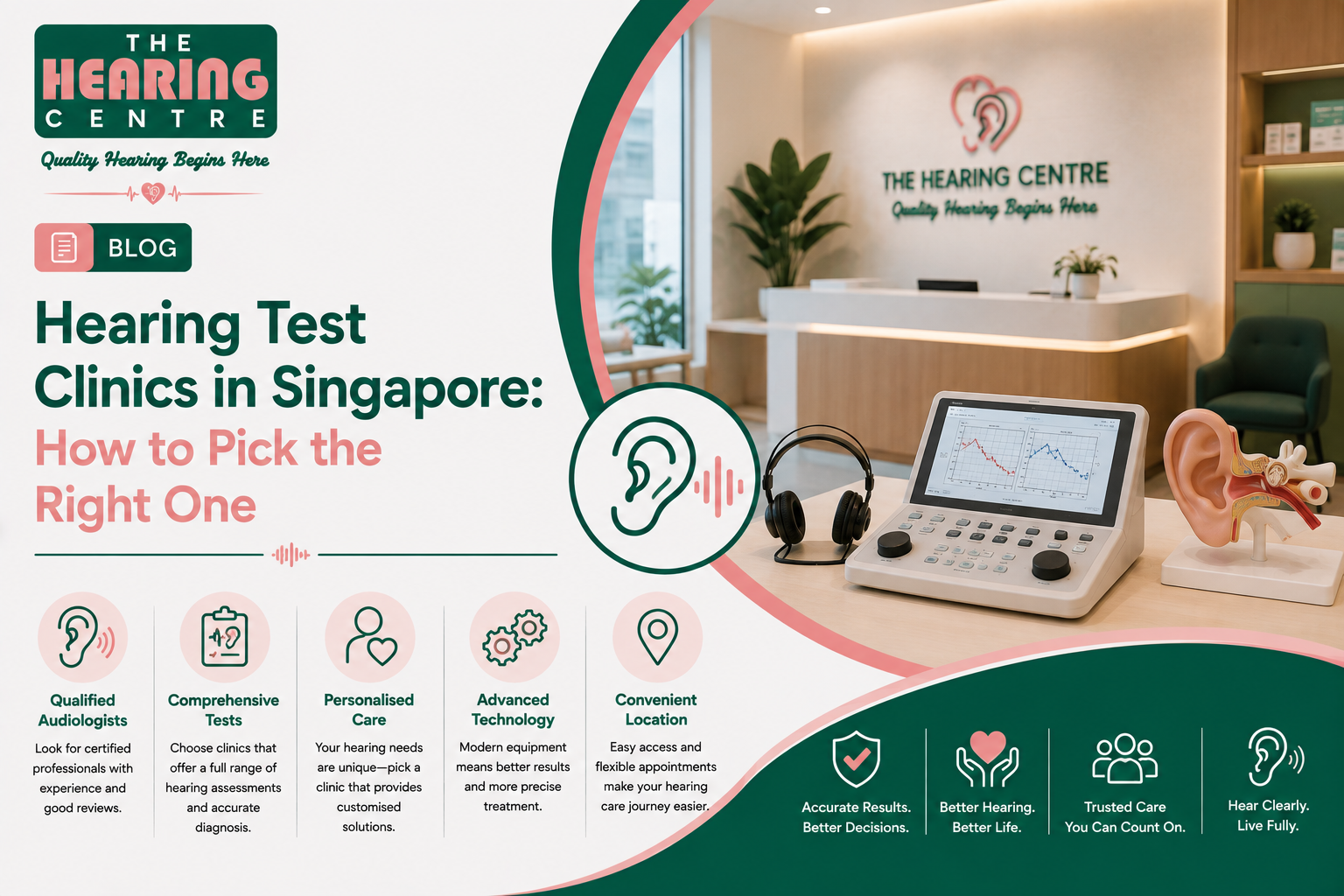
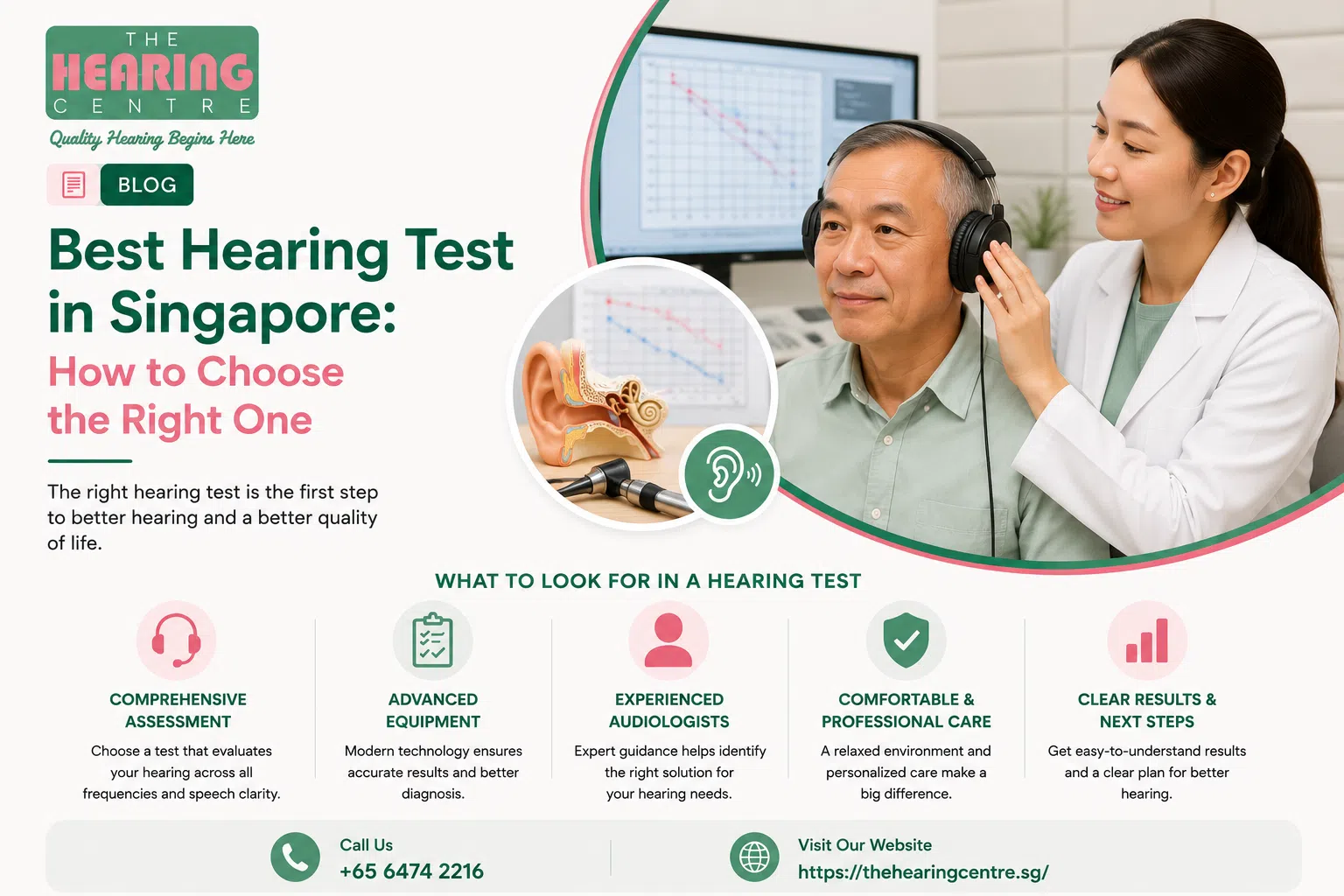
Pure Tone Audiometry is the core test — sitting in a soundproofed room with headphones, responding to tones at different frequencies and volumes. The results form an audiogram, which maps exactly where your hearing is and where it’s dropping off across the frequency range. This is what everything else is based on.
Tympanometry checks how the eardrum and middle ear are functioning. It’s quick and painless, and it helps rule out issues like fluid behind the eardrum — which is a medical issue that might need treating before a hearing aid is even appropriate.
Speech Discrimination Testing measures how well you understand speech at a comfortable volume, not just whether you can detect sounds. Two people can have identical audiograms and very different speech clarity — this test captures that difference, which matters for which device and settings are recommended.
Real Ear Measurement is the gold standard for hearing aid fitting. A small probe microphone measures what the hearing aid is actually delivering inside your ear canal and verifies it matches your audiogram. Not every clinic does this routinely. The audiologists at The Hearing Centre use this as standard practice, because fitting a hearing aid without verifying the real-ear output is essentially guesswork.
A full assessment typically takes 45 to 90 minutes.
The adjustment period: what most people aren’t warned about
A lot of first-time hearing aid users are surprised by the adjustment period, because nobody explained it to them properly beforehand.
Your brain has spent months or years working with a reduced, incomplete sound signal. When a hearing aid suddenly delivers clearer, fuller sound, the brain doesn’t immediately know what to do with the extra input. In the first week or two, your own voice might sound strange — slightly louder, slightly different. Background sounds that you’d stopped registering — aircon hum, footsteps, ambient noise — suddenly feel more present. Some sounds that were previously inaudible might feel sharp or startling.
This is normal. It doesn’t mean the device isn’t right for you. It means the brain is recalibrating, which is exactly what needs to happen.
For most people with mild hearing loss, consistent daily use for two to four weeks gets them through this phase. The key word is consistent — wearing the device for a few hours and leaving it in the case slows the process considerably because the brain keeps going back to its adapted baseline. Follow-up appointments at two weeks and one month let the audiologist adjust the programming based on what you’re actually experiencing in your daily environments.
One last thing
Mild hearing loss has a way of becoming the new normal before you’ve really noticed how much has changed. Most people only realise how much effort they were putting in when they stop having to put in that effort — after getting properly fitted and adjusted to a device.
Getting assessed early, knowing your options, and making a decision based on real audiogram data — rather than waiting until things feel obviously worse — genuinely changes the trajectory. And Singapore’s subsidy options mean the cost is often lower than people assume going in.
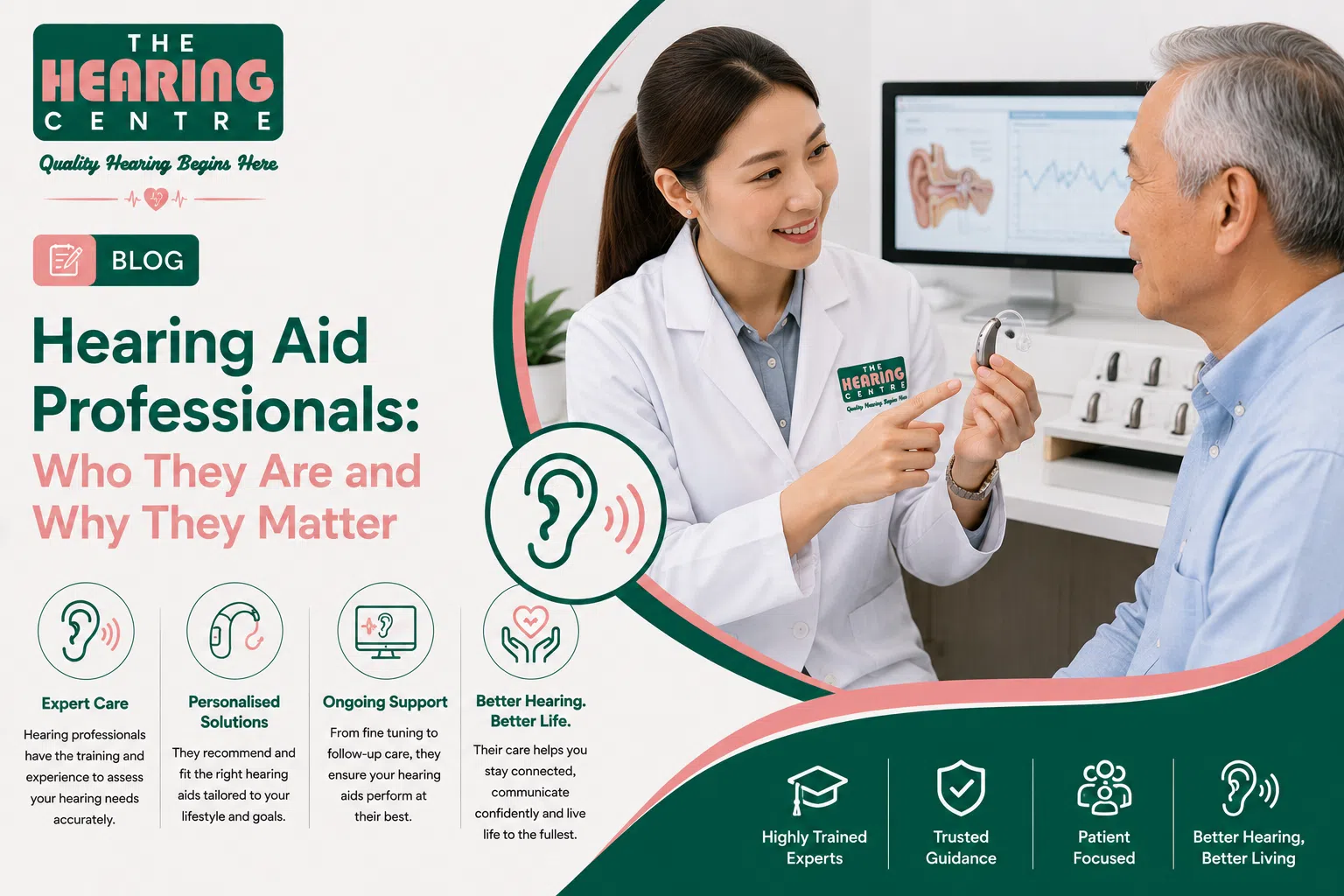
The Hearing Centre has been helping people across Singapore through this process — from the first uncertain “do I actually need this?” conversation right through to fitting, adjustment, and long-term support. If you’re at that first step, that’s exactly where to start.
Book your hearing assessment at The Hearing Centre and find out where things actually stand.
Frequently Asked Questions:
Often yes, on two fronts. The hearing loss itself tends to progress over time when untreated. And the longer the brain functions with incomplete input, the harder the eventual adjustment to amplified sound becomes.
With current RIC or CIC devices, most people won’t. The devices are genuinely small now — nothing like the visible beige aids people picture from twenty years ago.
There’s no single answer — it depends on your audiogram, your environments, and your priorities. For most active users in Singapore, a mid-range RIC from Signia, Phonak, or ReSound tends to be a strong starting point. Your audiologist narrows this down based on actual test results.
OTC devices aren’t programmed to your audiogram — they amplify everything generally rather than compensating for your specific pattern of loss. For mild hearing loss where speech clarity is often the main issue, generic amplification doesn’t address the actual problem. Professional fitting consistently produces better outcomes.
If both ears have mild hearing loss, fitting both is usually recommended. The brain integrates sound from both sides — fitting only one leaves the other unaddressed and loses the spatial awareness that comes from balanced bilateral input.
Five to seven years with proper care. Keeping them dry, cleaning them regularly, and storing them properly when not in use makes a significant difference to lifespan.
SMEF for citizens 60+, ATF for citizens and PRs, CHAS for cardholders. Subsidies can cover up to 90% in eligible cases. Ask your clinic before assuming full-price.
Usually this comes down to poor fitting or an outdated device. The technology — particularly noise processing and comfort — has moved significantly in the past five years. A properly fitted current device with Real Ear Measurement is a genuinely different experience.
No. It manages the loss, not reverses it. What it does is reduce the daily cognitive effort of straining to hear, improve speech clarity in challenging environments, and slow the associated cognitive load. That’s still a meaningful difference to daily life.
If you’re regularly missing parts of conversations, turning the TV up more than you used to, or feeling unusually tired after social situations — don’t wait for it to get worse. A hearing test at The Hearing Centre gives you real information in about an hour. Then you can make a decision based on actual data.