
TLDR: Hearing loss in one ear can be sudden or gradual, temporary or permanent. Earwax, infections, Meniere’s disease, and acoustic neuroma are common causes. Sudden hearing loss in one ear needs same-day attention — don’t wait on it. Gradual loss needs a proper hearing test before any treatment decision. Good device options exist including CROS hearing aids, bone-anchored devices, and cochlear implants.
There’s a specific kind of confusion that comes with losing hearing in one ear. One side sounds fine. The other doesn’t. And yet somehow the whole experience of hearing feels off in ways you can’t quite pin down.
You stop being able to tell where sounds are coming from. Following a conversation in a noisy place takes more effort than it used to. You find yourself angling your head slightly in certain situations without really noticing you’ve started doing it.
People around you often don’t understand why it’s a big deal. “But you can still hear out of one ear” is something a lot of patients at The Hearing Centre have heard from family members. And yes, technically true. But one ear doing all the work is genuinely different from two ears working together. The brain uses input from both sides constantly — to locate sounds, to separate speech from background noise, to make sense of busy environments. Take one away and that whole system works harder than it was designed to.
About 500,000 people in Singapore live with some kind of hearing loss. Plenty of them have it in one ear only. Here’s what’s actually going on, and what actually helps.
What Unilateral Hearing Loss Means
Hearing loss in one ear is called unilateral hearing loss. One ear has reduced or no hearing. The other works normally or close to it.
The degree varies. Some people have mild loss on one side — they catch most things but miss softer sounds. Others have profound loss, where the affected ear picks up essentially nothing. That severe version is sometimes called single-sided deafness.
There are three types depending on where the damage sits:
Conductive — something is physically blocking sound in the outer or middle ear. Earwax, fluid, a damaged eardrum, or problems with the small bones in the middle ear. Often
Sensorineural — damage to the inner ear or the auditory nerve. Age, noise, viral infections, tumours. Usually permanent, though hearing devices can manage it well.
Mixed — a bit of both in the same ear.
What’s Causing It
Earwax
The most common cause is that people don’t think to check. When wax builds up and gets compacted against the eardrum in one ear, hearing on that side drops. It can happen suddenly or slowly. Professional removal usually sorts it the same day.
Ear Infection
Middle ear infections cause fluid and inflammation that affect hearing temporarily. Most resolve once the infection is cleared . Repeat infections that go untreated for too long can cause lasting damage.
Ruptured Eardrum
A tear in the eardrum disrupts how sound travels and causes hearing loss in one ear. Small tears often heal on their own within a few weeks. Larger ones sometimes need surgical repair.
Sudden Sensorineural Hearing Loss
This one needs to be treated as an emergency.
Sudden sensorineural hearing loss — sometimes called sudden deafness — is when hearing in one ear drops rapidly, usually within 72 hours. Some people describe waking up to find one ear has changed. Others notice a pop followed by muffled sound and ringing.
Steroid treatment started within the first few days significantly improves recovery chances. Every day of delay makes recovery less likely. If this sounds like what you’re experiencing, see someone today, not in a few days.
Meniere’s Disease
An inner ear condition that causes episodes of vertigo, fluctuating hearing loss in one ear, tinnitus, and a feeling of pressure in the ear. Affects one ear in most cases. Episodes can come and go unpredictably, and hearing can decline progressively over time.
Acoustic Neuroma
A slow-growing benign tumour on the nerve that runs close to the auditory nerve. As it grows, it causes gradual hearing loss in one ear, tinnitus, and sometimes balance problems. When hearing loss is noticeably worse in one ear than the other without an obvious reason, this is something audiologists look for.
Loud Noise Damage
A single very loud sound close to one ear — a gunshot, an explosion, a burst of extremely loud audio — can cause immediate hearing loss on that side. One-sided noise exposure over years can also gradually cause more loss on one side than the other.
Viral Infections
Viruses including mumps, measles, and Ramsay Hunt syndrome can damage hearing in one ear rapidly. Ramsay Hunt sometimes causes facial weakness on the same side as the hearing change.
Medications
Some antibiotics, certain chemotherapy drugs, and high-dose aspirin can damage hearing. Sometimes the damage is worse on one side.
Born with It
Some people have hearing loss in one ear from birth due to structural differences, genetics, or infections during pregnancy. Newborn screening in Singapore catches most of these. Some appear later in childhood.
Quick Reference
Cause | How It Starts | Type | Can It Be Fixed? |
Earwax | Gradual or sudden | Conductive | Yes |
Ear infection | Gradual | Conductive | Usually |
Ruptured eardrum | Sudden | Conductive | Often |
Sudden SSHL | Within hours | Sensorineural | Partly, if treated fast |
Meniere’s disease | Comes and goes | Sensorineural | Partly |
Acoustic neuroma | Very gradual | Sensorineural | Depends |
Loud noise | Sudden | Sensorineural | Rarely |
Viral infection | Rapid | Sensorineural | Varies |
Congenital | From birth | Mixed | Rarely |
How It Affects Daily Life
The effects of hearing loss in one ear aren’t always obvious to people watching from the outside. But they add up.
Locating sounds. Two ears working together give the brain enough information to know which direction a sound came from. With hearing loss in one ear, that ability drops significantly. People describe not knowing where a car horn came from, or not being able to tell which direction a voice is calling from. It becomes a safety consideration in certain environments.
Noisy rooms. Quiet one-on-one conversations are manageable. Restaurants, parties, group meetings are harder. The brain has to work more to make sense of what’s coming in through one ear without the balancing input from the other side. It tires faster.
Work and concentration. The mental effort of compensating throughout a workday adds up. Missing portions of calls. Losing track in group discussions. Feeling more drained than colleagues without a clear explanation. How poor hearing affects concentration and focus at work goes into more depth on this if it’s relevant to your situation.
Sleeping habits. Some people with hearing loss in one ear quietly adjust which side they sleep on to keep their better ear facing upward. A small adaptation that most don’t consciously register.
Social situations. Struggling to follow group conversations eventually leads some people to stop putting themselves in those situations. Not dramatically — just a slow drift away from noisy social events, talking less in groups, finding reasons not to go.
Getting a Diagnosis
A proper diagnosis needs to happen before any treatment decision. Guessing at the cause and picking a device without one usually leads to disappointment.
At The Hearing Centre, a full assessment for hearing loss in one ear typically covers:
- Otoscopy to look inside the ear canal and at the eardrum
- Pure tone audiometry to measure minimal level at which each ear can hear across different pitches
- Tympanometry to check how the eardrum and middle ear are functioning
- Speech audiometry to test how clearly speech is understood, not just whether sounds are heard
- ABR/ASSR testing to assess the auditory nerve, particularly relevant if acoustic neuroma is a possibility
- MRI or CT scanning when something structural needs ruling out
Treatment
What gets recommended depends entirely on what the audiogram and assessment show.
Medical
Corticosteroids are used for sudden sensorineural hearing loss, taken orally or injected directly into the middle ear. Antibiotics for bacterial infections. Antiviral medication for viral causes. Professional earwax removal for impaction.
Surgery
Tympanoplasty repairs a damaged eardrum. Ossiculoplasty rebuilds damaged middle ear bones. Acoustic neuroma is treated through surgery, targeted radiation, or observation depending on size and rate of growth.
Hearing Devices
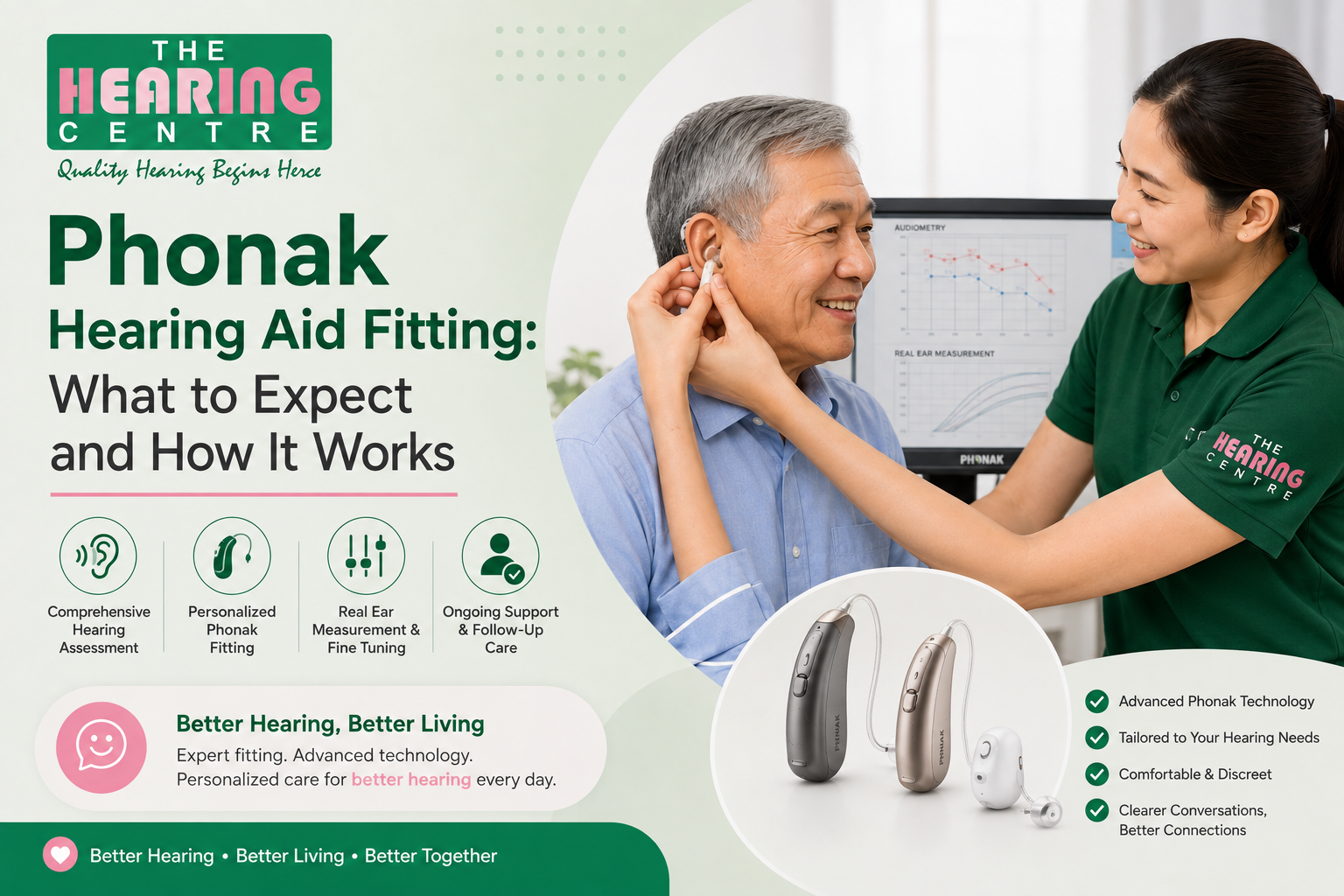
Standard hearing aids work well for mild to moderate sensorineural hearing loss in one ear where some useful hearing remains on the affected side. Modern AI-powered devices from Phonak, Signia, Starkey and ReSound are a significant step up from older technology in terms of how they handle background noise and complex environments. The best AI hearing aids covers what’s currently available and what the differences actually mean in practice.
CROS hearing aids are made for people with single-sided deafness where the affected ear picks up nothing usable. A microphone on the deaf side captures sounds and sends them wirelessly to the good ear. It doesn’t give hearing back to the deaf ear but stops sounds from that direction being completely missed.
BiCROS hearing aids work on the same principle but for people who also have some hearing loss in the good ear.
Bone-anchored hearing aids skip the outer and middle ear entirely and send sound through vibration in the bone directly to the inner ear. Useful for conductive hearing loss in one ear or single-sided deafness. The bone conduction hearing aid without surgery guide explains the non-surgical soft band option for anyone not ready to go the surgical route.
Cochlear implants are for profound sensorineural hearing loss in one ear where the auditory nerve still works. The device bypasses the damaged cochlea and stimulates the nerve directly.
Device Options
Device | Who It Suits | Surgery? |
Standard hearing aid | Mild to profound loss, some residual hearing | No |
CROS | Single-sided deafness, good ear normal | No |
BiCROS | Single-sided deafness, some loss in good ear | No |
Bone-anchored (soft band) | Conductive loss or SSD | No |
Bone-anchored (implant) | Conductive loss or SSD | Yes |
Cochlear implant | Profound sensorineural, functioning nerve | Yes |
Hearing technology has changed a lot. The history of hearing aids stretches back to ear trumpets in the 1600s. What’s on offer now would have been unrecognisable even two decades ago. The audiologists at The Hearing Centre match device type to hearing loss type rather than recommending a product and working backward.
For people already fitted with a device, using controls on behind-the-ear BTE hearing aids covers day-to-day practical use.
When to Go Today, Not Later
See someone the same day if:
- Hearing in one ear dropped suddenly in the past 72 hours
- Tinnitus appeared in one ear alongside a hearing change
- Dizziness or vertigo arrived at the same time as the hearing change
- Facial weakness developed on the same side as the hearing loss
Sudden sensorineural hearing loss has a treatment window that closes. Waiting a week is not neutral — it actively reduces what’s recoverable. This is the one situation where going immediately is not an overreaction.
What You Can Prevent
Not every cause is avoidable. Some of the common ones are.
Wear hearing protection around loud noise. A single loud event near one ear can cause permanent damage. Custom earplugs for concerts, motorsport, and industrial work are worth it.
Get ear infections treated early. Don’t leave a painful ear infection more than a couple of days without seeing a doctor. Repeat untreated infections cause lasting middle ear damage.
Keep cotton buds out of the ear canal. They push wax deeper and can puncture the eardrum. Both cause hearing loss in one ear.
Get your hearing checked after 50. Gradual changes are easy to miss. Annual assessments catch them before they become significant.
If you’re taking medications that can affect hearing, ask your doctor about monitoring during the course of treatment.
When to Book with The Hearing Centre
Come in if you have noticed any difference between your two ears, even something mild that’s been gradually building. Come in if tinnitus has developed in one ear. If a sudden change has happened and more than a day or two has passed, come in sooner rather than later.
For hearing aids Singapore patients already using devices who find their good ear working harder than expected, or device performance dropping, that’s worth an assessment too.
Book a hearing test at The Hearing Centre as the starting point. Our audiologists carry out full assessments across multiple locations in Singapore and refer to ENT specialists when the situation calls for it.
Frequently Asked Questions
Sudden sensorineural hearing loss is the most common unexplained cause and needs same-day medical attention. Earwax, ear infection, ruptured eardrum, and viral infections also cause sudden one-ear hearing loss.
Sudden hearing loss is a medical emergency. Gradual loss from a treatable cause like earwax is less urgent but still needs assessment. Any unexplained change in one ear deserves a proper diagnosis.
Conductive causes like earwax and infection usually resolve with treatment. Sudden sensorineural hearing loss can recover partially or fully if caught early. Long-standing sensorineural loss is generally permanent but manageable.
A microphone on the deaf side captures sounds and sends them wirelessly to the good ear. It doesn’t restore hearing on the deaf side but prevents sounds from that direction being completely missed.
A full assessment covers pure tone audiometry, tympanometry, speech testing, and sometimes ABR/ASSR. MRI may be ordered when asymmetric sensorineural loss needs further investigation.
Yes, including from birth. Singapore’s newborn hearing screening catches most congenital cases. Early fitting with the right device makes a significant difference to speech and language development.
Sudden loss, same day. Gradual loss, within a week or two. Don’t wait months hoping it resolves. Early diagnosis keeps more options available.