
TLDR: Hearing loss is a lot more general here than people assume. Around 500,000 people in Singapore are dealing with it, and the self-reported value among adults went from 1.3% in 2013 to 9.2% in 2023. That’s not a small jump. For seniors, it’s even more common; somewhere near 6 in 10 adults over 60 have some degree of it, and most of them aren’t wearing hearing aids even when their loss is bad enough to significantly affect daily life.
Statistic | Figure |
Singaporeans living with hearing loss | Roughly 500,000 |
Self-reported hearing loss in adults, 2013 | 1.3% |
Self-reported hearing loss in adults, 2023 | 9.2% |
Adults 60+ with some hearing loss | Around 63% |
Adults 60+ with disabling hearing loss (40dB+) | About 16% |
Seniors with disabling hearing loss who actually use hearing aids | Roughly 7.5% |
Newborns with significant hearing impairment | About 4 in every 1,000 |
That second-to-last row is the one that gets us every time. Most people who’d genuinely benefit from a hearing aid just aren’t wearing one — often because nobody’s ever pointed out that it’s an option, or because there’s still this leftover idea that hearing aids make you look old or fragile. Neither is a good enough reason to keep straining through conversations for years.
At its simplest, hearing loss just means a reduced ability to pick up sound in one or both ears — anywhere from mild trouble with certain pitches all the way to complete deafness. It splits into three broad categories:
Type | What’s Happening | Usually Caused By |
Conductive | Sound can’t reach the inner ear properly | Earwax blockage, fluid, ear infections, structural issues |
Sensorineural | Damage to the inner ear or the auditory nerve itself | Ageing, prolonged noise exposure, certain medications |
Mixed | A combination of both | Multiple contributing factors at once |
Sensorineural is what adults deal with most, and it’s usually permanent, though very manageable with the right hearing aid or, for more severe cases, a cochlear implant. A big share of this falls under age-related hearing loss, which creeps up slowly enough that people often adjust without really clocking what’s happened. Conductive hearing loss tends to be a different story — frequently treatable, sometimes fully reversible, once whatever’s blocking things gets sorted out.
In adults, the usual culprits are:
In children, it looks a bit different:
In adults, the usual tells are asking people to repeat themselves more than feels normal, struggling with phone calls or group conversations, needing the TV or radio louder than everyone else is comfortable with, and a ringing or buzzing that won’t quit. Some people also start unconsciously turning one ear toward whoever’s talking without even noticing they’re doing it.
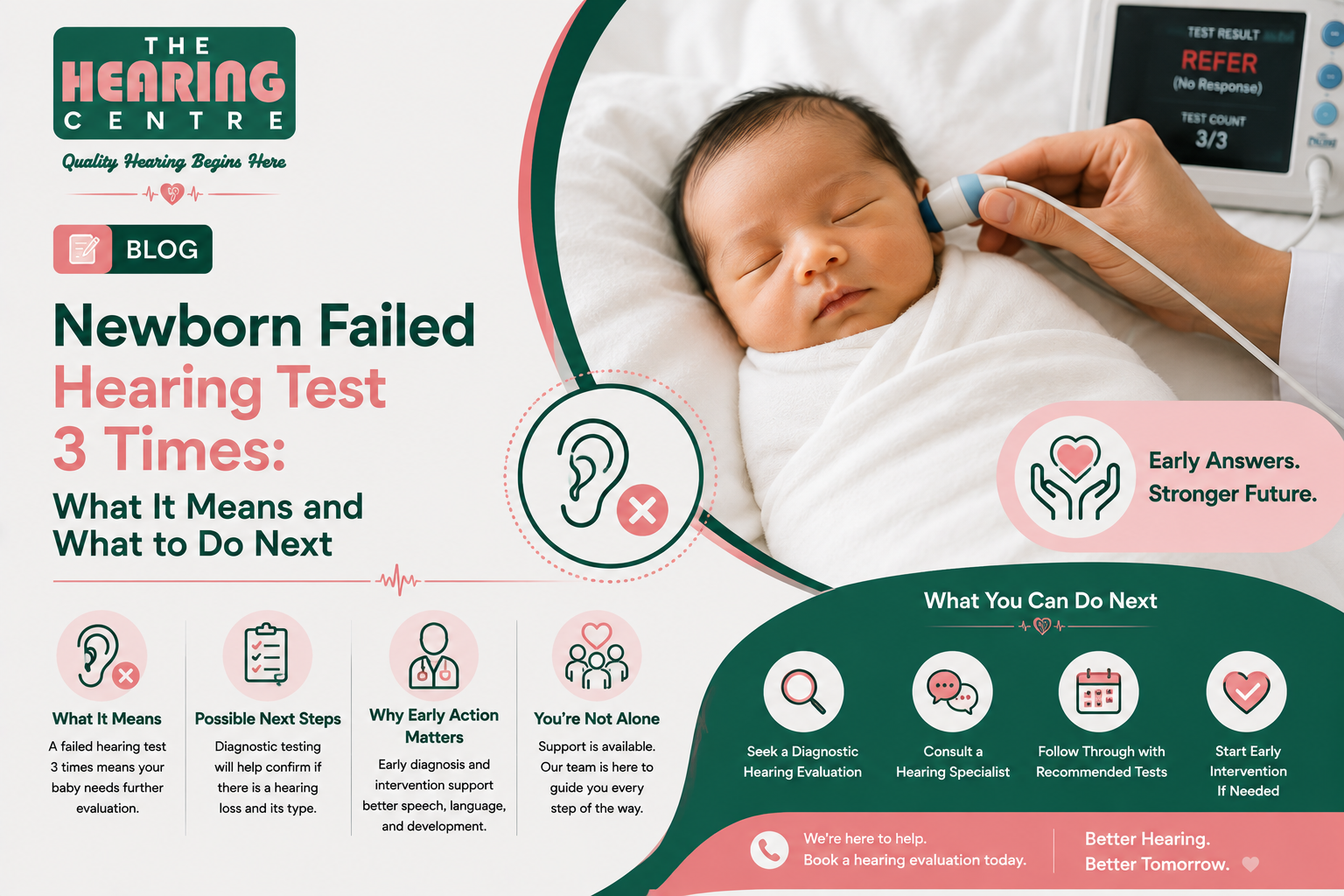
In children, it’s a different picture and honestly easier to miss — delayed speech or language development, not responding to their name or to sounds generally, frequent ear infections, or persistent complaints about ear discomfort.
Singapore runs a national newborn hearing screening programme, so most congenital cases get caught early. The real gap tends to be adults who’ve lived with gradual hearing loss for years and just never got it properly checked out.
Diagnosis usually pulls together a handful of tests rather than leaning on just one:
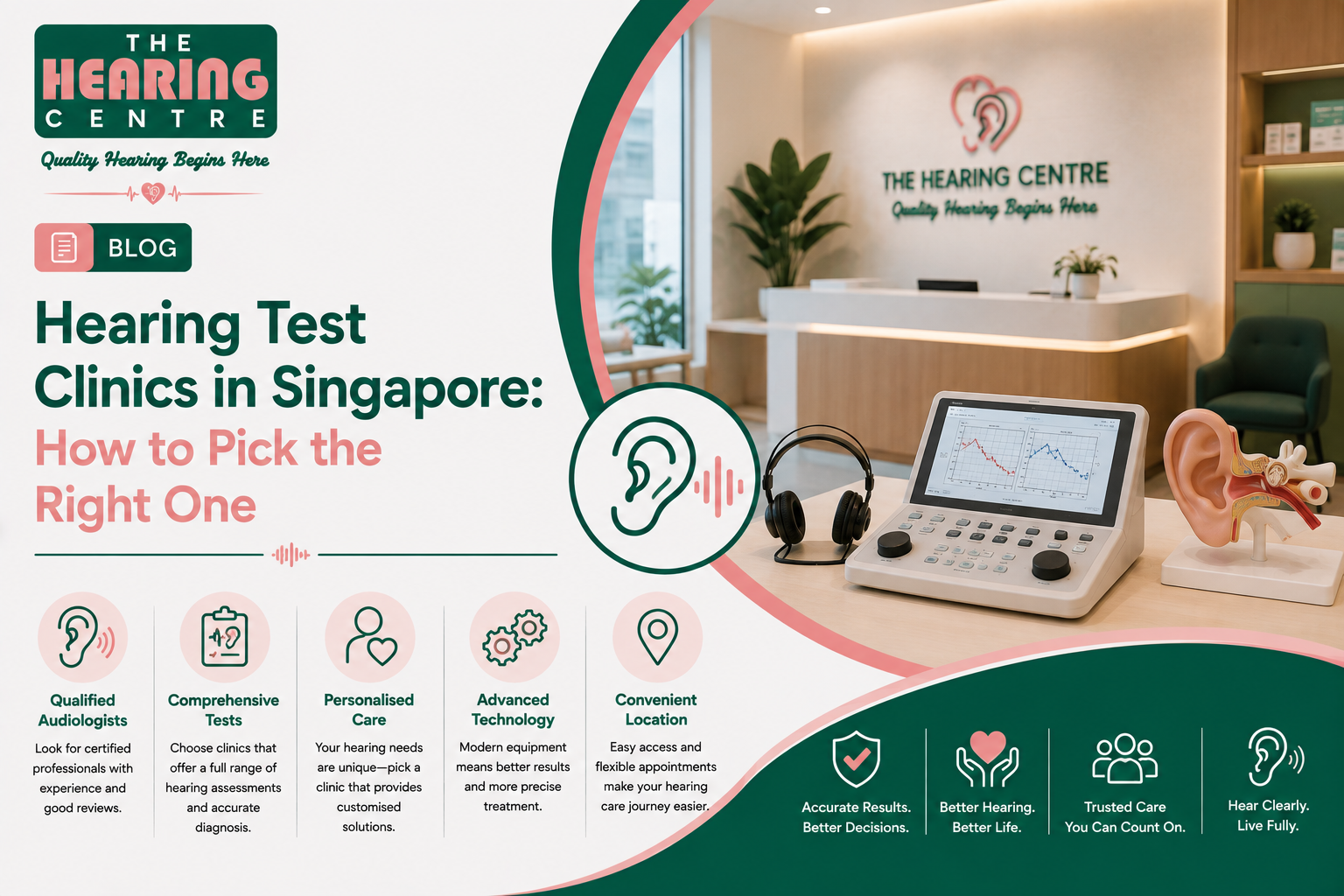
A proper audiometry test in Singapore, followed by a consultation with an audiologist in Singapore, gives you a far clearer picture than guessing off symptoms alone. A hearing specialist in Singapore can also help work out whether what you’re dealing with fits neatly into one of the standard types of hearing loss, or whether it’s something a bit more complicated.
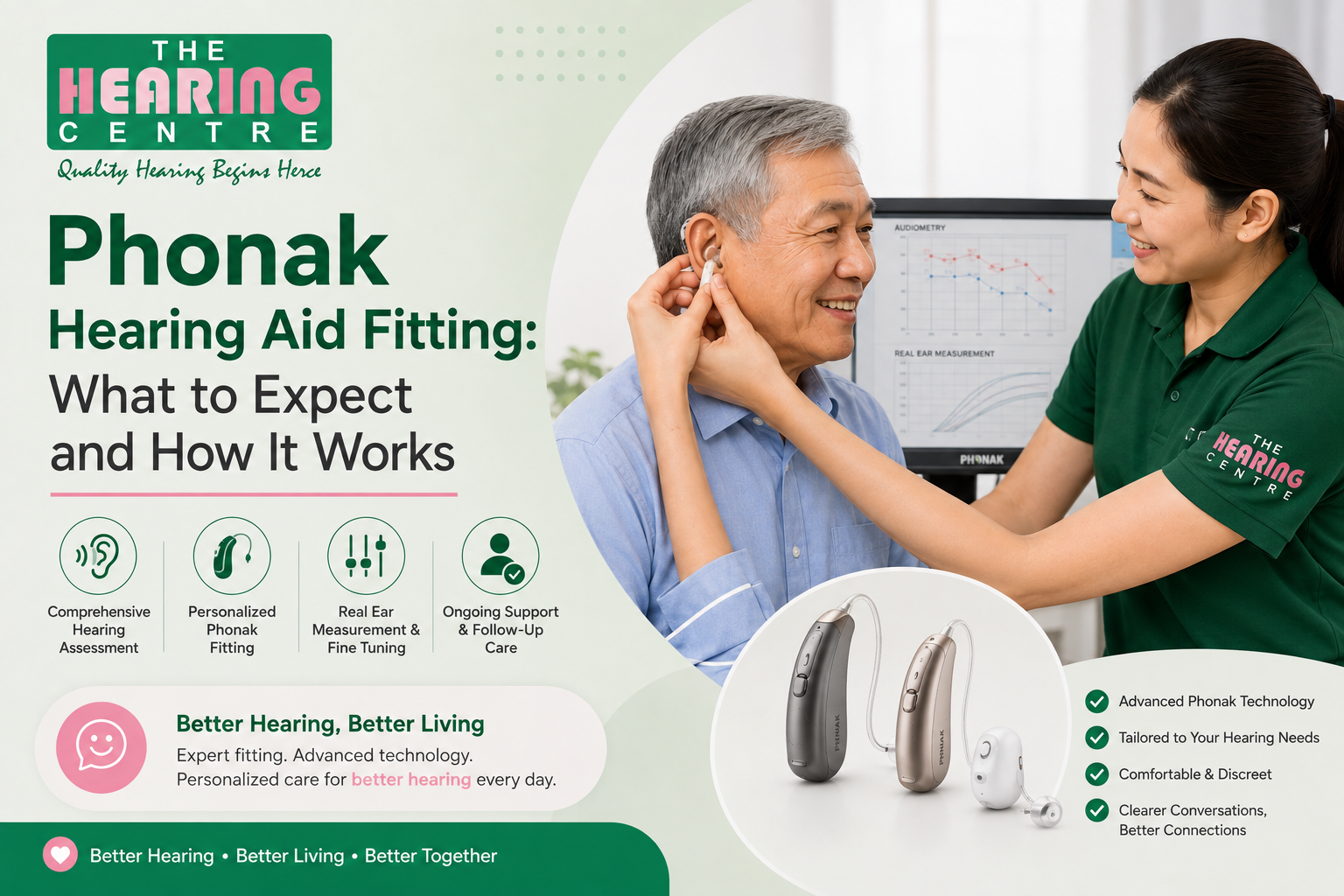
Hearing aids. Still the most common route for mild to severe hearing loss, and modern hearing aids really have come a long way — smaller, smarter, far less noticeable than what most people still picture in their head. If you’re weighing up styles, our comparison of CIC versus IIC hearing aids walks through the trade-offs between the two smallest, most discreet options. Looking specifically at Signia? Our guide on which Signia hearing aid actually suits different needs is worth reading before you commit to a particular model. And a lot of people want to know whether devices genuinely hold up in Singapore’s noisier spots — hawker centres, MRT platforms, open-plan offices — which we’ve covered honestly in our piece on whether hearing aids actually help you hear in noisy places.
Cochlear implants. For severe or profound sensorineural hearing loss where standard hearing aids just aren’t enough, cochlear implants bypass the damaged part of the inner ear entirely. Cost tends to be the first question people have here, and our breakdown of hearing aid implant surgery costs walks through what actually goes into that price tag.
Medical and surgical treatment. For conductive hearing loss specifically, treating the underlying infection, clearing an earwax blockage, or repairing eardrum damage can bring hearing back without any device involved at all.
Tinnitus management. Hearing loss and tinnitus show up together often enough that they’re worth treating as a pair rather than separately. Tinnitus treatment and sound therapy can meaningfully cut down the ringing and make everyday life more bearable.
Hearing aids aren’t cheap, and Singapore does offer some help depending on your situation. Schemes like the Assistive Technology Fund and CHAS-linked subsidies can cover a decent chunk of the cost for eligible seniors and lower-income households. Eligibility swings quite a bit case by case, so it’s genuinely worth asking directly during your consultation instead of assuming you won’t qualify.
Not all of it is preventable, but a fair amount is:
This is the part people underestimate. Ignoring hearing loss doesn’t just mean missing bits of conversation. It tends to snowball into more than that:
We don’t treat a hearing test as an excuse to push whatever device happens to be sitting on the shelf. Every visit starts with a proper assessment, followed by an honest conversation about what’s actually going on and what genuinely fits your situation, your budget, your lifestyle. If a hearing aid isn’t the right move yet, or a medical referral makes more sense, that’s exactly what we’ll tell you, no sales pitch attached.
Reading about hearing loss in Singapore is useful, sure, but it won’t tell you where your own hearing actually stands. If you’re searching for Hearing aids Singapore, reach out to us and we’ll set up a proper assessment, walk you through your results honestly, and figure out what actually makes sense for you.
More common than most people think. Roughly 500,000 people here live with some degree of it, and the self-reported rate among adults has climbed sharply over the past decade.
Conductive, sensorineural, and mixed. Conductive is often treatable, sensorineural is usually permanent but manageable, and mixed is a bit of both.
Sometimes. Conductive hearing loss caused by infections or blockages can often be treated successfully. Sensorineural hearing loss is generally permanent but can be well managed with hearing aids or, in severe cases, cochlear implants.
Repeatedly asking people to repeat themselves, struggling with phone calls or noisy environments, and needing the TV volume higher than everyone else prefers.
Delayed speech, not responding to their name, frequent ear infections, and generally seeming to miss sounds other kids pick up without effort.
Roughly every one to two years, sooner if you’re already noticing symptoms like trouble following conversations or ringing in the ears.
They work best for sensorineural and age-related hearing loss. Some conductive and mixed cases respond better to medical or surgical treatment instead.
Yes. Untreated hearing loss has a well-documented association with faster cognitive decline and a higher risk of dementia, plus higher rates of depression and social isolation.
Yes — schemes like the Assistive Technology Fund and CHAS-linked support can help eligible seniors and lower-income households cover part of the cost.
In most cases, yes. With early detection and consistent use of hearing aids or cochlear implants alongside speech therapy, children can develop near-normal speech and language skills.