
Sudden hearing loss strikes without warning, often in one ear, leaving people panicked over muffled sounds or total silence during everyday moments like phone calls or conversations. This guide breaks down causes from viral triggers to circulation issues, spots key symptoms like tinnitus or dizziness, and maps out steroid treatments that boost recovery odds within days.
Families facing this emergency learn when to rush to ENT specialists, prevention steps, and long-term aids—restoring clarity fast before permanent damage sets in. Households dealing with abrupt auditory changes need straightforward paths to diagnosis and care, especially since half recover naturally, but time-sensitive steps maximize outcomes.
What Defines Sudden Hearing Loss
Sudden hearing loss or SSHL refers to a rapid (at least 30 decibels) unilateral loss of at least three correlated frequencies within 72 hours. The sensation of deafness is softened by muffled hearing, which is ear stuffing with cotton; total deafness is more severe.
Unlike gradual age-related hearing decline, SSHL is considered a medical emergency. Specialists often treat it with the same urgency as a stroke until proven otherwise. Early diagnosis and timely care are crucial, especially for individuals who may later rely on solutions like hearing aids in Singapore for long-term hearing support.
It occurs during sleep, during work or during exercise, and increases the shock value.
What Causes Sudden Hearing Loss?
Although 85-90 per cent of cases cannot be classified as pathogenic (i.e. the exact cause is not known), medical professionals have determined that there are some core triggers that may harm the sensitive structures of the inner ear.
Common Triggers
- Viral and Bacterial Infections: Recent bouts of the flu, common colds, or herpes viruses can cause inflammation that damages inner ear hair cells.
- Structural Damage: Head trauma, ear surgery, or the growth of an acoustic neuroma (a benign tumour on the auditory nerve) can obstruct or block nerve signals.
- Systemic Conditions: Autoimmune flares, Multiple Sclerosis (MS), or Meniere’s disease can attack the ear tissues.
- Circulation Issues: Vasculitis or blood clots can restrict blood flow, effectively starving the cochlea of necessary oxygen.
- Ototoxic Medications: Certain high-dose antibiotics or chemotherapy drugs are known to be toxic to the auditory system.
Cause Category | Primary Examples | Risk Factors |
Viral/Infection | Flu, Herpes, Measles | Recent illness |
Structural | Acoustic Neuroma, Trauma | Head injury/concussion |
Systemic | Autoimmune, MS, Diabetes | Chronic conditions |
Toxic | Chemotherapy, certain antibiotics | High-dose medication use |
Recognizing the Symptoms
Sudden hearing loss often feels like a muffled sensation, similar to being underwater. In 70-90% of cases, it is accompanied by tinnitus (ringing, buzzing, or hissing in the ear).
- Vertigo/Dizziness: A spinning sensation or balance issues.
- Aural Fullness: A feeling that the ear is blocked or “plugged.”
- Speech Distortion: Difficulty understanding conversations, even if sounds are audible.
If you experience sudden hearing loss alongside ear pain, facial weakness, or slurred speech, seek emergency medical care immediately.
Why SSHL Is a Medical Emergency
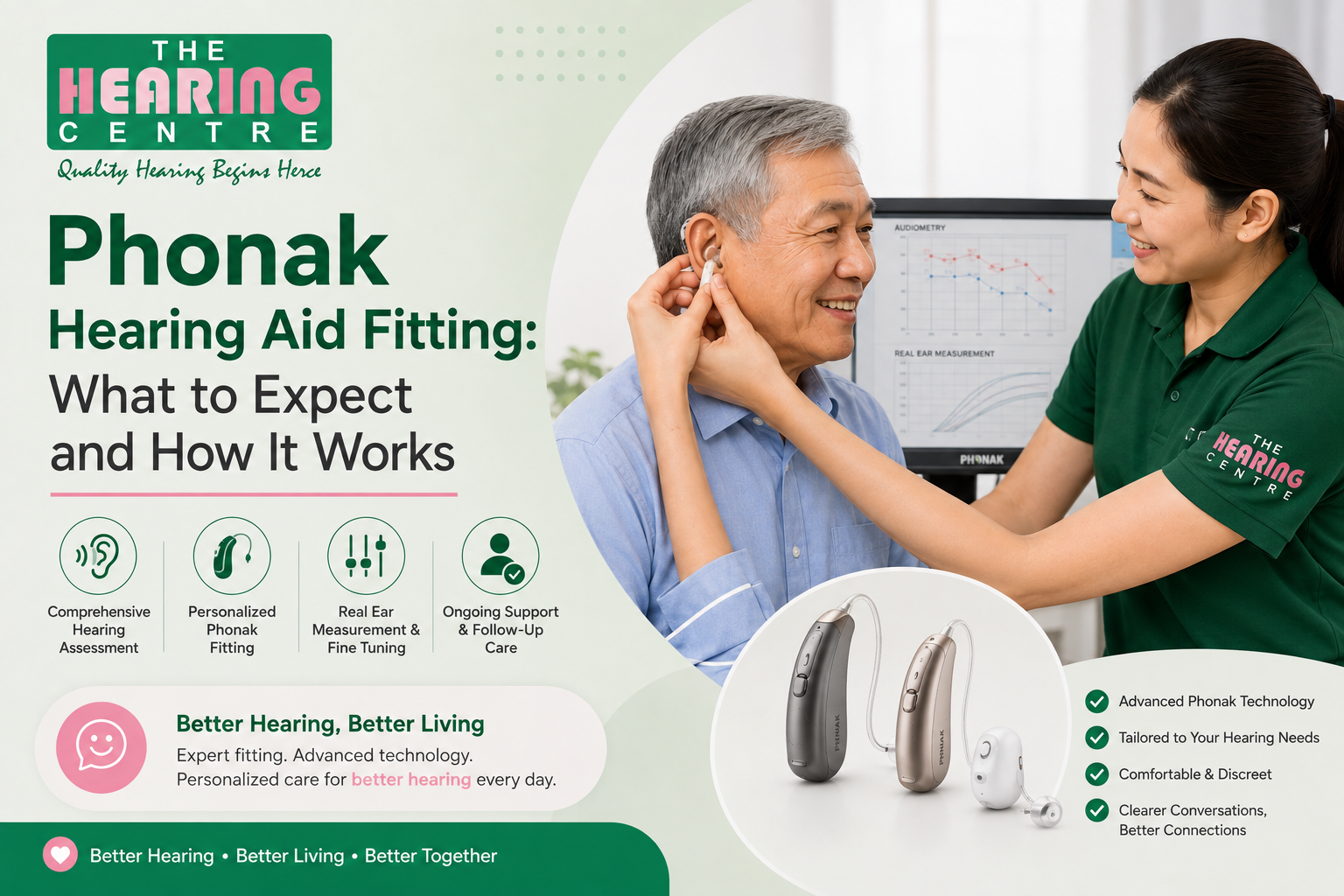
Time is the most critical factor in recovery. There is a 14-day “golden window” for treatment. Steroids are most effective when administered within the first week of symptoms. If you require long-term assistance, modern technology like Signia hearing aids in Singapore or advanced Phonak hearing aids in Singapore offer sophisticated sound processing to restore your quality of life.
Diagnostic Steps
ENT specialists typically perform:
- Audiograms: To measure the severity and range of hearing loss.
- MRI Scans: To rule out tumors or structural abnormalities.
- Blood Tests: To check for underlying inflammatory or systemic conditions.
Standard Treatment Approaches
The goal of treatment is to reduce inflammation and restore function to the inner ear.
- Corticosteroids: High-dose oral prednisone (often tapered over two weeks) is the gold standard. Intratympanic injections (direct delivery into the ear) are an effective alternative for patients who cannot tolerate oral medication.
- Hyperbaric Oxygen Therapy: Pressurized oxygen sessions can aid in tissue regeneration when used alongside steroid therapy.
- Targeted Care: If an infection is identified, antibiotics or antivirals may be prescribed.
Recovery and Long-Term Management
While 50% of patients experience spontaneous recovery, proactive care is vital. For those with permanent residual loss, specialized solutions such as Starkey hearing aids can bridge the gap.
Recovery Expectations
- Full Recovery: Possible in mild cases within days or weeks.
- Partial Recovery: Leaves residual hearing loss that may require management.
- Permanent Loss: Requires long-term solutions such as hearing aids, CROS systems (for single-sided deafness), or cochlear implants for profound cases.
Prevention Strategies
- Vaccinations: Keep up to date with immunizations against measles and mumps.
- Protect Your Ears: Always use earplugs at loud venues to keep noise exposure below 85 dB.
- Lifestyle Management: Manage blood sugar levels, quit smoking to improve circulation, and treat respiratory infections promptly.
- Routine Maintenance: Avoid improper ear cleaning methods that could damage the ear canal.
Impact on Daily Life
Work calls garble completely, forcing louder voices or text relays that slow meetings down. Social dinners turn awkward with repeated “what?” questions, pushing folks toward quiet corners. Driving gets dicey without spatial sound to judge car speeds or horns from behind. Kids in classrooms miss teacher instructions or peer whispers, hurting grades quietly.
Adults pull back from parties, feeling isolated as conversations blur—family game nights frustrate everyone. Hearing aids bring voices back crisp; counselling teaches face-to-face chats and patience tricks.
- Phone meetings need text backups
- Restaurant talks strain friendships
- Spatial loss makes roads risky
- Schoolkids miss vital lessons
- Social withdrawal hits hard
Emerging Research and Therapies
Gene therapies now regrow lost hair cells in lab trials, showing real promise for permanent cases. Stem cell injections aim to rebuild cochlear damage from the ground up. Combined with personalized hearing aid fittings at The Hearing Centre, these advancements mean that even profound cases have more options than in the past.
- Gene edits revive hair cells
- Stem cells rebuild ear tissue
- Smarter antivirals fight viruses
- AI diagnoses super-fast
- Wearables warn of risks early
Conclusion
Sudden hearing loss demands lightning responses with steroids and specialist care to snatch hearing back from the brink, tackling viral roots or mystery flares head-on. Households navigate tinnitus, dizziness, and recovery timelines armed with prevention like vaccines and noise shields, while aids fill lasting gaps seamlessly. Awareness turns panic into action—protecting ears ensures conversations, music, and warnings stay sharp for years ahead.
Frequently Asked Questions
Viruses like those behind colds or flu are the usual suspects—they sneakily inflame your inner ear, hitting without warning and muffling sounds overnight. Other culprits include blood flow hiccups or autoimmune flares, but bugs win the blame game nine times out of ten.
Jump on it within 48-72 hours—steroids like prednisone work magic early by slashing swelling before nerve damage sets in for good. Delaying past a week drops recovery odds way down, so rush to an ENT if your hearing dips suddenly.
It’s rare, striking just one ear in about 90% of cases, but both can get hit in tricky autoimmune or toxic scenarios. When bilateral, it’s often scarier and slower to bounce back, needing quicker doc intervention.
Totally—lingering stress ramps up inflammation risks, while a fresh cold or sinus bug often kicks it off by clogging ear pathways. Folks under pressure or fighting sniffles report it more, so chill out and dodge germs when possible.
Picture a relentless ring, buzz, or ocean whoosh overpowering soft voices or music—it ramps up in quiet rooms and pairs with that muffled world. For many, it’s the scariest sidekick, fading as hearing heals but lingering stubbornly sometimes.
They’re the gold standard, zapping inflammation fast, but docs often team them with hyperbaric oxygen to flood ears with healing vibes in stubborn spots. Antivirals sneak in for virus suspects too—custom cocktails beat solo shots.
Around 50-65% rebound completely within weeks without help, thanks to the ear’s grit, but the rest need steroids or therapy to nudge it along. Mild cases vanish quickest; profound ones fight harder for every decibel.
Big time—blasting decibels can tip vulnerable ears over the edge, so custom plugs drop sound by 20-30dB without killing the vibe. Skip the front row if you’ve had episodes; your future hearing will thank you big time.
They start with an audiogram to map hearing dips, toss in blood tests for infections or clotting issues, and MRI scans to rule out tumours—the whole workup wraps in days. It’s thorough but painless, nailing why your ear went quiet.
Hearing aids amplify the good frequencies smartly, while cochlear implants zap signals straight to the brain for severe cases—both restore conversations and music with shocking clarity. Pair with lip-reading apps for everyday wins.