TL;DR: A cold can block your ears and make hearing go muffled. This happens because mucus blocks a tiny tube that connects your ear to your nose. It usually fixes itself in a week or two. Do not poke your ear. Do not panic. But if it is still blocked after two weeks, go get it checked at The Hearing Centre.
Last month my cousin called me sounding completely panicked. She had a bad cold, and one morning she woke up and could barely hear out of her left ear. Everything sounded like she was underwater. She thought she had gone deaf.
She had not. It cleared up in four days.
But that fear she felt? Totally understandable. When your hearing suddenly drops and you are already feeling sick, it is scary. You do not know if it is going to come back.
This page explains why it happens, what helps, and the signs that mean you should stop waiting and see someone.
So Why Does a Cold Affect Your Ears
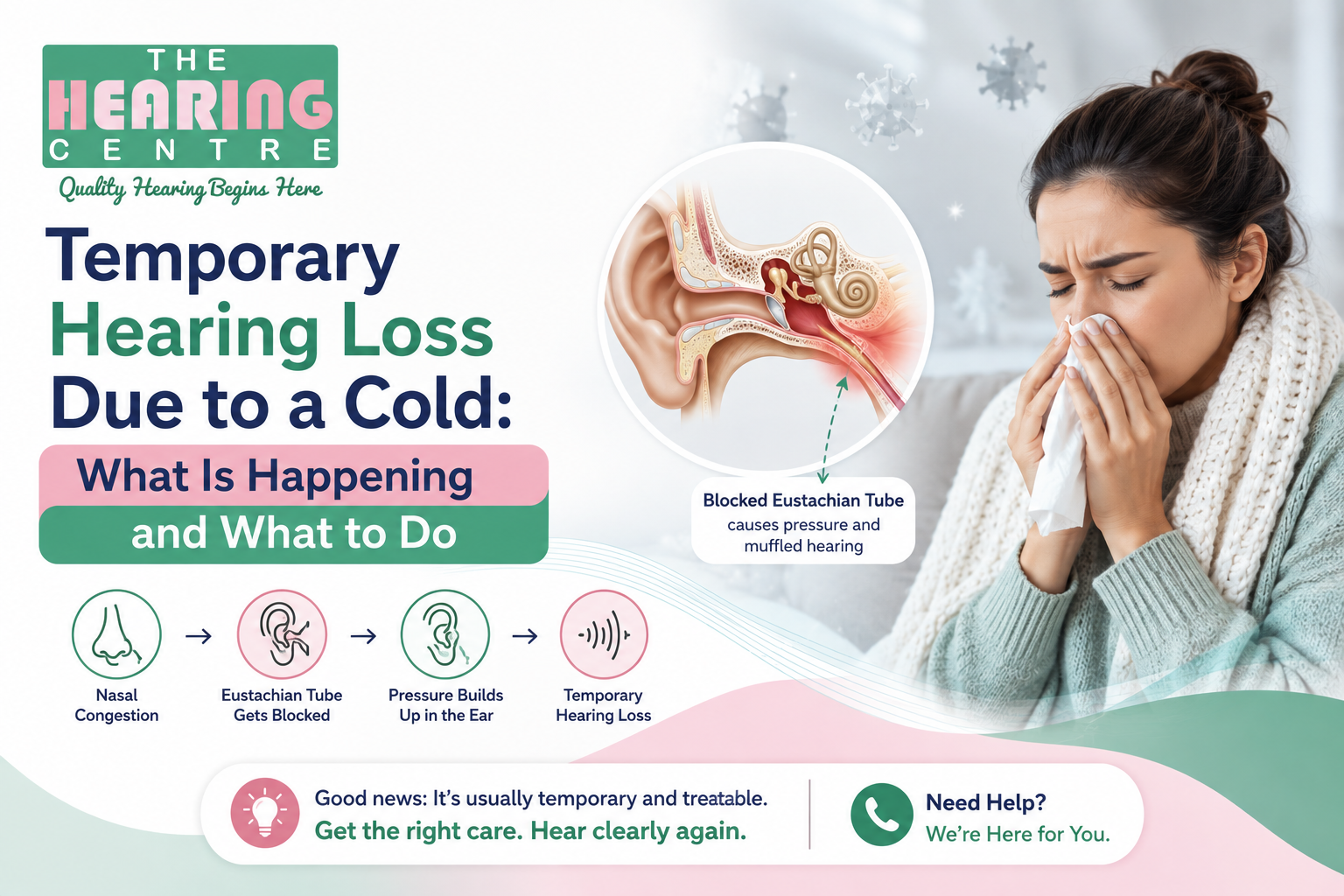
Your ear is connected to the back of your nose. There is a small tube that runs between them. It is called the Eustachian tube. Most of the time you never think about it. It quietly keeps the pressure in your ear balanced and drains away any fluid.
When you get a cold, your nose and throat swell up and fill with mucus. That mucus and swelling can block this small tube. When the tube is blocked, pressure builds up inside your ear. Fluid can get stuck behind your eardrum. Sound cannot travel through properly.
That is why you get that cotton-in-the-ears feeling. That underwater sound. That pressure that makes you want to pop your ears but nothing happens when you try.
It is not your ear going wrong. It is the blocked tube causing a knock-on effect.
What Does It Actually Feel Like
People describe it in different ways.
Some say their ears feel full. Like they need to pop but they cannot. Others say voices sound far away, like people are talking from another room. Some get a ringing sound on top of the muffled hearing. Some feel mild pain or a dull ache. Some hear crackling when they swallow.
Here are the most common things people notice:
- Ears feel blocked or heavy
- Sounds seem muffled or distant
- Your own voice sounds loud and strange inside your head
- A low ringing that was not there before
- Popping or crackling when you yawn or swallow
- Mild pain or pressure deep in the ear
- Hard to follow what people are saying, especially in noisy spots
You might get one of these. You might get several. It varies from person to person and cold to cold.
Is This the Same as an Ear Infection
Not always. These are two different things, though one can lead to the other.
The muffled hearing from a cold is usually just the blocked tube and fluid sitting behind the eardrum. No actual infection in the ear, just the cold causing congestion that backs up into the ear space.
A middle ear infection is when bacteria or a virus gets into that space and causes a real infection. That hurts more. You might get a fever. The ear can really throb. Children get this a lot.
You can have the muffled hearing without having an ear infection. But if you leave a cold-related blockage long enough, and fluid sits there for weeks, there is a higher chance of infection developing.
If your ear pain is getting worse instead of better, or you have a fever, that is when it might have crossed into infection territory.
The Different Types of Hearing Loss a Cold Can Cause
The common one: conductive hearing loss Sound is being blocked on its way through the middle ear. Fluid, mucus, swelling. The inner ear is fine. Once the blockage goes, hearing comes back. This is what most people get from a cold.
The rare one: sensorineural hearing loss This means the inner ear itself or the nerve has been damaged. This almost never happens with a regular cold. It would take a serious viral infection to cause this. But if your hearing drops suddenly and severely, not gradually and muffled, see someone the same day. That is a different situation.
Mixed hearing loss Both types at once. Less common. Usually in people who already had some hearing damage before the cold hit.
For most people reading this, it is the first type. Temporary. It goes away.
What You Can Actually Do at Home
There is no magic cure for a cold. But there are things that help with the ear symptoms while your body fights it off.
Steam helps a lot Sit in a steamy bathroom. Or lean over a bowl of hot water with a towel over your head. Ten minutes. The steam loosens the mucus and can help that blocked tube start to open. Do this two or three times a day.
Drink more water than you think you need Thin mucus moves. Thick mucus sits. Staying hydrated makes a real difference to how quickly things clear.
Blow your nose gently, one side at a time Blowing hard with both nostrils blocked can push pressure into the ear and make things worse. One nostril at a time, gentle pressure.
Try to pop your ears carefully Pinch your nose shut, close your mouth, then breathe out gently as if blowing up a balloon. Very gently. You might feel a pop. This is called the Valsalva manoeuvre. It sometimes gives short-term relief. Do not force it.
Sleep with your head a bit higher Lying completely flat lets fluid pool. Propping your head up slightly with an extra pillow can help things drain better overnight.
Decongestant from the pharmacy These can help open the tube. Nasal sprays work faster but do not use them for more than three days in a row, they cause a rebound effect. Tablets take longer but are safer for a longer cold. Ask the pharmacist.
Leave your ear alone No cotton buds. No fingers. No ear candles. The problem is not in your outer ear canal. Putting things in there does nothing to fix it and can cause new problems.
What Parents Should Watch for in Kids
Children get this more than adults. Their Eustachian tubes are shorter and more horizontal, which makes blockages happen more easily. And children cannot always explain what they are feeling.
Signs a child might have ear problems from a cold:
- They keep saying “what?” or asking you to repeat
- They turn the TV or tablet volume way up
- They do not respond when you call their name from another room
- They seem more frustrated than usual, especially in conversation
- Younger children might just be grumpier and harder to settle
Most of the time it clears up without treatment. But if it goes on for more than two or three weeks, or your child is in real pain, go see someone. Fluid stuck in a child’s ear for a long time can affect how they develop speech. It is worth catching early.
How Long Before Hearing Comes Back
For most adults, within a few days to two weeks after the cold ends.
Your cold clears. The swelling goes down. The tube opens. The fluid drains. Hearing comes back.
But if two weeks have passed since your cold ended and your ears are still blocked, stop waiting. At that point it is probably not going to fix itself without help. What might be happening:
- Fluid in the middle ear that has not drained on its own
- The Eustachian tube is still not functioning normally
- An infection has developed
- Something else is going on that needs a proper check
Two weeks is the line. Before that, home care and patience. After that, go in.
Signs You Should See Someone Now, Not Later
Do not wait two weeks if any of these are happening:
- Hearing dropped suddenly and severely, not gradually
- Pain is getting worse each day, not better
- You can see or feel fluid coming out of the ear
- You feel dizzy or like the room is moving
- You have a high fever alongside the ear symptoms
- Your child is in a lot of pain and not sleeping
Sudden severe hearing loss especially should be seen the same day if possible. It is not the same as the muffled gradual hearing loss from congestion. It can mean something more serious is happening and time matters.
What Happens If You Come to The Hearing Centre
You come in, describe what happened, and the audiologist takes a look.
A hearing test checks how much your hearing has been affected and at what pitches. This tells us whether the problem is in the middle ear or deeper.
A pure tone audiometry test plays tones through headphones at different volumes and pitches. You press a button when you hear them. Simple.
Tympanometry checks whether there is fluid or pressure behind your eardrum. Very quick. Not uncomfortable. This one is especially useful because it shows clearly whether fluid is the problem.
ABR/ASSR testing goes deeper and checks the auditory nerve. Less common for a regular cold but done if the results from other tests are not clear enough.
From those results, the audiologist can tell you exactly what is going on and what the next step is.
If It Does Not Resolve on Its Own
Most of the time, it does. But if it does not, a doctor may suggest:
Antibiotics if there is an infection sitting in the ear. Anti-inflammatories to bring down swelling. Decongestants to help the tube open.
If fluid has been sitting there for a long time, a small cut in the eardrum to release it. This is called a myringotomy. It sounds worse than it is. The cut heals on its own.
For children with fluid that keeps coming back, small ear tubes can be placed to keep things draining. Very common procedure.
If the hearing does not fully return after all that, a hearing loss treatment Singapore plan gets discussed at The Hearing Centre. And in the rare cases where a cold leads to lasting hearing damage, hearing aids may be an option. The Hearing Centre carries Starkey, Signia, Phonak, and ReSound and can set up a trial.
One More Thing: Allergies Do the Same Thing
If your ears block up and it is not cold season, or it happens to you regularly, allergies might be the cause. Hay fever and dust allergies cause the same swelling and mucus in the nose and throat that blocks the Eustachian tube. Same symptoms, different trigger.
If this keeps happening to you, mention it to a doctor. It might not always be a cold doing it.
Also worth knowing: sometimes what looks like a simple blocked ear from a cold can turn into a fungal ear infection if the ear stays moist and warm for too long. Itching and discharge that does not match a normal cold recovery are signs of this.
The Short Version of All This
You get a cold. Mucus blocks a small tube. That tube connects your ear to your nose. Pressure builds up. Hearing goes muffled. It is called temporary hearing loss due to a cold and it is very common.
Steam. Water. Gentle nose blowing. Decongestant if needed. Give it up to two weeks.
Still blocked after two weeks? Go see the team at The Hearing Centre. Our audiologists will check what is happening and tell you clearly what you are dealing with.
The Hearing Centre is MOH approved and trusted for hearing aids Singapore and all hearing care needs. Book a visit if things are not improving.
Frequently Asked Questions
Yes. The mucus and swelling from a cold can block the Eustachian tube, which connects your ear to the back of your nose. When that tube gets blocked, pressure builds in the middle ear and sound cannot travel through properly. Hearing goes muffled.
In almost all cases, yes. Once the cold clears and the tube opens back up, hearing returns. If it has not come back two weeks after the cold ended, go get it checked.
Not from a regular cold. The type you get from a cold is conductive, meaning something is physically blocking the sound. Remove the blockage, hearing returns. Permanent hearing loss from a cold is extremely rare.
Steam, water, gentle nose blowing, sleep slightly propped up, and a pharmacy decongestant if needed. Do not put anything in your ear.
If hearing dropped suddenly and severely. If pain is getting worse. If there is discharge from the ear. If you feel dizzy. If it has been more than two weeks since the cold ended and things are still blocked.
Turning up the TV, not responding to their name, saying “what?” a lot, seeming more frustrated than usual. Most of the time it clears up. If it goes on for more than two or three weeks or the child is in real pain, see someone.
Yes. Allergies cause the same swelling and mucus that can block the Eustachian tube. If this happens to you outside of cold season or very often, allergies might be involved.
Only if the hearing has not come back two weeks after the cold ended, or if you are worried. A quick test at The Hearing Centre will show clearly what is going on.
It is a small tube that connects your middle ear to the back of your nose and throat. It keeps pressure balanced and drains fluid. When a cold blocks it, ear symptoms start.
Come in to The Hearing Centre for a full assessment. Tests will show whether there is lasting damage. If needed, the audiologist will put together a hearing loss treatment plan, and hearing aids may be discussed if relevant.