
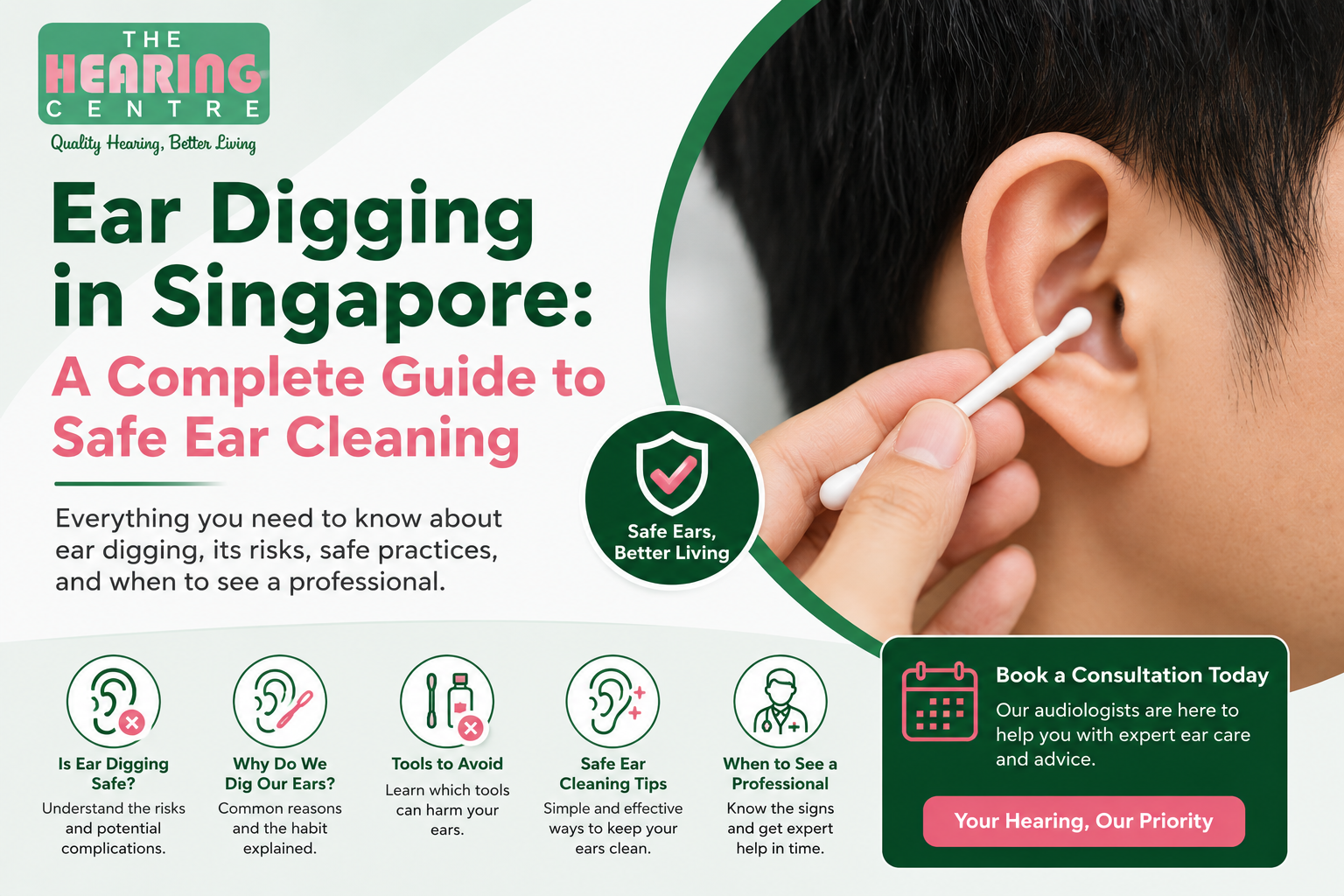
Walk into any pharmacy here and you’ll find entire shelves dedicated to ear digging. Cotton buds, metal scoops, ear picks with little LED lights. People buy them, use them daily, and genuinely believe they’re keeping their ears clean.
Most of the time, they’re making things worse.
Earwax gets a terrible reputation but it actually does a job. It’s called cerumen and your body produces it on purpose — to trap dust, stop bacteria from going deeper, and keep the canal skin from drying out. ear digging it out aggressively and you’re removing something that was there for good reason.
This guide covers everything from why home ear digging tends to backfire, to what proper professional ear wax removal in Singapore actually involves.
Why Ear Digging Is So Common in Singapore
This isn’t random. Ear digging is deeply embedded in Asian household culture. Most Singaporeans grew up having their ears dug by a parent or grandparent — it was just part of the routine, like cutting nails. The tools varied: cotton buds, plastic scoops, metal picks with small spoons at the end.
The practice goes back further in Chinese culture where ear cleaning was a skill in its own right. Street practitioners in China would clean ears outdoors using fine metal wires and picks, sometimes with small brushes attached. It was considered a relaxing, almost meditative service. Traditional barbers across Asia also cleaned customers’ ears as part of a full grooming session after a haircut.
None of this means it’s medically sound. But it explains why so many people in Singapore do it instinctively and why convincing them to stop feels counterintuitive. Understanding where the habit comes from helps put the medical advice in context.
What Earwax Actually Does
Most people treat earwax like it’s something to get rid of. It’s not.
Your ear canal has glands that produce this waxy substance constantly. It catches small particles before they go deeper. It has natural antibacterial properties. It keeps the skin inside the canal lubricated without it you’d have a constantly dry, itchy ear. And under normal conditions, old wax slowly works its way out on its own. Your jaw movement while eating and talking actually helps push it outward.
When that natural process gets disrupted — or when someone produces more wax than their canal can clear — buildup happens. It hardens, compacts, and eventually causes muffled hearing or that blocked feeling that won’t go away. At that point it needs clearing, but how you clear it matters a lot. Understanding why your hearing sounds muffled can help you figure out whether wax is actually the cause before you do anything.
The ear canal has its own built-in cleaning system that most people don’t know about. Skin cells at the eardrum slowly migrate outward — literally moving in a circle toward the canal entrance, carrying wax and debris with them as they go. Jaw movement from eating and talking speeds this process up.
In severe cases, pushing too deep doesn’t just risk the eardrum. Behind it sit three tiny bones the hammer, anvil, and stirrup that carry sound vibrations to the inner ear. A hard jab or slip with a metal pick can displace these bones. That kind of damage causes significant hearing loss and typically needs surgical correction. It sounds extreme but it happens, and it happens from the same tools you’ll find in any pharmacy here.
Under normal conditions, this migration pushes old wax to the entrance where it dries and falls away naturally. When you stick something into the canal and push wax back in, you’re disrupting a process that was already working. The wax that was migrating outward gets pushed back against the flow. That’s why regular ear digging tends to create the very buildup people are trying to prevent.
Why Home Ear Digging Usually Backfires
People reach for a cotton bud the moment their earwax feels blocked. It’s instinctive. It’s also almost always counterproductive.
The tip of a cotton bud is too wide to actually pull wax out. What it does instead is compress the wax further into the canal, making the blockage tighter and harder to shift. The more you do it, the worse it gets.
That’s before you get to the other problems:
Canal scratches — the skin inside is genuinely delicate. A cotton bud or metal scoop scrapes it easily. Those tiny abrasions are where infections get started.
Eardrum damage — push too far or too hard and you can puncture the eardrum. Perforated eardrum symptoms include pain, discharge, and a noticeable drop in hearing. Recovery takes time and sometimes needs treatment.
Infections — strip out the protective wax layer and you’ve left the canal exposed. Bacterial and fungal infections find that environment very welcoming.
Pain, discharge, or ringing in the ears means it’s gone past a home remedy situation. A specialist may run a tympanogram to check what’s happening in the middle ear before deciding how to treat it.
Professional Ear Wax Removal in Singapore
There are several methods clinics use, and the right one depends on how bad the blockage is and your ear history.
1. Manual Ear Cleaning
A specialist removes wax directly using medical-grade tools under proper lighting. More precise and controlled than anything you’d do at home.
2. Ear Irrigation
Warm water at gentle pressure flushes wax out. It’s quick, most people find it painless, and it works well when wax has been softened first with drops. Not suitable if you’ve had a perforated eardrum or ear surgery.
3. Microsuction Ear Cleaning
A small suction device operated under a microscope. No water, no pressure on the eardrum, very precise. It’s the preferred method for people with sensitive ears, a history of ear problems, or deeply compacted wax that other methods won’t shift.
4. Ear Drops and Softening Agents
Often the first step before any procedure. Drops soften hardened wax so the removal itself is quicker and more comfortable. If you want to know which ones work and how fast, how to remove ear wax blockage fast covers that in detail.
Why Going Professional Is Worth It
Done by a trained audiologist, ear digging takes about 15 minutes and carries very little risk. Compare that to weeks of repeatedly pushing wax deeper with cotton buds.
Beyond just clearing the blockage, a specialist can spot things during the process that you’d never catch at home — early ear infection signs, skin irritation, or anything else that needs attention before it becomes a bigger problem.
Signs You Should Stop Waiting and Book an Appointment
Some people sit on ear symptoms for months thinking it’ll sort itself out. Sometimes it does. Often it doesn’t.
Worth getting checked if you notice:
- Hearing that’s gone noticeably quieter or muffled
- An ear that feels full or blocked and won’t pop
- Persistent itching or discomfort deep inside
- Pain, swelling, or any discharge
- Tinnitus — ringing or buzzing that appeared recently
- Dizziness that seems connected to the ear
Impacted wax that sits untreated for a long time raises the infection risk and can cause temporary hearing loss. It’s far easier to deal with early.
How to Pick a Clinic in Singapore
Not all ear cleaning services are the same. A few things to check:
Who’s doing it — an audiologist or ENT specialist is better placed than a general walk-in clinic for anything beyond basic cleaning.
What methods they offer — microsuction and irrigation are the safer options. If a clinic only does manual scooping with no magnification, ask more questions.
Hygiene standards — tools should be sterilised between patients. Worth confirming if you’re unsure.
Location — practically speaking, choose somewhere you can actually get to without it becoming a half-day trip.
If You Do Clean Your Ears at Home
Keep it minimal. The less you interfere with the canal, the better.
What’s fine:
- Doctor-recommended ear drops to soften wax
- Wiping the outer ear with a damp cloth
- Seeing a professional if symptoms don’t clear in a few days
What’s not:
- Cotton buds inside the canal — any brand, any size
- Metal picks or sharp objects
- Ear candling. It produces no suction, the wax in the burnt candle is candle wax not yours, and burns inside the canal are a documented risk. There’s a lot of confusion about ear candling — the short version is it doesn’t work and it can hurt you
- Ignoring pain or hearing changes that stick around
For routine ear health between professional visits, 2 to 3 drops of clean olive oil after a shower two or three times a week is a safe option. It keeps the canal skin moisturised and helps wax stay soft enough to migrate out naturally. Warm the oil slightly to body temperature, not hot, before applying. This is maintenance, not treatment. If you have a real blockage, it won’t shift it, but it helps prevent compaction from building up in the first place.
Myths That Keep Circulating
“Earwax means your ears are dirty.” It doesn’t. It’s a natural secretion your body produces intentionally. Healthy ears have wax.
“Cotton buds are designed for ear cleaning.” The manufacturers actually say on the packaging they’re not for use inside the ear canal. That messaging just gets ignored.
“Ear candling pulls wax out.” It doesn’t create suction. Studies have tested this. The “wax” residue is just burnt candle material.
“Professional cleaning is uncomfortable.” Microsuction feels odd but isn’t painful. Irrigation is generally well-tolerated. Most people are surprised by how quick and low-key it is.
Keeping Your Ears Healthy Long-Term
Nothing complicated here:
- Drink enough water — dry wax compacts and hardens faster
- Cut down on long earphone sessions, especially tight in-ear buds
- Book a periodic check-up if you’re someone who tends to build up wax quickly
- Know how to clean your ears properly — for most people that means wiping the outer ear and leaving everything else alone
- Pay attention to ear wax colour — dark or black wax sometimes signals older buildup or other issues worth checking
The Short Version
Your ear handles its own cleaning under normal circumstances. The problems start when people interfere with that process using cotton buds and picks.
If you’ve got a real blockage that isn’t shifting, or your ear’s been giving you trouble for more than a few days, professional removal is the sensible move. It’s fast, it’s safe, and it actually solves the problem rather than compressing it further in.
Hearing aids Singapore handles ear wax removal, full hearing assessments, and audiological care.
Frequently Asked Questions
For the most part, no. Cotton buds and home tools push wax deeper and scratch the canal. Professional cleaning is the safer route.
Most people don’t need regular scheduled cleaning. Sort it when symptoms appear, or once a year if you’re prone to heavy buildup.
Microsuction and professional irrigation. Both are gentle on the ear and precise.
Muffled hearing, a blocked feeling, itching, dizziness, or ringing in the ears. Those are the main signs.
Generally not. Most people find it mildly strange but painless and over quickly.
Yes. Most clinics offer appropriate cleaning methods for children.
When done by trained professionals with proper equipment, yes.
Nothing inside the canal. Keep the ear dry for at least 24 hours after irrigation.
Yes, both can soften wax. Check with a doctor before using them for an extended period.
Yes. ENTs handle wax removal and ear infections along with most other ear-related problems.