TL;DR
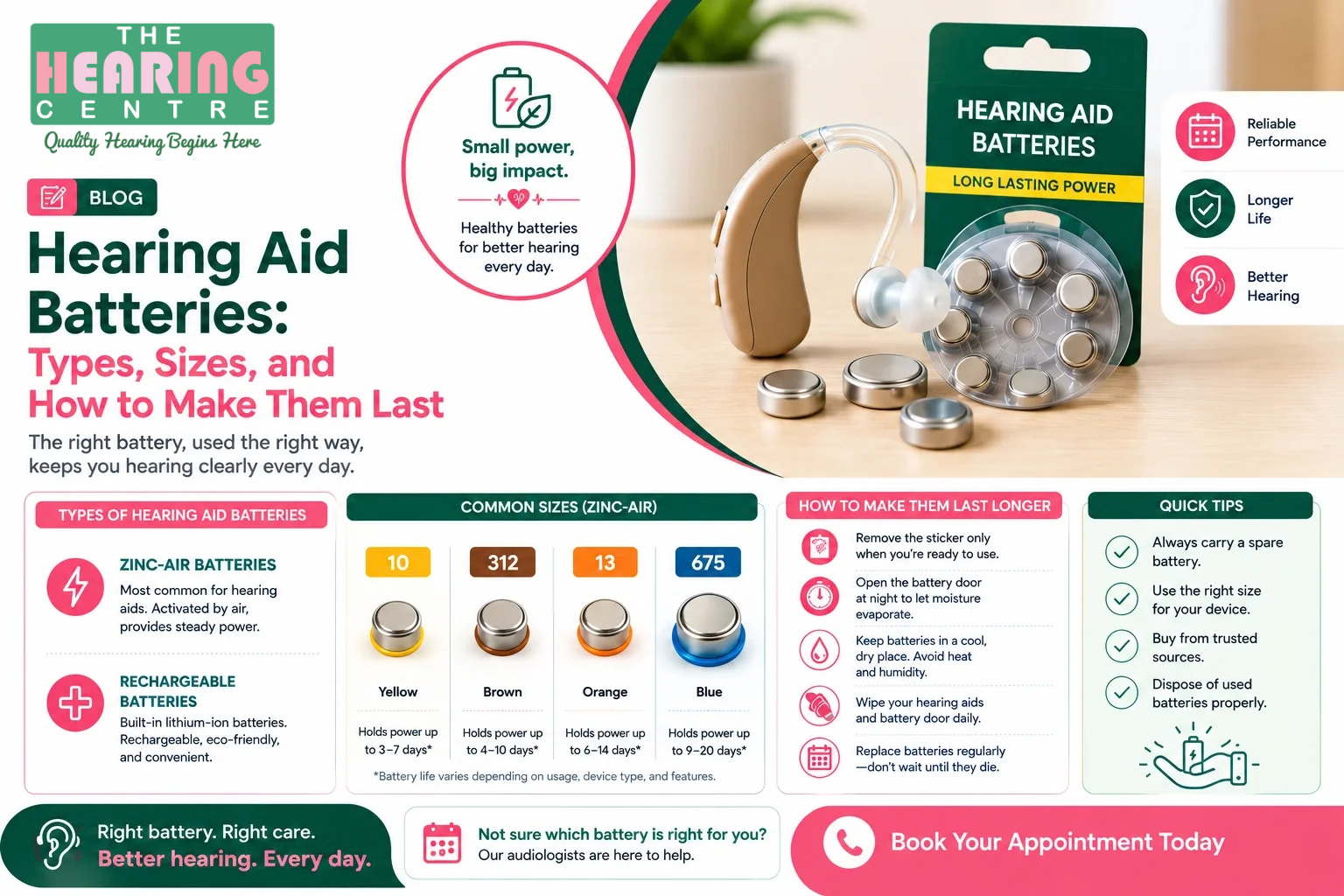
- Two kinds of hearing aid batteries. Disposable zinc-air, and rechargeable lithium-ion built into newer devices.
- Disposable ones come in four sizes. 10, 312, 13, 675. Each colour-coded, each lasting a different stretch of time.
- Rechargeable batteries run a full day per charge, and usually last 3 to 5 years before you need new ones.
- Quick way to check a dead battery. Drop it from about 10 to 15cm. Bounces a lot? It’s done.
- The Hearing Centre in Singapore helps you pick the right type and size. No guessing.
Hearing aids do a lot now. Bluetooth, noise reduction, mics that pick up direction. None of it works without power though. That’s where batteries come in, and most people never think about them until the thing cuts out mid-sentence. The Hearing Centre gets asked about this constantly. So here’s the basics. Two battery types, the sizes you’ll actually see, how long each lasts, and a few tricks to squeeze more life out of them.
Types of Hearing Aid Batteries
Two options here. Each fits a different kind of person.
Type | How It Works | Pros | Cons |
Disposable (zinc-air) | Air activates it once you peel the sticker off | Cheap, easy to swap, no charger needed | Doesn’t last long, cost adds up |
Rechargeable (lithium-ion) | Charges overnight in a dock, like a phone | Convenient, lasts years, less waste | Costs more upfront, need a charger nearby |
Disposable’s still common, especially in smaller devices where rechargeable tech hasn’t quite caught up yet. Rechargeable’s grabbed a big chunk of the market though. Most people who’ve tried both end up preferring it.
Hearing Aid Battery Sizes Explained
Four sizes for disposables. Getting the right one actually matters, they’re not interchangeable.
Size | Colour Code | Typical Life | Used In |
10 | Yellow | 3 to 7 days | Invisible-in-canal (IIC), completely-in-canal (CIC) |
312 | Brown | 3 to 10 days | Mini BTE, mini RITE, ITC |
13 | Orange | 6 to 14 days | Standard BTE, ITE |
675 | Blue | 9 to 20 days | Power BTE, some cochlear implants |
Smaller batteries go into smaller, more hidden types of hearing aids, trading off battery life to get there. Bigger sizes like 675 turn up in power BTE devices and some cochlear implants too. Not sure which size you need? Just ask your audiologist instead of guessing at a pharmacy counter.
How Long Do Hearing Aid Batteries Actually Last?
A handful of things decide this, way more than the number stamped on the pack:
- Hearing aid features. Bluetooth streaming drains power fast.
- Usage time. More hours worn, faster it drains. Nothing fancy there.
- Environment. Singapore’s humidity messes with battery life more than people think.
- Age. Unopened zinc-air batteries hold charge about 3 years and some may up tp 4 years depending on the brand. Peel the tab though, and the clock starts.
On average, disposables last 3 to 20 days depending on size. Rechargeables run a full day per charge, last 3 to 5 years total.
A Quick Way to Check If a Battery Is Dying
Here’s a trick worth knowing. Drop a disposable battery from around 10 to 15cm onto something hard, a table works fine. Bounces several times? Probably dead. Fresh batteries land with more of a dull thud and barely bounce. Not exactly science, but it works. The Hearing Centre’s audiologists mention this to nearly every new patient who comes through.
How to Replace a Disposable Battery the Right Way
A few small steps, and they actually matter:
- Open the battery drawer fully.
- Pull out the old one, check the contacts for gunk.
- Peel the sticker tab off the new battery.
- Wait about 5 minutes before putting it in. Air needs time to activate it properly. Skip this, and the battery seems to die way faster than it should.
- Insert it, close the drawer gently. Don’t force anything.
Tips to Extend Battery Life
A few habits that genuinely help. Open the battery door at night so moisture can escape, even with rechargeables turned off. Switch your hearing aids off completely when you’re not wearing them, not just paused. Keep spares at room temperature, away from heat and sunlight. Grab a dehumidifier kit if you’re somewhere humid but separate the battery when drying the hearing aids, which in Singapore is, well, everywhere. And don’t just toss loose batteries in your bag or pocket where they can hit metal and short out.
Storing and Disposing of Batteries Safely
A few basics people skip:
Wash and dry your hands first. Keep spares away from kids and pets, small enough to swallow, easy to forget that. Check the expiry date if batteries have been sitting around a while. And never bin used ones with regular trash — drop them at a recycling point instead
Rechargeable vs Disposable: Which Should You Pick?
Neither wins outright. Comes down to your life. Rechargeable suits people who like routine, charge overnight, wear all day, done. Disposable works better if you travel a lot or don’t want to depend on finding an outlet. Our guide on rechargeable vs battery-operated hearing aids breaks this down properly if you’re still torn.
When to See a Specialist
Sometimes it’s not actually the battery. Going through them faster than expected? Sound still unclear with a fresh one in? Hearing changing suddenly? Worth getting checked instead of just blaming the battery every time. Regular hearing aid care and knowing how often to clean your hearing aids both affect battery life more than people realise, buildup and moisture drain power faster than normal wear does.
Where to Get Help in Singapore
At The Hearing Centre, our audiologists help you pick the right battery type and size for your device, your lifestyle, and how much fuss you’re willing to put up with. We stock batteries directly too, so you’re not stuck sourcing them somewhere sketchy.
Got hearing aids for a child? Our children’s hearing aid solutions team walks parents through battery safety, since tiny batteries and small kids really don’t mix. For anyone going through hearing loss treatment or working with a hearing specialist, sorting your batteries out properly just means fewer surprise interruptions. We also run audiometry testing if hearing changes show up alongside battery trouble, just to rule out anything bigger than a simple power issue. Check out hearing aids singapore for more on how The Hearing Centre supports patients beyond just batteries.
Final Thoughts
Hearing aid batteries aren’t the exciting part of wearing a hearing aid, but they decide whether your device actually works when you need it to. Rechargeable or disposable, whichever you pick, knowing the right size, storing them properly, and catching a dying one early with the bounce test saves a lot of hassle. If anything about your battery routine feels off, The Hearing Centre is a good place to get a straight answer.
Frequently Asked Questions
Not really better, just different. Rechargeable suits people who want convenience and less waste. Disposable works well for travellers or as backup without easy charger access.
Usually a full day per charge, and 3 to 5 years overall before needing replacement, depending on how much you use them.
Depends on your device. Smaller ones like CIC or IIC usually take size 10. Bigger BTE devices often take size 13 or 675. Ask your audiologist if you’re not sure.
Hearing aid features. Bluetooth streaming drains power fast — and so does heavier sound processing, like noise reduction or speech-focusing features working overtime in a noisy environment. The more the chip has to work, the faster it drains. Humidity plays a part too, Singapore’s weather isn’t kind to batteries, and older batteries naturally hold less charge than fresh ones, so don’t expect the same runtime from a battery that’s been sitting around a while.
No. That causes condensation, which can damage the battery. Room temperature, somewhere dry, works best.
Try the bounce test. Drop it from 10 to 15cm onto a table. Bounces a lot? Probably dead.
Yes, even unopened ones. Unused zinc-air batteries hold charge about 3 years, so check the date before using stored ones.
Yes, as long as it’s a trusted retailer or clinic. Cheap, unverified batteries can leak or damage your device.
Never in regular trash. Drop them at a recycling point or bring them back to your clinic.
The Hearing Centre can walk you through battery types, sizes, and replacement schedules based on your specific hearing aid.