TL;DR
New parents have a hundred small worries, and hearing is one that’s easy to miss since babies can’t just tell you something’s wrong. The good news is Singapore has a solid system already in place for this. Almost every baby born here gets checked before going home, and if you missed it, or want a closer look later, there are good options for that too. This guide covers what a baby hearing test Singapore actually involves, when to get one done, what the results mean, and what signs to watch for as your child grows.
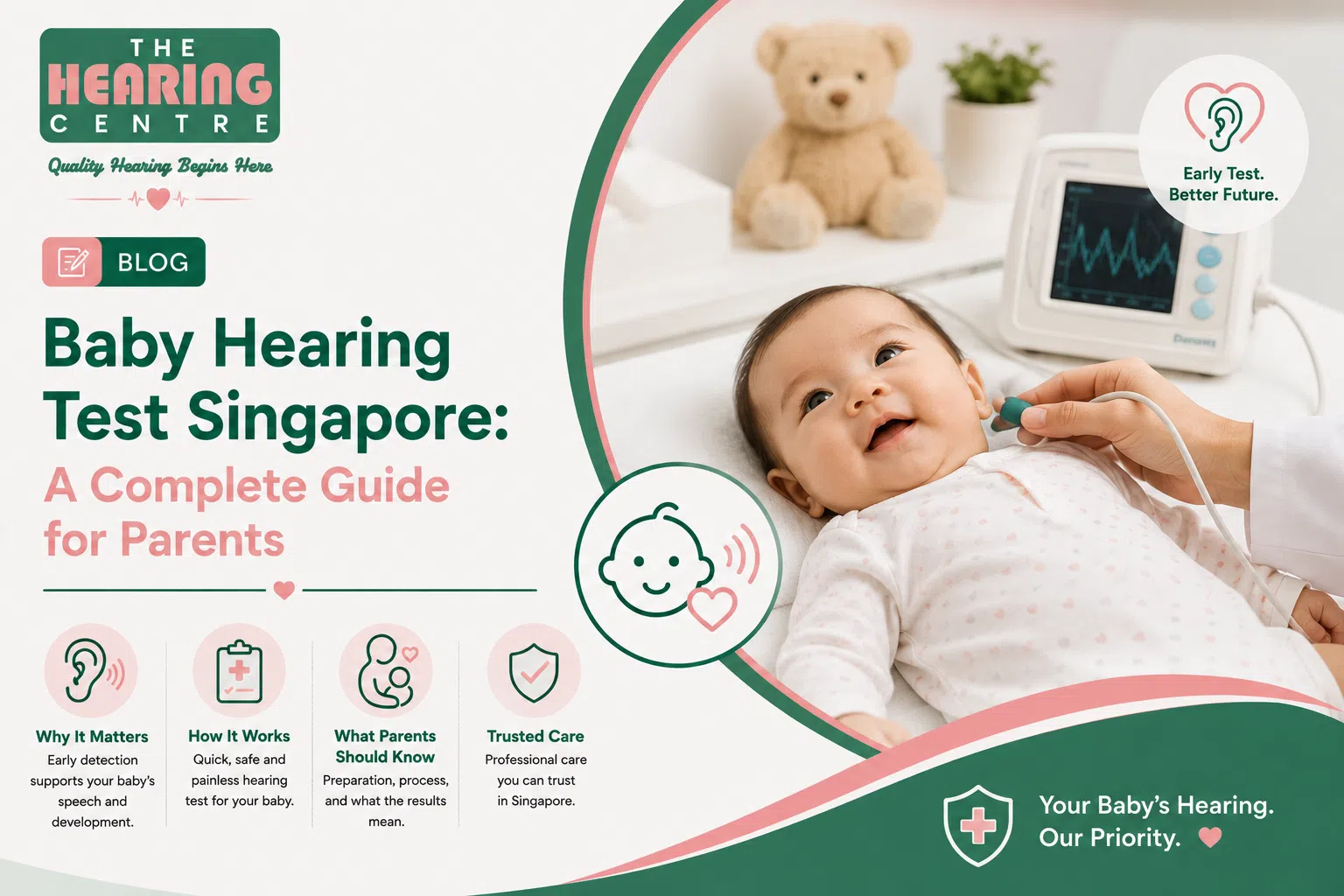
A baby hearing test Singapore hospitals run is basically a check to see if your baby’s ears and hearing nerves are working the way they should. For newborns, it’s usually a quick check done in hospital in the first few days after birth. For older babies and toddlers, the test looks different and depends a lot on how old the child is and how alert they are on the day.
There’s a difference worth knowing. Screening is a fast pass-or-refer check, done on nearly every newborn. A full hearing test is more detailed, and that’s what happens next if the screening flags something, or if a parent notices something later that doesn’t feel right.
About 1 to 4 babies out of every 1,000 born in Singapore have some level of hearing loss at birth. That sounds like a small number, but hearing is so tied to how babies learn to talk, connect, and pick up language in those first couple of years that catching a problem early really does change how things turn out.
If it’s missed, hearing loss in a baby can quietly get in the way of speech, learning, and Communication.None of that shows up right away. It builds up slowly, which is exactly why “he’ll grow out of it” isn’t a great plan. A proper baby hearing test Singapore families can get, done at the right time, catches this stuff long before it turns into a bigger problem.
If your baby was born early, doctors sometimes use “corrected age” instead of actual age when working out timing, since babies born early tend to catch up a little slower.
Different ages need different tests. Here’s roughly how it breaks down.
Test | Best For | What It Checks |
OAE (Otoacoustic Emissions) | Newborns | Whether the inner ear responds to sound |
AABR (Automated Auditory Brainstem Response) | Newborns | How well sound travels from the ear to the brain |
ABR / ASSR | Babies who fail screening, any age | A closer look at hearing levels and the type of loss |
Tympanometry | Babies and toddlers | How well the eardrum and middle ear are working |
Visual Reinforcement Audiometry (VRA) | Around 6 months to 2.5 years | How the baby reacts to sound, using a small reward |
Play Audiometry | Roughly 2 to 6 years | Hearing levels through a simple game |
Newborn checks like OAE and AABR are quick and don’t hurt at all. If a fuller test like ABR or ASSR is needed, it’s usually done while the baby is asleep or lying still, since the child needs to stay quiet for it to work.
The check at birth helps a lot, but hearing loss can also show up later, from infections, genes, or other things that build up over time. Keep an eye out for these, roughly by age:
One or two of these on their own isn’t a big deal, since every kid grows at their own pace. But a pattern of missed steps is worth a baby hearing test Singapore parents can book, rather than just waiting and hoping.
Some babies need a closer eye than others, including those with:
None of these mean there’s definitely a problem. They just mean a baby hearing test Singapore clinics offer, along with a closer follow-up after, is a smart move and not something to skip.
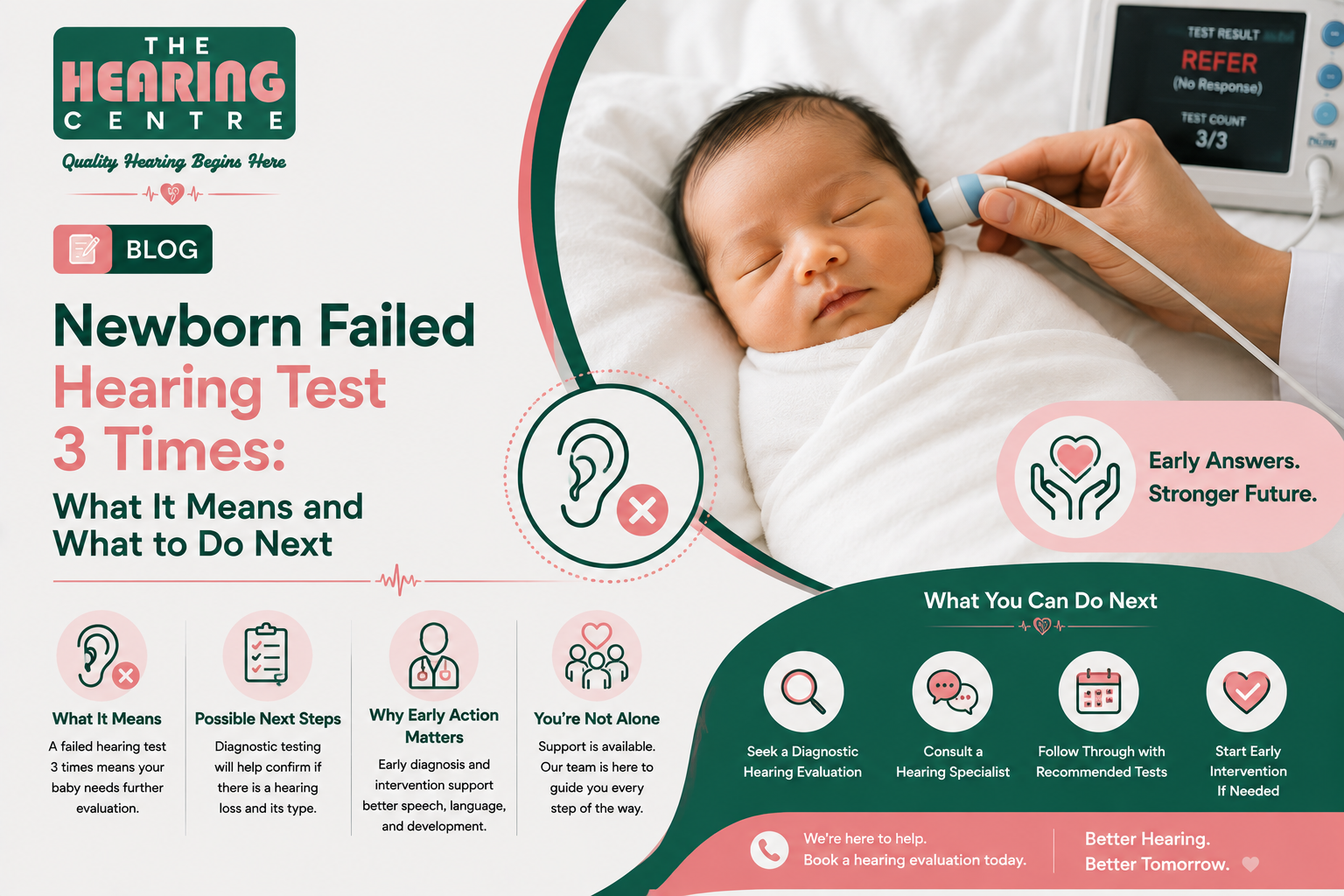
First off, don’t panic. A “refer” or “did not pass” result on a baby hearing test Singapore hospitals run is pretty common, and it does not automatically mean hearing loss.
What usually happens next:
The main thing is not skipping that follow-up appointment. Missing the appointment is way more common than actual hearing loss turning out to be true, but you won’t know which one it is until the test gets done.
Screening at public hospitals is often part of the usual maternity care, sometimes subsidised, so it’s worth asking your hospital directly. Fuller tests done later, like ABR, ASSR, or tympanometry at a private hearing centre, cost more since they need special equipment and a trained audiologist’s time. Prices differ from clinic to clinic, so ask for a clear quote upfront instead of guessing what a baby hearing test Singapore visit will end up costing.
Parents are usually more nervous than the baby during a baby hearing test Singapore visit. A few things that help:
None of this hurts. The hardest part for most babies is just being handled and having something placed near their ear, not the test itself.
Testing a newborn and testing a 3-year-old are nothing alike. Newborns can’t respond on cue, so the check relies on machines reading the body’s own response. Toddlers and older kids can be coaxed into play-based tests like VRA or play audiometry, where they respond to sound through a small game instead of lying still. As kids get older, testing starts to look more like a normal adult hearing test, with headphones and buttons to press.
At The Hearing Centre, based right here in Singapore, our team runs full hearing tests for babies and children, including ABR and ASSR testing for babies who need a closer look beyond the newborn check. If hearing loss gets confirmed and support is needed, we also work with families through our hearing aids for children service, fitted and adjusted for growing ears.
Not sure if it’s time for a test? Our guide on newborn hearing tests explains what to expect, and our piece on early signs of hearing loss in children is worth a read if your child is a bit older and something feels off.
We’re also known for our work with Hearing aids Singapore more broadly, so if hearing support ends up being part of your child’s path, you’re already in the right place.
Most babies get through their hearing screening just fine, and that’s genuinely the most common outcome. But when something does get flagged, following up quickly matters way more than worrying about it does. A baby hearing test Singapore offers is quick, doesn’t hurt, and is honestly one of the easiest ways to make sure your child’s speech and growth start off on the right foot.
Newborn hearing screening is standard practice at hospitals here and strongly recommended for every baby, though it’s not a legal requirement. Nearly every baby born here still gets checked before going home.
Ideally within the first few days, before leaving the hospital. If that gets missed, testing should still happen by one month of age.
It doesn’t mean hearing loss for sure. A follow-up test gets booked, and only a full test can confirm if there’s an actual issue.
No. Neither the screening nor the fuller tests hurt at all. Babies usually sleep through the longer ones, and screening only takes a few minutes.
Yes. The screening only checks hearing at that moment. Hearing loss can turn up later from infections, genes, or other causes, which is why watching for signs as your baby grows still matters.
OAE checks if the inner ear responds to sound. AABR checks how well that signal travels from the ear to the brain. Some hospitals use just one, some use both for a fuller picture.
Around 6 months to 2.5 years old, testing usually moves to Visual Reinforcement Audiometry. From about age 2 to 6, play audiometry works well since kids can follow a simple game.
Sometimes. Doctors often use corrected age rather than actual age when timing follow-up tests for babies born early, since they can take a little longer to catch up.
Newborn screening is often part of the standard hospital maternity package, sometimes subsidised. Fuller tests at private clinics vary by provider, so check directly with your insurer or the clinic.
Getting started early, ideally by 6 months, gives the best results. That might mean hearing aids, ongoing check-ups, speech therapy, or a referral to a specialist, depending on the type and how bad the hearing loss is.