
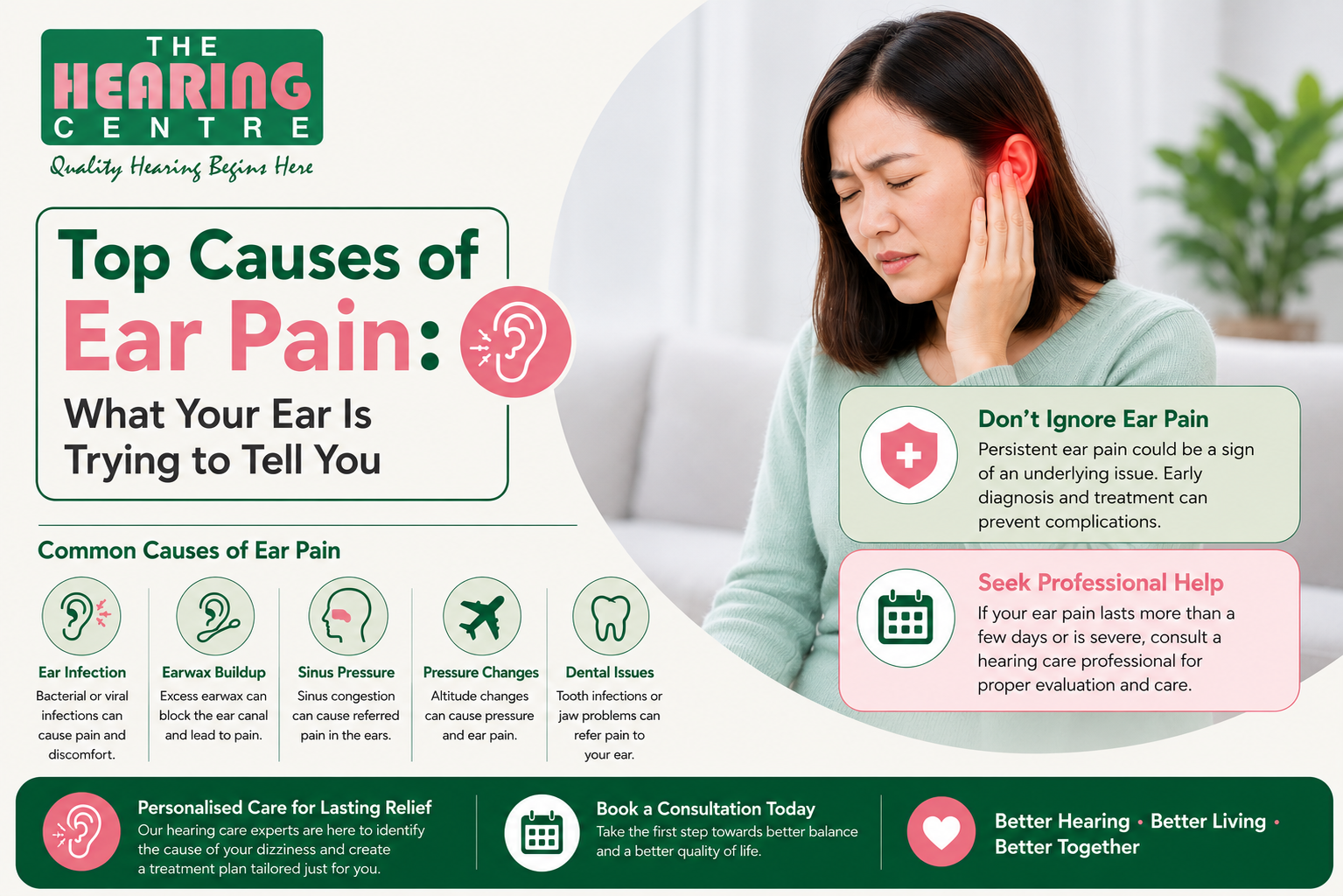
Some people describe it as a sharp stab. Others say it’s more of a deep throb that won’t quit. Either way, ear pain tends to demand your full attention from the moment it starts.
What catches people off guard is how many different things can cause it. It’s not always an infection. Sometimes it’s not even the ear. Getting the cause right matters because what helps for one thing does nothing for another.
Here’s a plain breakdown of what’s actually behind ear pain, how to tell the difference, and what to do about it.
Primary vs Referred Ear Pain
Worth knowing this upfront because it changes everything about finding the cause.
Primary ear pain starts in the ear. An infection, a wax blockage, a damaged eardrum. The problem is there, the pain is there.
Referred ear pain is trickier. The ear feels like it’s the problem but it isn’t. The jaw, throat, sinuses, or a tooth can send pain signals along shared nerve pathways that land in the ear. Someone with a dental abscess or tonsillitis will often feel it mainly in their ear. The ear looks completely fine on examination because it is fine.
This is why treating the ear when the real issue is the jaw or throat doesn’t fix anything. The pain just keeps coming back until someone looks at the actual source.
Common Ear Pain Causes
1. Outer Ear Infection (Swimmer’s Ear)
In Singapore this one comes up a lot. Warm weather, humidity, and the amount of time people spend in pools create the ideal conditions for it. Water sits in the ear canal, bacteria grow, and the canal gets inflamed.
It feels like a deep ache or throbbing specifically inside the canal. The telltale sign is that pulling or pressing on the outer ear makes the pain noticeably worse. That’s what separates it from a middle ear infection. Some discharge, redness, and swelling inside the canal is common too.
Antibiotic ear drops clear it up. The ear needs to stay dry until it does.
2. Middle Ear Infection
This one tends to hit after a cold or upper respiratory infection. Bacteria or viruses travel up the Eustachian tube, inflammation builds behind the eardrum, pressure rises, and the pain can get quite bad.
It feels deeper than swimmer’s ear. Less sharp, more pressure. Often comes with muffled hearing and a sense of fullness in the ear. Children get this more often than adults, usually with a fever. In some cases the eardrum perforates under the pressure which actually causes the pain to ease suddenly. That still needs proper treatment.
3. Earwax Buildup
The most common reason people walk into a hearing aid clinic with ear pain. The ear is self-cleaning but this process gets disrupted easily. Cotton buds are the main culprit. Instead of removing wax they push it back against the eardrum, compact it, and the pressure builds.
The pain from wax is usually a dull pressure rather than something sharp. Hearing sounds muffled. There’s no fever. It doesn’t go away on its own once the wax is fully impacted.
4. Eustachian Tube Dysfunction
The Eustachian tube balances pressure between the middle ear and the back of the throat. When it gets blocked from a cold, allergies, or sinus issues, that pressure balance breaks down.
Most people know this feeling from flying. That blocked sensation on descent that won’t pop. When a cold keeps the tube like that for days, the discomfort becomes persistent. Yawning and swallowing give temporary relief. Treating the underlying congestion or allergy is what actually fixes it.
5. Barotrauma
Sudden pressure changes during flying or diving that the ear can’t equalise fast enough. The pain hits during descent on a flight or when going deeper underwater. Swallowing, chewing gum, or pinching the nose and blowing gently usually helps. Flying with a blocked nose is one of the most common ways to end up with barotrauma serious enough to need treatment.
If the pain is severe, doesn’t resolve, or hearing drops after the flight or dive, get it checked. The eardrum can tear from pressure injury and that needs medical attention.
6. Perforated Eardrum
A hole or tear in the eardrum from a severe infection, a sudden loud noise, a head injury, or something poked into the ear canal. The moment it perforates is usually very painful. After that the pain often eases because the built-up pressure has released.
What follows is muffled hearing, sometimes ringing, and occasionally fluid draining from the ear. Small perforations usually heal without intervention. Larger ones may need surgical repair. Water needs to stay out of the ear completely while it heals. If you want to understand what this looks and feels like, our perforated eardrum symptoms page goes into the detail.
7. TMJ and Jaw Problems
The jaw joint sits right next to the ear canal. When it’s inflamed or misaligned, the pain tends to register in the ear more than the jaw, which is why people repeatedly don’t connect the two.
TMJ ear pain generally gets worse when chewing, yawning, or clenching. Critical just in front of the ear on the jaw joint creates tenderness. The ear itself looks entirely normal. An ENT or dentist handles this, not ear drops or antibiotics.
8. Sinus Infections and Allergies
Singapore’s moisture, dust, and pollen levels mean sinus problems are honestly common here. Excited sinuses build up pressure that travels over shared pathways into the ear. The pain tends to sit across the cheekbones and forehead alongside the ear rather than in isolation.
Allergies causing Eustachian tube dysfunction are a frequent driver of ear pain that comes and goes. Treating the allergy reduces how often this happens.
9. Throat Infections and Dental Problems
Strep throat, tonsillitis, and tooth abscesses send pain through the glossopharyngeal nerve which runs from the throat up toward the ear. The ear feels like the problem. It isn’t. If ear pain comes with a sore throat or toothache, the ear may just be where the pain is landing rather than where it’s starting.
10. Ear Pain When Swallowing
This gets its own section because it’s one of the more misunderstood symptoms. Ear pain that specifically comes on when swallowing nearly always points away from the ear. The Eustachian tube opens each time you swallow. If the throat or that tube is inflamed, swallowing moves the inflamed tissue and sends pain into the ear. Tonsillitis and strep throat are the most common causes. More detail at our ear pain when swallowing guide.
Ear Pain in Children
Kids get ear pain far more often than adults. Their Eustachian tubes are shorter and more horizontal which makes it easier for bacteria to travel up from the throat. Middle ear infections after colds are extremely common in children under five.
A young child with ear pain often can’t say that’s what’s happening. They pull at the ear, become irritable, sleep badly, and may have a temperature. If a child has recently had a cold and becomes unsettled and feverish, ear infection is near the top of the list.
Repeated infections, three or four or more a year, need proper assessment. Untreated middle ear infections over time affect hearing, which in turn affects speech development. More on this at our ear pain in kids guide.
When to See a Doctor
Most mild ear pain from minor infection or brief pressure change settles within a few days. These signs mean don’t wait:
- Pain getting worse after two to three days rather than better
- Fever alongside the ear pain
- Discharge from the ear, especially with blood or smell
- Sudden hearing loss
- Dizziness or balance problems with the ear pain
- Swelling or redness behind the ear
- A young child whose ear pain isn’t improving
- Ear pain that followed a head injury or something entering the canal
The later some of these get treated, the more complicated recovery becomes.
What Actually Helps
Ear infection: Needs proper treatment. Outer ear infections take antibiotic drops. Middle ear infections may need oral antibiotics or monitored observation. Over-the-counter pain relief manages symptoms in the meantime but doesn’t clear the infection.
Earwax: Professional removal. Softening drops can help for mild cases. Significant blockages need hands-on clearing.
Pressure and Eustachian tube: Decongestants short term, antihistamines if allergies are driving it. Steam inhalation helps. Avoid flying or diving until it resolves.
TMJ pain: An ENT or dentist assessment. Night guards for teeth grinding, jaw exercises, anti-inflammatories. The ear doesn’t need treating.
Referred pain from throat or teeth: Treat the source. The ear pain follows.
While waiting: Ibuprofen or paracetamol for pain. A warm cloth held against the outer ear helps with comfort. Nothing goes into the ear canal.
Preventing Ear Pain
Dry the ears after swimming. Tilt your head side to side and let water drain naturally. Don’t use cotton buds. In Singapore’s climate, moisture in the ear canal is a fast route to infection.
Leave the ear canal alone. Cotton buds compact wax and scratch the skin. The ear manages its own cleaning. Let it.
Equalise pressure when flying or diving. Swallow, chew, yawn during descent. If you’re flying with a severe cold, consider whether it’s worth it. A blocked nose during a flight is a common reason people end up needing treatment afterward.
Get allergies managed. Repeated sinus inflammation keeps the Eustachian tube under constant pressure. Proper allergy treatment cuts down how often ear pressure problems develop. Worth reading our ear pain causes guide if the pattern keeps repeating.
See a dentist if you grind your teeth. Bruxism drives TMJ problems which drive referred ear pain. A night guard addresses this before it becomes something recurring.
Frequently Asked Questions
Outer and middle ear infections, earwax buildup, Eustachian tube pressure problems, and pressure changes from flying or diving. Pain from the jaw, throat, and sinuses is also common and often incorrect for an ear problem.
Referred pain. The jaw, throat, or sinuses are the actual source. Pain travels along common nerve pathways and registers in the ear even nevertheless the ear itself is fine.
Yes. The glossopharyngeal nerve connects the throat and ear. Tonsillitis, strep throat, and throat abscesses frequently send pain into the ear through this nerve pathway.
Usually throat or Eustachian tube inflammation. Every swallow moves those tissues and triggers the pain. Tonsillitis and strep throat are the most frequent causes.
It needs attention promptly. Middle ear infections are very common in young children and repeated infections without treatment affect hearing and speech development.
Yes. Impacted wax pressing against the eardrum creates a real dull pressure pain alongside muffled hearing. Professional removal sorts it quickly.
Outer ear infection pain gets worse when you pull or touch the outer ear. Middle ear infection feels deeper, more like pressure and fullness, often with fever. Pulling the ear makes no difference to middle ear pain.
Only if you know the cause. Wax-softening drops are safe. Antibiotic drops need a proper diagnosis first. Never use drops if there’s any chance the eardrum has perforated.
Discharge with blood, sudden hearing loss, dizziness, swelling behind the ear, or high fever with severe pain all need same-day medical assessment.
Pressure pain from flying usually clears within hours. Outer ear infections take five to seven days with treatment. Middle ear infections seven to ten days. Wax pain goes once the wax is removed. Anything still there after a week needs a proper look. Our Comprehensive ear infection treatment page covers what to expect from treatment timelines.