
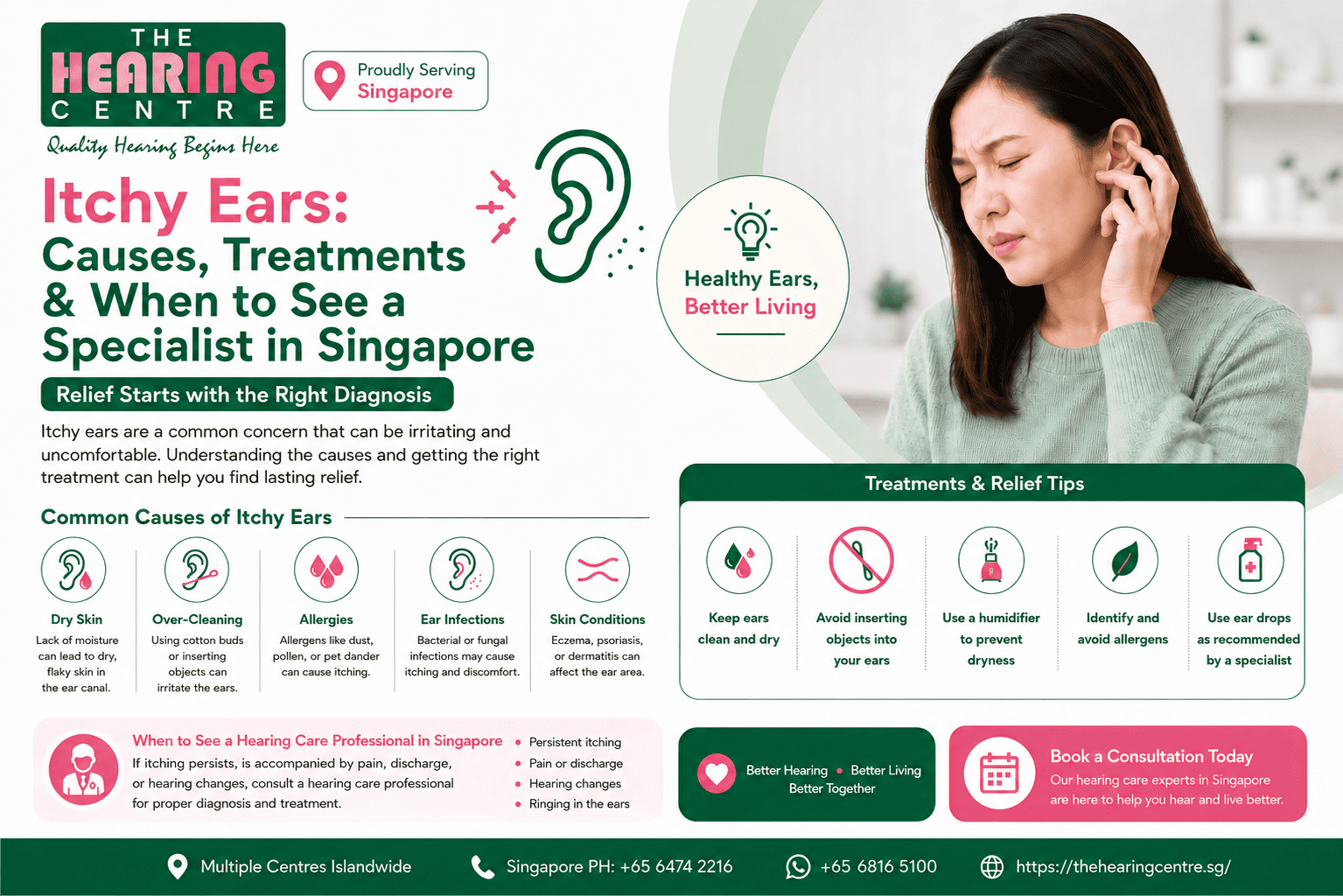
Itchy ears are a pain. Not in a serious way usually, but in that annoying, can’t-ignore-it way that makes you want to stick a pen in your ear just to get some relief.
I see this a lot. People come in having already tried cotton buds, their little finger, the corner of a tissue — anything to scratch that itch. Nine times out of ten, they’ve made it worse.
So let’s talk about what’s actually going on, what causes it, and what you should (and shouldn’t) do about it.
What Does It Mean When Your Ears Are Itchy?
The skin lining your ear canal is thin. Thinner than most skin on your body. So when something irritates it — even slightly — you feel it fast.
Sometimes it’s one ear, sometimes both. A lot of people are surprised to learn their ears look completely normal from the outside even when the itch inside is driving them mad. That’s because the problem is deeper in the canal where you can’t see it.
What people usually notice:
- A tickle or itch somewhere deep inside
- That constant urge to dig around in there
- A dry or tight sensation in the canal
- Mild soreness when pressing on the outer ear
If it’s been around more than a few days and isn’t clearing up on its own, it needs to be looked at properly. An audiologist can usually spot the cause in about two minutes just by looking inside.
Common Causes of Itchy Ears
1. Earwax Buildup
Earwax gets a bad reputation but it’s actually doing a job. It keeps dust and bacteria out of the canal. The problem starts when there’s too much of it, or when people try to clean it out and push it further in instead.
The itch from wax tends to sit deep in the ear. Sometimes hearing goes slightly muffled at the same time. Most people’s first instinct is to grab a cotton bud — don’t. Check out how to clean your ear properly before trying anything at home.
2. Dry Skin
The ear canal needs some moisture to stay comfortable. In Singapore where air-conditioning is basically everywhere all day, skin dries out fast — including inside the ear. Older adults get this more often. It feels like a tightness or dryness rather than a sharp itch.
3. Fungal Infections
This one’s more common in Singapore than people realise, mostly because of the humidity. Swimmers, people who wear earphones for hours, anyone whose ears stay damp — these are the people who end up with fungal infections.
The itch is more intense than plain dryness. It doesn’t let up. Sometimes there’s a slight smell or some discharge too. This won’t fix itself. It needs antifungal drops from a doctor.
Special note for people with diabetes: Fungal ear infections are more common and can be more severe in people with diabetes. The infection can spread beyond the ear canal if left untreated. If you have diabetes and are experiencing intense ear itching, don’t wait — get it assessed promptly rather than trying home remedies first.
4. Bacterial Infections
Swimmer’s ear is the most common one. The ear canal gets red, swollen, and sore — not just itchy. If pressing on the outer part of your ear hurts, that’s a sign bacteria are involved and not just dry skin.
5. Allergic Reactions
Sometimes the itch has nothing to do with the inside of the ear at all. New earrings, a different shampoo, hair dye, even new earphone tips can cause an allergic reaction. This kind of itch tends to stay near the outer ear rather than deep inside.
6. Skin Conditions
Eczema and psoriasis impact the ear canal the same way they affect other skin. If you previously deal with either of these conditions somewhere, and your ears are now itching with some detachment, it’s possibly the same thing showing up in a new spot.
7. Hearing Aids and In-Ear Devices
Anything that settles inside your ear for hours every day catches warmth and moisture. That generates the right conditions for irritation and occasionally infection. If the itching started around the same time you got hearing aids or started using earphones greatly, that connection is worth paying attention to. There’s a lot more detail on this in the Taking Care of hearing aids to Prevent Ear Infection article.
8. Nasal Allergies and the Eustachian Tube
This one startles a lot of people. If you have allergic rhinitis, a sensitive or obstructed nose the excess mucus can drip toward the back of your nasal passage, where the Eustachian tubes join your nose to your ears. That irritation travels, and you feel it as a intense itch inside the ear canal even though the true problem is in your nose.
If your itchy ears come with a runny nose, sneezing, or seasonal patterns, the root cause may be allergic rather than anything wrong with the ear itself. Treating the allergy, not just the ear, is what actually fixes it.
9. Foreign Objects
Less common in adults, but worth knowing. Anything sitting in the ear canal that shouldn’t be there — including insects, which do occasionally enter the outer ear — causes immediate irritation. Children are more likely to accidentally push small objects in. If you suspect something is lodged inside, do not attempt to remove it yourself. See a specialist
Symptoms to Watch For: Itchy Ear
Itching by itself isn’t usually a reason to panic. These things alongside the itch are:
- Discharge with a bad smell
- Visible redness or swelling inside the canal
- Real pain when you touch or tug the outer ear
- Hearing that suddenly feels blocked
- Skin that’s flaking or looks crusty
Any of those means something more is going on and it needs to be checked.
How Ear Itching Gets Diagnosed
An audiologist or hearing specialist looks inside with a small light called an otoscope. It takes maybe two minutes. Doesn’t hurt.
Depending on what they find, they might also:
- Do a basic hearing check if wax or infection might be blocking things
- Take a swab if they suspect a fungal or bacterial infection
- Ask about your habits — do you swim a lot, wear hearing aids, have skin conditions, recently changed products near your ears
Most of the time the visual exam tells them everything.
What Not to Do When Your Ears Are Itchy
This matters as much as the treatments.
Cotton buds inside the canal. Already covered but worth repeating: they compact wax against the eardrum, scratch the canal skin, and create the exact conditions for infection. The outer ear only — never past the canal entrance.
Ear candles. There is no clinical evidence that ear candling removes wax or relieves itching. There is evidence it can cause burns and wax deposits from the candle itself. Avoid entirely.
Scratching with any object. Pens, bobby pins, fingernails, tissue corners — all of these create micro-cuts in the thin canal skin. Those cuts get infected. The itch gets significantly worse. It feels satisfying for about three seconds and causes problems for days.
Using the wrong ear drops. Antifungal drops won’t help a bacterial infection. Antibiotic drops won’t help dry skin. Using the wrong type can worsen things or delay the right treatment. Always confirm with a professional before applying anything.
Swimming without ear plugs when you already have a problem. If your ear is already irritated, water exposure — especially in pools with chlorine — makes it worse. Hold off on swimming until it’s resolved.
Treatment Options for Itchy Ears
Earwax Removal
If wax is the culprit, get it taken out professionally. Micro-suction is the cleanest way — no water, no flushing, just a tiny suction device that clears it quickly. No discomfort.
And again — stop using cotton buds inside the ear. They push wax deeper and compact it against the eardrum. They’re not cleaning anything.
Ear Drops
The right drops depend on the cause:
- Antifungal drops for fungal infections
- Antibiotic drops for bacterial infections
- Steroid drops when the skin is inflamed
Using the wrong type won’t help. A doctor needs to confirm which one you actually need.
For Dry Skin
A specialist might recommend a specific moisturising solution safe for use in the ear canal. Not something you’d find on your own in a pharmacy — they’ll tell you exactly what to use and how.
Small Changes That Make a Difference
After swimming or showering, tilt your head and let the water run out. Don’t dig around trying to dry it. If you think a new product might be the trigger — earrings, shampoo, anything — stop using it for a week and see if anything changes.
Clean your earphones and hearing aids regularly. They pick up moisture and dead skin cells faster than you’d expect.
If Hearing Aids Are the Issue
Usually it’s either the fit or the cleaning routine. A quick adjustment appointment sorts it out most of the time. A properly fitted, properly cleaned device shouldn’t cause ongoing ear problems.
Home Remedies for Itchy Ears
For mild itching, a few things can help at home.
A warm cloth rested against the outer ear — not inside it — can ease the irritation. Not a fix, but it helps in the moment.
Some over-the-counter ear drops work well for wax softening or mild irritation. Read the label and don’t use them for more than a few days without checking with a professional first.
The hardest advice to follow: leave it alone. Scratching the canal skin makes tiny cuts. Those cuts get infected. The itch gets worse. It’s a cycle that starts with one cotton bud at 11pm.
Limit water getting in when you can. Ear plugs for swimming, gentle patting dry after showers, nothing inserted to dry it out.
Olive oil drops
One to two drops of warm (not hot) olive oil placed into the ear canal after a shower can help relieve mild itching caused by dryness. It softens any dry skin and provides brief relief. This is not a treatment for infection — if there is discharge, pain, or hearing changes alongside the itch, skip the olive oil and see a professional. And use the actual bottle — room temperature, tipped slightly, a drop or two, then tilt your head to let it settle. That’s it.
Antihistamines for allergy-driven itch
If your itching is allergy-related — worse in certain seasons, accompanied by a runny nose or sneezing — an over-the-counter antihistamine may help reduce the itch. It won’t fix dry skin or infection, but for allergic ear irritation it addresses the actual cause. If you’re not sure whether your itch is allergy-driven, an audiologist can help work that out at your assessment.
Preventing Itchy Ears
Don’t over-clean. The ear canal manages itself. Cleaning too often strips away the wax that’s actually protecting it.
Keep ears dry. Moisture is behind most fungal and bacterial infections. After any water exposure, let it drain naturally.
Think about what touches your ears. New products are a common overlooked trigger.
If you get recurring infections, wear hearing aids daily, or have eczema — an annual check-up with a hearing specialist is worth having. Problems caught early are simple to deal with.
One thing worth knowing — if the itch happens mainly at night and feels like it’s really deep inside, ears itching deep inside at night explains why that pattern happens and what tends to actually fix it.
Itchy ears are common and usually not serious. But “usually” isn’t always. If yours keep coming back or come with anything else going on — pain, discharge, hearing changes — get it properly checked rather than guessing at home.
Hearing aids Singapore offers proper ear assessments. They’ll look inside, tell you exactly what’s happening, and sort it out properly.
Frequently Asked Questions
The canal skin is irritated deeper in than you can see from the outside. Dryness, early fungal growth, or mild wax buildup can all cause itching before anything visible develops.
Yes. Hardened or compacted wax presses against the canal walls constantly. Left long enough, it can cause a secondary infection on top of the itch.
The itch is stronger and more constant than regular dryness. A faint smell or some discharge can show up too. A swab test from a specialist confirms it.
Yes. Ear infections are more common in children, and swimmer’s ear is very common in kids who spend time in pools. A child pulling at their ear regularly should be checked.
They can, especially if cleaning is irregular or the fit is slightly off. The itchy ear canal article covers this specifically for hearing device users.
Only on the very outer part of the ear. Never inside the canal.
A few days if wax is removed or drops are used correctly. Skin conditions like eczema take longer and need ongoing treatment.
Yes — earrings, hair products, pollen. Remove the likely trigger and see if it improves.
If it’s been more than a few days, if there’s pain, discharge, swelling, or your hearing feels off. Earlier is always better with ear problems.
It can, especially if ears stay moist frequently. Completing the full treatment course and keeping ears dry helps prevent it returning.