So you’ve decided to look into hearing aids. Maybe your spouse kept telling you to, maybe you noticed yourself missing bits of conversations, or maybe a doctor brought it up. Whatever got you here — the next thing most people do is google the price and immediately feel overwhelmed.
Phonak is one of the names that keeps appearing. And yeah, they’re not cheap. But people who wear them rarely switch brands, and that tells you something.
This guide gives you a real-world look at what Phonak hearing aids cost in Singapore, what you get at each price point, and how to figure out which model is worth your money.
Why Phonak Hearing aids?
Honestly, there are several solid hearing aid brands in Singapore. Phonak isn’t the only good option. But a few things about them stand out.
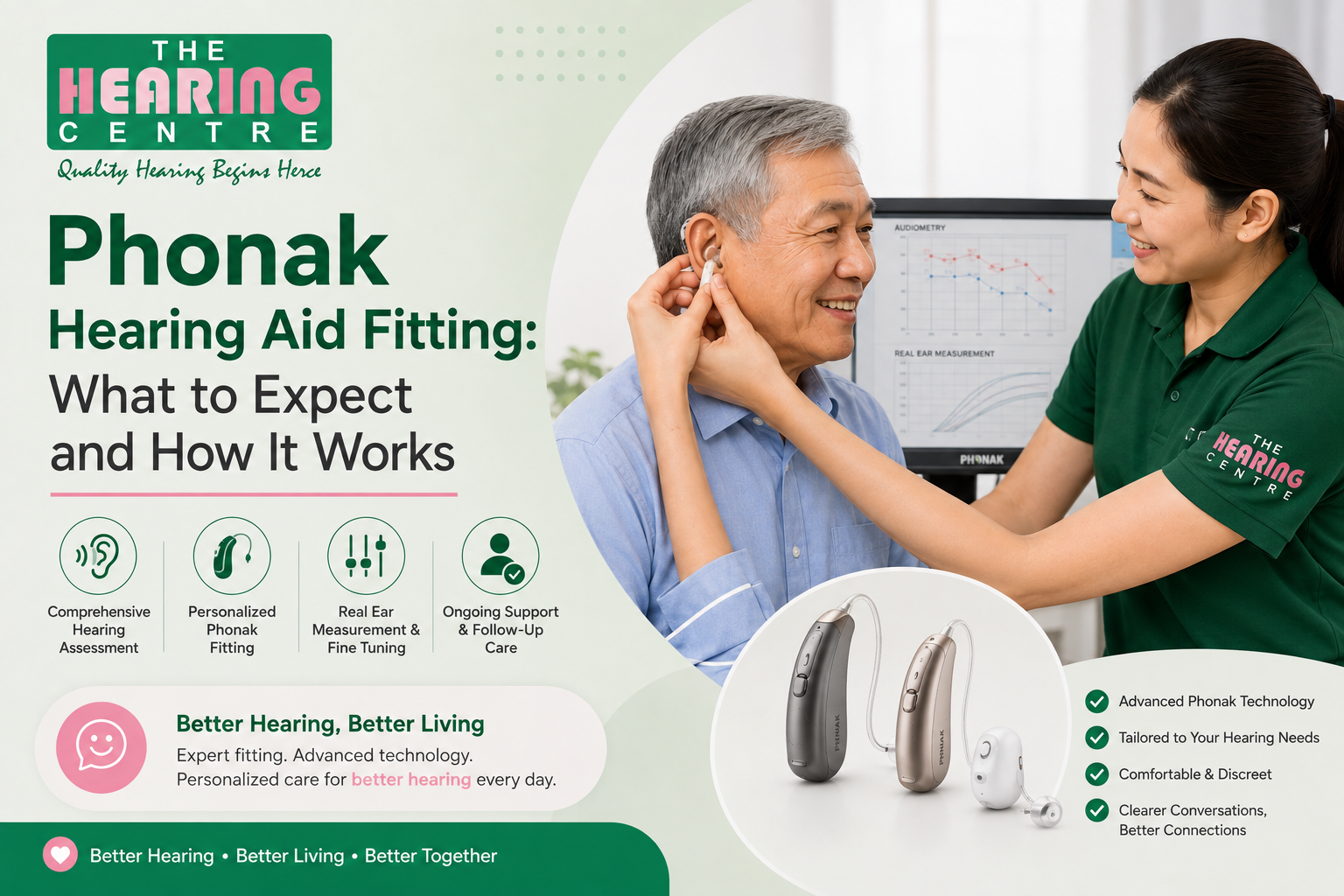
Their noise handling is better than most. If you’re in a hawker centre, a meeting room, or a noisy family dinner — that’s where cheap hearing aids struggle and Phonak tends to hold up. They also have a proper rechargeable range now, which matters more than people realise until they’re dealing with tiny size-10 batteries at 7am.
They make devices for mild hearing difficulty all the way up to severe loss. So whether you just need a small boost or you’ve had significant hearing loss for years, there’s something in the lineup for you.
And the designs are slim. That’s not a small thing. A lot of people put off getting hearing aids because they don’t want something visible. Phonak’s RIC models especially sit pretty discreetly behind the ear.
If you want to see how the brand compares with others before deciding, it’s worth reading through the hearing aids in Singapore buying guide to get a full picture first.
What Affects the Phonak Hearing Aids Price
Phonak hearing aids cost in Singapore is wide — roughly SGD 4,000 to SGD 7,500 per device. That gap isn’t random. Here’s what’s actually driving it.
Processing power. The more a device can do — separate speech from noise, adjust automatically between environments, stream directly from your phone — the more it costs. You’re paying for the chip and software, basically.
The style. A receiver-in-canal (RIC) device sits differently on your ear than a behind-the-ear (BTE) or a fully custom in-ear mould. Custom moulds need ear impressions, extra fitting time, and more lab work. That adds cost.
Rechargeable vs battery. Rechargeable models cost more upfront. But no battery purchases for years means the real difference is smaller than the sticker price suggests.
What the clinic bundles in. This is where people get confused when comparing quotes. One clinic might include three years of follow-up visits and servicing. Another quotes the device only. Always ask exactly what’s included before comparing prices side by side.
How much do Phonak hearing aids cost in Singapore?
Here’s a rough guide to current Phonak hearing aids cost in Singapore. These figures generally include professional fitting and first adjustments:
Updated Price Table (Replace Your Current One)
Model | What It’s Built For | Price Range (SGD) |
Audéo Lumity | Everyday RIC use, rechargeable, Bluetooth | $4,500 – $6,000 |
Audéo Paradise | Strong sound processing, phone streaming | $4,200 – $5,800 |
Audéo Infinio Ultra | AI-powered, natural sound in any environment, fully rechargeable | $6,000 – $8,000+ |
Naída Marvel | Severe to profound hearing loss | $5,000 – $7,000 |
Naída Lumity | High-power BTE with universal Bluetooth, Roger-compatible | $5,500 – $7,500 |
Virto Black | Custom in-ear, virtually invisible, titanium shell | $5,500 – $7,500 |
Virto Titanium | Smallest custom ITE, medical-grade titanium, ultra-discreet | $5,000 – $7,000 |
Prices are per device and indicative. Final cost depends on clinic, fitting package, and aftercare included. Book a hearing test before purchasing to confirm the right model for your hearing profile.
Singapore Government Subsidies for Hearing Aids
Phonak hearing aid cost in Singapore is high, but there are government schemes that can reduce what you pay out of pocket. Here is what is currently available in Singapore:
Assistive Technology Fund (ATF)
The ATF is directed by the Agency for Integrated Care (AIC) and offers funding for helpful devices, including hearing aids. Singapore citizens and permanent residents with a household annual income per capita below a certain threshold may qualify.
The fund covers a portion of the device cost the accurate value depends on your income bracket and evaluated need. Apply through a recorded social service agency or your hearing clinic.
Seniors’ Mobility and Enabling Fund (SMF)
The SMF supports seniors aged 60 and above who need assistive tools. Hearing aids are covered under this scheme. Deserving seniors can obtain subsidies toward the device value, with higher subsidies accessible for those from lower-income households. Your audiologist or a medical social laborer at a polyclinic can assist with the demand.
Community Development Council (CDC) Vouchers
CDC vouchers can be used at active hearing clinics in Singapore. Verify with your clinic immediately to confirm whether they approve CDC vouchers for hearing aid gains.
Important note on Medisave:
Medisave presently cannot be used for hearing aids in Singapore. If a clinic implies otherwise, verify this instantly with CPF Board before proceeding.
If you are unsure which scheme applies to you, speak with our audiologist during your hearing test appointment. We can advise on eligibility and help with the paperwork where possible.
Model Comparison
Feature | Audéo Lumity | Audéo Paradise | Naída Marvel | Virto Black |
Rechargeable | Yes | Yes | Yes | Limited |
Bluetooth | Yes | Yes | Yes | No |
Noise Reduction | Moderate | Advanced | High | Advanced |
Style | RIC | RIC | BTE | Custom |
The Audéo Lumity and Paradise cover most people’s needs. Lumity is the newer model with updated processing. Paradise is strong on sound quality and suits people who stream audio directly from their phones a lot.
Naída Marvel is a different category entirely. It’s a high-power device built for people with severe or profound hearing loss. If your audiogram shows significant loss, this is the one worth discussing with your audiologist.
Virto Black is for people who really don’t want anyone to see their hearing aid. It sits inside the ear canal and is custom-made from ear impressions. No Bluetooth, but the fit and invisibility factor is unmatched in the Phonak hearing aids cost in Singapore.
Thinking about other brands too? Starkey hearing aids prices are worth looking at if you want a direct comparison between what Phonak hearing aids cost in Singapore and Starkey offers at similar price points.
Rechargeable or Battery-Powered?
Most people lean toward rechargeable once they understand what it actually means day to day. You charge it overnight. It lasts through the day. No battery tabs, no scrambling to find a pharmacy with the right size, no device dying in the middle of a conversation.
The non-rechargeable models are lighter and do make sense as a backup device. Some people keep one of each. But for a primary device you’re wearing every day, rechargeable is almost always the easier choice.
What Goes Into the Total Cost
When you’re looking at quotes from different clinics in Singapore, here’s what should ideally be covered:
- The hearing aid itself
- Professional fitting (not optional — a badly fitted device is just expensive discomfort)
- Ear impressions where needed
- Follow-up visits for tuning and adjustments
- Repairs and servicing within the warranty period
Most good clinics build these into a package. A low headline price that doesn’t include aftercare can end up costing more in the long run. Check what happens after the sale — how many visits are included, what the repair turnaround looks like, what’s under warranty.
You can also browse the best hearing aids Singapore page to compare how different clinics and brands package their services.
Get the Hearing Test Done First
Seriously. Don’t skip this.
A lot of people come in already knowing which model they want based on price or what a friend uses. The problem is that your friend’s hearing loss might be completely different from yours. A device that works well for moderate loss in one frequency range could be the wrong choice for your specific audiogram.
The tests themselves aren’t scary:
Pure Tone Audiometry maps how well you hear across different pitches. This is the main one — it tells the audiologist exactly where your hearing falls short.
Tympanometry checks how your middle ear is functioning. Sometimes hearing difficulty is partly a middle ear issue, not just a nerve issue.
ABR/ASSR looks at how your auditory nerve responds. More relevant for complex or severe cases.
The results shape everything — which model the audiologist recommends, how the device gets programmed, and how closely the follow-up tuning needs to happen. Skipping the test and just buying a device is genuinely a false economy.
How to Pick the Right Phonak hearing Aids Model
A few practical things to work through before you decide:
Your hearing loss level comes first. Mild, moderate, and severe loss need different amplification levels. The audiogram tells you this clearly.
Think about where you actually struggle to hear. Noisy restaurants? Phone calls? TV? One-on-one conversations in quiet rooms? Different models handle different situations better, and knowing yours helps the audiologist make a useful recommendation.
Decide how important Bluetooth is to you. If you regularly take calls through your hearing aid or want to stream music directly, Bluetooth matters a lot. If you mostly want help following conversations, you might not need it.
Ask specifically what aftercare is included. This one question will tell you a lot about a clinic. Good audiologists are happy to explain it. If they’re vague, that’s worth noting.
If you also have ringing in your ears, bring that up. Some Phonak models have tinnitus masking built in. Read more about what types of hearing aid is best for tinnitus if that’s relevant to your situation — it’s more common than people think and some devices address both issues at once.
Premium vs Standard — Honest Take
Standard hearing aids amplify sound. That’s the job. For mild hearing difficulty in mostly quiet settings, they do it fine.
Premium Phonak models — Lumity, Paradise, Naída — do more. Speech in background noise sounds clearer. The device adapts as you move from a quiet office to a loud street. Bluetooth means you can take calls directly without holding a phone to your ear. Battery life is longer and more consistent.
Is the price difference worth it? Depends on your lifestyle. If you’re socially active, work around noise, or find yourself in varied listening environments through the day — yes, the premium range makes a real difference that you’ll notice daily. If your situation is quieter and more predictable, a standard model might genuinely be enough.
Spread the cost over five to seven years of daily use and it’s not as dramatic as it looks on the day you pay for it.
Figuring out which Phonak device is right for you does take a bit of work — but it’s mostly about knowing your own hearing loss clearly, understanding what features you’ll actually use, and making sure the aftercare is solid before you buy.
The Hearing Centre Singapore offers proper audiological assessments and can walk you through the full Phonak hearing aids cost in Singapore with your test results in hand, which is genuinely the best way to make this decision.
Frequently Asked Questions
Since most people need hearing aids for both ears, the total cost for a pair is roughly double the per-device price. For mid-range models like the Audéo Lumity, a pair typically costs SGD $9,000–$12,000. Premium models like the Audéo Infinio Ultra can exceed $16,000 for a pair. All prices quoted by clinics should specify whether they are per device or per pair — always confirm before comparing.
Medisave cannot currently be used for hearing aids. However, the Assistive Technology Fund (ATF) and the Seniors’ Mobility and Enabling Fund (SMF) can offset part of the cost for eligible Singapore citizens and PRs. Eligibility is based on age, residency, and household income. Ask us about subsidy eligibility during your consultation.
Yes. The Phonak Sky range is designed specifically for children with hearing loss. It is built to be durable, tamper-resistant, and suited to classroom environments. The fitting and programming approach for children is different from adults if you are looking for a hearing aid for a child, request a paediatric hearing assessment separately.
The Phonak Audéo Infinio Ultra is currently the most advanced model in the Phonak lineup, featuring AI-powered sound processing through Phonak’s DEEPSONIC chip for natural hearing in challenging environments. It is fully rechargeable and available at The Hearing Centre Singapore.
Roughly SGD 4,000 to SGD 7,500 per device. The range depends on the model, features, and what aftercare package is bundled in.
For daily use, yes. The convenience is real and you’re not buying batteries for years. The actual cost gap over time is smaller than it looks upfront.
Processing power and connectivity features like Bluetooth and automatic environment switching. Custom moulding also adds cost.
Some clinics offer trial periods. Worth asking about. A proper fitting session will also give you a real sense of how it performs before you sign anything.
With regular maintenance and proper care — usually five to seven years. Annual check-ups help keep the settings accurate as your hearing changes.
Premium models have better noise reduction, Bluetooth, rechargeable batteries, and automatic adjustments. Standard models cover core amplification at a lower cost.
Yes. Most Phonak devices carry a two to three year manufacturer’s warranty. Some clinics offer extended service plans beyond that.
Once a year is sensible. Hearing can shift gradually and your device should be re-tuned to match if it does.
Yes. The Audéo Lumity and Paradise both support Bluetooth for streaming calls and audio directly from smartphones.
Phonak covers mild through to profound. The Naída series handles severe and profound loss specifically. A hearing test will confirm which model fits your situation.