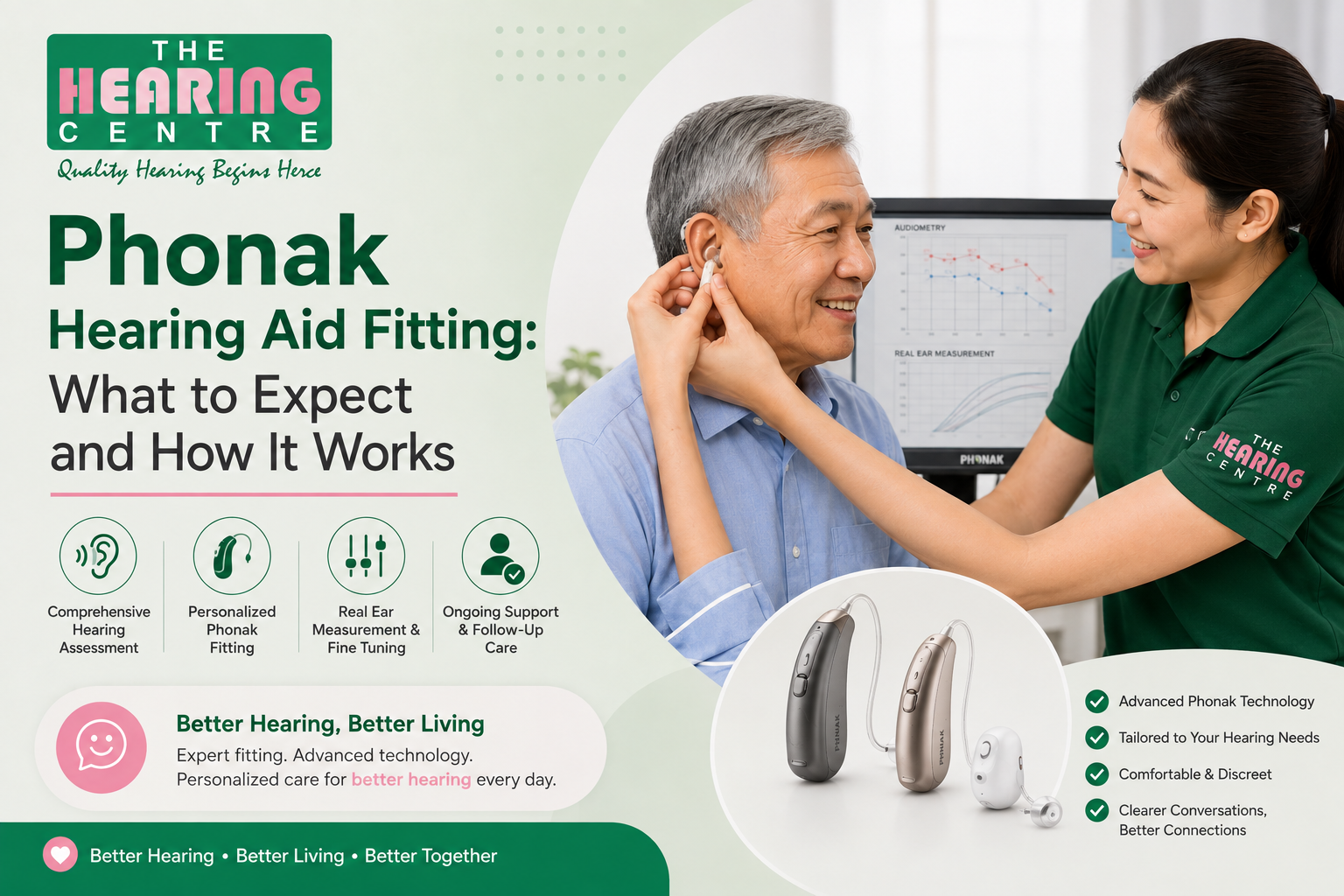

TL;DR: What are hearing aids? Plainly put, they’re small tools you wear in or behind your ear that make sound louder and clearer. A little microphone catches sound, a chip washes it up, and a small speaker sends it into your ear so speech and everyday noises are simpler to follow. There are numerous types to choose from, and the good one depends on your hearing test results, not just what appearance good. At The Hearing Centre, we test first and suggest second, so you don’t end up with a device that doesn’t really fit your life.
What Are Hearing Aids Real Meaning?
A hearing aid is a small electronic device worn in or behind the ear. Its task isn’t complicated: take in sound from the world around you, and make it loud sufficient and clear enough for your ears and brain to really process.
It won’t magically carry back the hearing you had at 25. What it does do is help you select up words in a conversation, hear your phone ring from another room, or follow what’s being said in a meeting without nodding along and hoping for the best.
If you’re wondering whether you really need one, ask yourself a few genuine questions. Do you find yourself missing bits of conversation, especially when there’s more than one person talking? Has someone at home mentioned the TV is too loud, again? Are you jumping calls or evading noisy places because keeping up feels exhausting? Has a hearing test previously flagged some level of hearing loss?
If a couple of these hit close to home, it’s value getting your hearing checked properly before you purchase anything.
How Do Hearing Aids Work?
The essential idea is simpler than most people await, even if the technology inside is sincerely advanced.
First, a tiny microphone in the device selects sound near you, voices, traffic, whatever’s happening. Then a small digital chip goes to operate on that sound, trying to separate speech from background noise and adapting it based on your specific hearing test results. From there, an enhancer boosts the parts of the sound you struggle to hear on your own. Lastly, a small speaker (audiologists call it a receiver) sends that clearer, louder sound into your ear channel.
Newer digital hearing aids go advance than that too. A lot of them connect to your phone over Bluetooth, change settings on their own when you walk from a calm room into a noisy one, and some even help mask ringing in the ears for people dealing with tinnitus.
What’s Truly Inside a Hearing Aid
Peel away the branding and the different shapes, and most hearing aids are built from the same handful of parts.
Part | What It Does |
Microphone | Picks up sound from your surroundings |
Digital chip | Cleans up and processes the sound |
Amplifier | Makes the sound louder |
Receiver (speaker) | Delivers sound into your ear |
Battery | Keeps the whole thing running |
Pricier models add extras on top of this, like rechargeable batteries instead of the tiny disposable ones, Bluetooth streaming, and phone apps that let you tweak the volume yourself.
The Different Types of Hearing Aids
There’s no single “best” hearing aid that works for everyone, no matter what an ad might promise. The right style depends on how much hearing loss you have, how you live day to day, and honestly, sometimes on how steady your hands are for handling small batteries.
Type | Where It Sits | Good For |
Behind-the-Ear (BTE) | Behind the ear, with a tube into the canal | Mild to profound hearing loss, any age |
Receiver-in-Canal (RIC) | Behind the ear, thin wire into the canal | Most adults, a good middle ground |
In-the-Ear (ITE) | Fills the outer ear | Mild to severe hearing loss |
In-the-Canal (ITC) | Sits partly in the canal | Mild to moderate hearing loss |
Completely-in-Canal (CIC) | Deep in the canal | Mild to moderate, more discreet |
Invisible-in-Canal (IIC) | Hidden deep in the canal | Mild loss, barely visible |
For more severe hearing loss, or when the ear canal can’t support a standard device, options like bone-anchored hearing aids or cochlear implants sometimes come into play instead. These usually involve a minor procedure, and our hearing implant services page walks through what that looks like.
If you want the full breakdown with pros and cons of each style, we’ve gone deeper into it in our guide on types of hearing aids.
Picking the Right One for You
Choosing a hearing aid isn’t really about size or which one looks the sleekest. A handful of things matter far more.
How much hearing loss you actually have matters, since mild loss and severe loss call for very different power levels. Your daily routine matters too. Someone sitting in noisy open-plan offices all day needs different features from someone who’s mostly at home. Then there’s practical stuff like dexterity and eyesight, since the tiniest devices can be fiddly if your hands aren’t what they used to be. Budget plays a role as well, and prices in Singapore can range from a few hundred dollars right up to several thousand depending on the features packed in. And finally, think about what extras you’d actually use. Bluetooth calling and tinnitus support are great for some people and completely unnecessary for others.
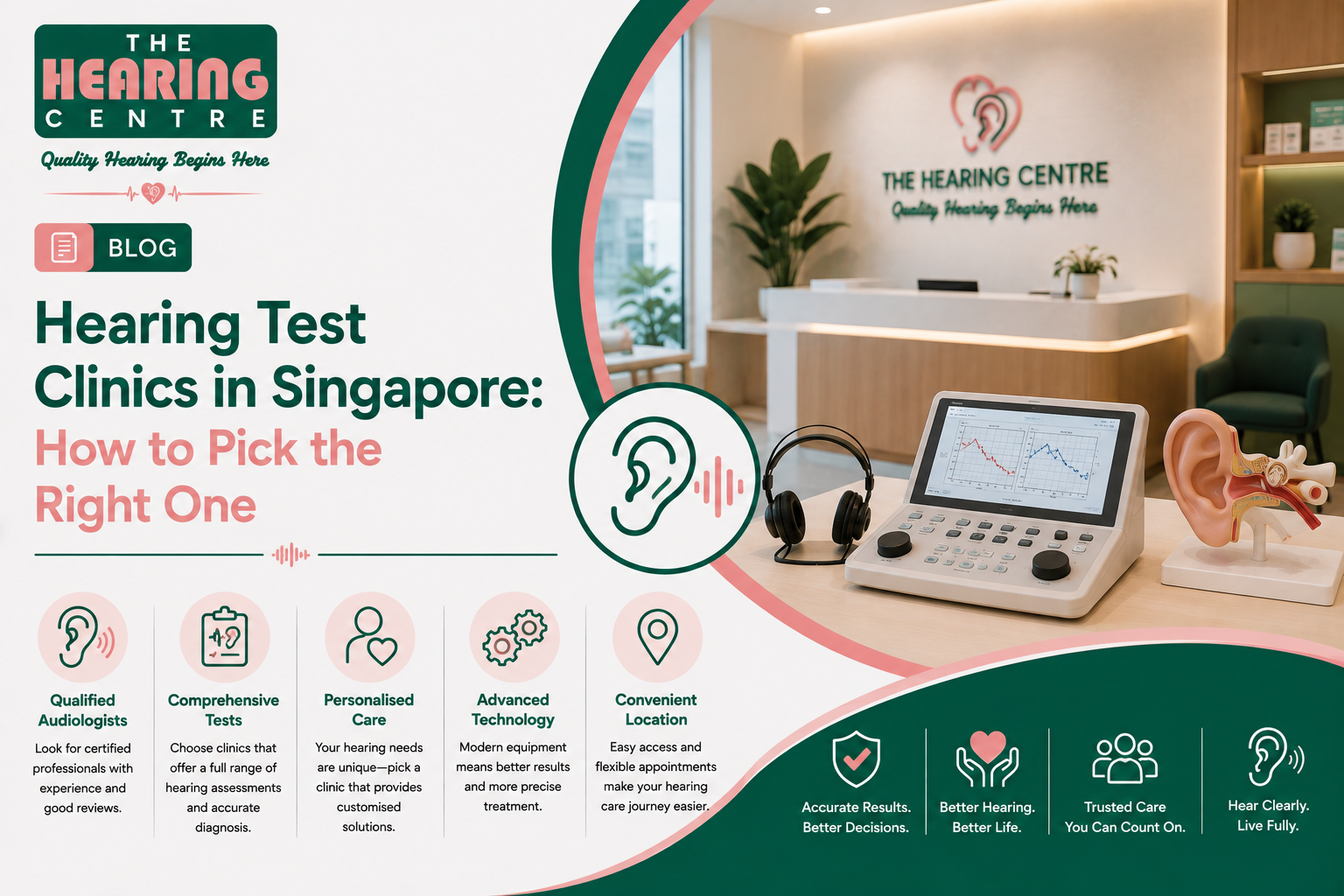
This is really why a proper hearing test comes before anything else. Guessing your way into a device almost always ends in disappointment. Every fitting at The Hearing Centre starts with a full assessment through our hearing test services, so what you end up wearing actually matches your ears, not just your budget.
Hearing Aid Brands You’ll Come Across in Singapore
Singapore has good access to most of the major hearing aid brands, and each has its own personality, so to speak.
Phonak leans into smart, AI-driven sound processing that adapts to wherever you are. Signia is known for clarity and strong connectivity features. Starkey adds health-tracking features on top of the usual hearing support. ReSound is popular for natural sound and easy phone pairing. Rexton tends to be the more budget-friendly, reliable option for everyday use.
None of these is objectively “the best.” What matters is which one lines up with your hearing test results and what you personally care about. The Hearing Centre works across all of these brands, so you’re getting an honest comparison instead of being steered toward whichever one we happen to sell more of.
Do Hearing Aids Actually Help?
Yes, and this isn’t just marketing talk. When they’re fitted properly and worn consistently, hearing aids tend to improve speech understanding even in noisy settings, make social situations feel less draining, ease tension in relationships that’s been building from constant miscommunication, and support mental sharpness and mood over time too.
The catch is in that phrase “fitted properly.” A hearing aid that hasn’t been programmed correctly for your hearing loss will feel off, uncomfortable, or just not do much at all. That’s why the fitting and the follow-up adjustments matter just as much as the device you actually pick.
What About Kids and Older Adults?
Hearing aids aren’t really one-size-fits-all across age groups either.
For children, devices tend to be built tougher, with tamper-proof battery doors and wireless features suited to classroom use. Catching hearing issues early matters a lot here, since hearing plays such a big role in how kids learn to speak and understand language.
For seniors, comfort and simplicity usually come first. Many older adults prefer rechargeable batteries over the tiny disposable ones that are easy to drop and hard to see, along with straightforward controls and a fit that’s comfortable to wear for a full day.
If you’re helping a parent or grandparent figure this out, it’s worth reading up on the early warning signs first. Our guide on hearing loss symptoms covers this, and honestly, a lot of families wait far longer than they should before booking a test.
Looking After Your Hearing Aids
A hearing aid is a true investment, so a bit of day-to-day upkeep goes a long way. Wipe it down with a soft, dry cloth each day, keep an eye out for wax build-up close the microphone and speaker, and stock it somewhere dry and cool overnight quite than leaving it in a bathroom. Wax guards and filters need changing regularly too, and it’s worth booking in for a expert clean and check every few months, even if nothing appears wrong.
If your device starts sounding quiet or just off likened to before, don’t just put up with it. Our hearing aid repairs and adjustments team can usually sort small issues out fairly quickly.
Why People Choose The Hearing Centre
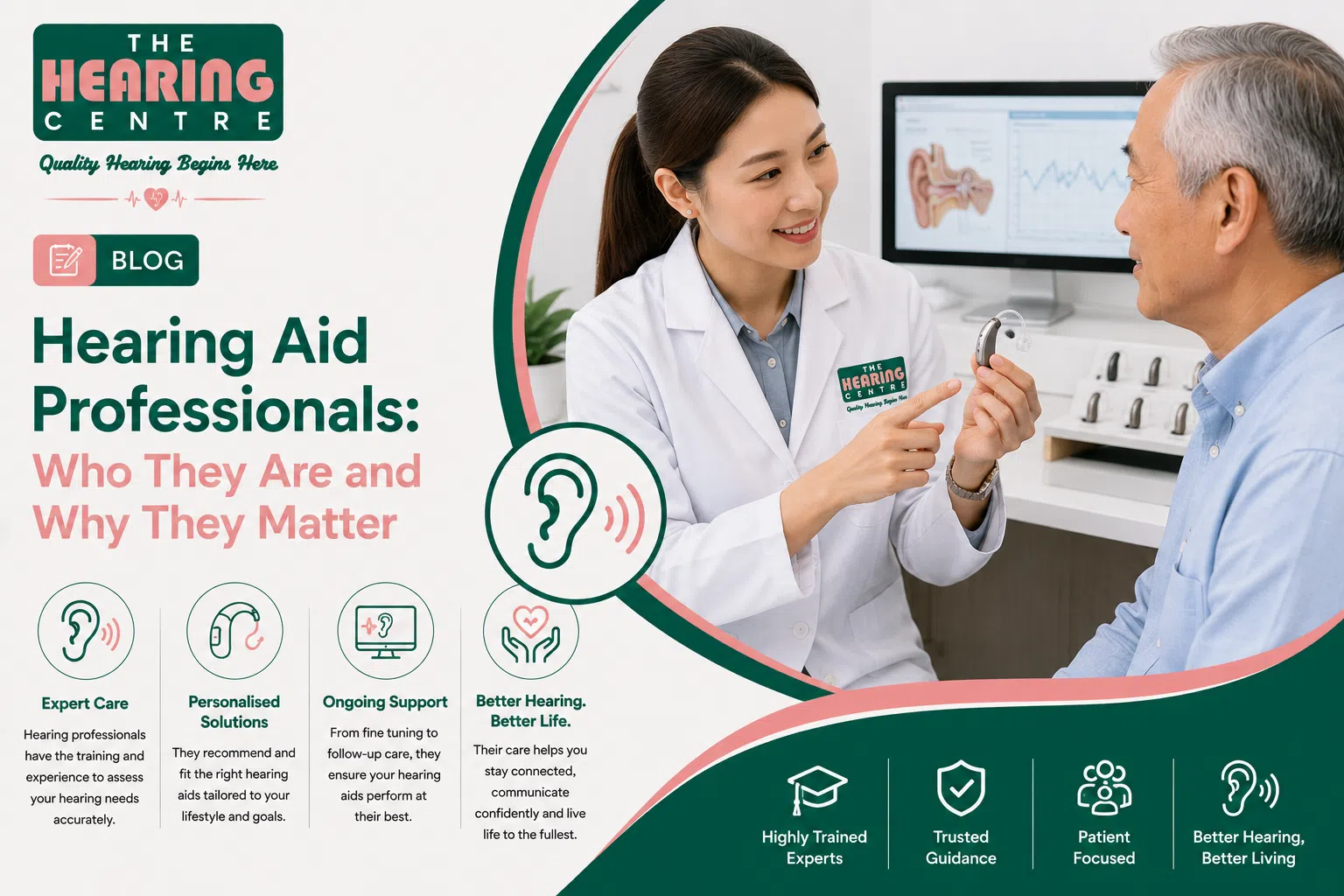
We’re not in the business of pushing the most expensive device on the shelf. Our audiologists start with an actual hearing test, ask about your day-to-day life, and only then talk through which device makes sense for your needs and your budget.
We take all the significant brands, so what you get is a fair comparability rather than a pitch for one brand over more. Whether you’re just beginning to look into hearing aids singapore options, reasoning about upgrading an old device, or helping a parent take their first step toward getting checked, The Hearing Centre is happy to walk you over it without any pressure to resolve on the spot.
Frequently Asked Questions
They help people with hearing loss by making sound louder and clearer, so conversations and everyday noises are easier to follow.
Many modern hearing aids use noise reduction and directional microphones to focus on the speech in front of you while turning down background noise.
Analogue hearing aids boost all sound equally. Digital ones can tell speech apart from background noise, which usually means clearer sound overall.
Behind-the-ear (BTE) models are usually the go-to for kids since they’re durable and easy to adjust as a child grows.
Most don’t. Only certain options, like bone-anchored hearing aids or cochlear implants, involve a procedure.
With reasonable care, most last around 4 to 6 years, though batteries or rechargeable units may need replacing sooner than that.
Most are water-resistant rather than fully waterproof. It’s best to avoid swimming or heavy rain unless your specific model says it can handle it.
Yes, a lot of current models support Bluetooth, so you can take calls or stream music straight through them.
Yes, several models include tinnitus masking features that can make ringing in the ears feel less noticeable.
You can book a full hearing test and fitting with The Hearing Centre, where our audiologists match you to a device based on your hearing test and how you actually live day to day.