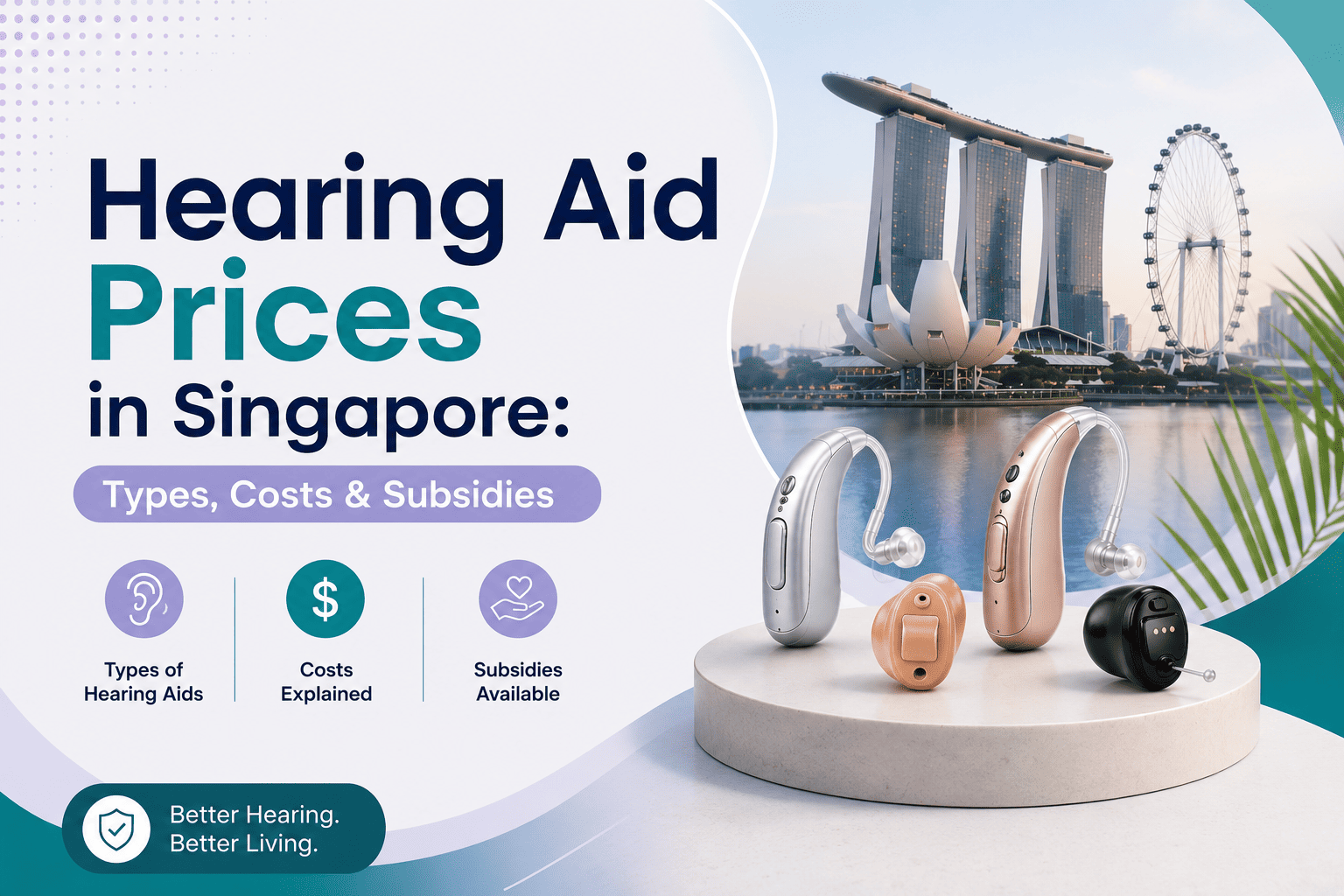
Let’s be straight about something. If you’ve searched for hearing aid price in Singapore even once, you’ve probably felt a little overwhelmed. The numbers jump from $800 to well over $7,000 for a single device, and nobody seems to explain clearly why the gap is that wide or what you’re actually getting at each level.
This guide breaks it down honestly the types available, what drives the cost of hearing aids in Singapore up or down, what the government actually helps with, and what to watch for when you’re comparing clinics. No fluff, just what you actually need to know before making a decision this important.
What Types of Hearing Aids Are There in Singapore?
The type of device you end up with affects the hearing aid Singapore price more than almost anything else, so it’s worth understanding your options before you look at any numbers.
- BTE — Behind-the-Ear: The casing sits behind your ear and connects to an earmold or dome inside the canal. These are the most powerful devices available and handle everything from mild to profound hearing loss. They’re also the easiest to handle, which makes them popular with seniors and people with dexterity concerns. Generally the most affordable entry point among prescription devices.
- RIC — Receiver-in-Canal: Similar shape to BTE but the speaker sits directly inside the ear canal, connected by a thin wire. This gives more natural sound quality and a noticeably smaller profile. Most working adults and first-time users end up with RIC devices — they balance performance, comfort, and discretion well. You can explore this style further on The Hearing Centre’s receiver-in-canal hearing aids page.
- ITE — In-the-Ear: Custom-moulded to fill the outer portion of your ear. All electronics sit in one unit inside the ear. Good for moderate to severe hearing loss, easier to handle than smaller in-canal styles, and can include volume controls and directional microphones.
- ITC — In-the-Canal: Sits partly inside the ear canal. Smaller than ITE, less visible, and still allows for features like dual microphones and wireless connectivity.
- CIC — Completely-in-Canal: Sits fully inside the canal, barely visible. Suitable for mild to moderate hearing loss. Very discreet but the smaller size limits some advanced features. More detail is available on The Hearing Centre’s CIC hearing aids page.
- IIC — Invisible-in-Canal: The deepest fitting and most invisible style available. Practically undetectable when worn. Requires a precise custom fit and suits mild to moderate hearing loss. Because of the manufacturing and fitting complexity, these tend to sit at the higher end of the hearing aid prices in Singapore range.
Rechargeable versions now exist across almost all these styles. Charge overnight, wear all day — no fiddling with tiny batteries, which matters more than people expect once you’re actually wearing a device every day.
What Factors Actually Influence Hearing Aid Prices in Singapore?
This is where most guides give you a generic list. Let’s make it useful instead.
- Technology level is the single biggest driver. A basic device amplifies sound. That’s genuinely all it does. A mid-range model starts filtering background noise, recognises different environments automatically, and connects wirelessly to your phone. Premium devices use AI-driven sound processing that adjusts in real time based on what’s around you — a restaurant sounds different from an office, and the device handles that switch without you doing anything. Each step up in capability pushes the hearing aids cost higher, and the difference in daily experience is real enough that most people who try premium don’t go back.
- Style and size play a role too. Larger BTE devices are more standardised and easier to manufacture, so they tend to start lower. Custom in-ear styles like CIC and IIC require individual ear impressions and lab fabrication for each user — that process adds cost, not margin.
- Brand matters to some extent. Phonak, Signia, Starkey, ReSound, and Oticon each position their ranges differently and have different strengths for different types of hearing loss. But brand alone shouldn’t drive your decision. Two devices at the same hearing aid Singapore price from different brands can perform very differently depending on your specific audiogram.
- What’s bundled in is honestly the factor most people overlook. A clinic quoting you $3,500 that includes a full diagnostic assessment, real-ear measurements, unlimited follow-up adjustments, and annual servicing is offering better value than one quoting $2,800 for the device alone and charging per visit for everything else. Always ask what’s actually included before you compare numbers.
- Aftercare services — cleaning, recalibration, repairs — are ongoing costs that don’t show up in the headline price. Over a five-year device lifespan, these add up. Understanding this upfront saves unpleasant surprises later.
Price Ranges You Can Realistically Expect in Singapore
Here’s a straightforward breakdown of what the cost of hearing aids in Singapore looks like across different tiers:
- Entry level ($800 – $2,000 per device): Functional, covers the basics. Suitable for mild to moderate hearing loss in relatively quiet environments. Good for someone who mainly struggles at home or in one-on-one conversations. Limited noise filtering and no smart features, but they do the job for simpler needs.
- Mid-range ($2,500 – $4,500 per device): This is where most people end up landing, and for good reason. Bluetooth connectivity, noise management, rechargeable batteries, and more discreet styling are all standard here. A device you can realistically wear through a full working day, social situations, and phone calls without constantly fighting the technology.
- Premium ($5,000 – $8,000+ per device): AI sound processing, near-invisible form factors, automatic environment detection, and direct audio streaming. For people with complex hearing profiles, demanding listening environments, or those who simply want the most advanced experience currently available.
If you need devices for both ears — which most people with bilateral hearing loss do — these figures double. That’s the real hearing aids cost to plan around.
What Does the Hearing Aid Prices in Singapore Actually Include?
This question matters more than the number itself.
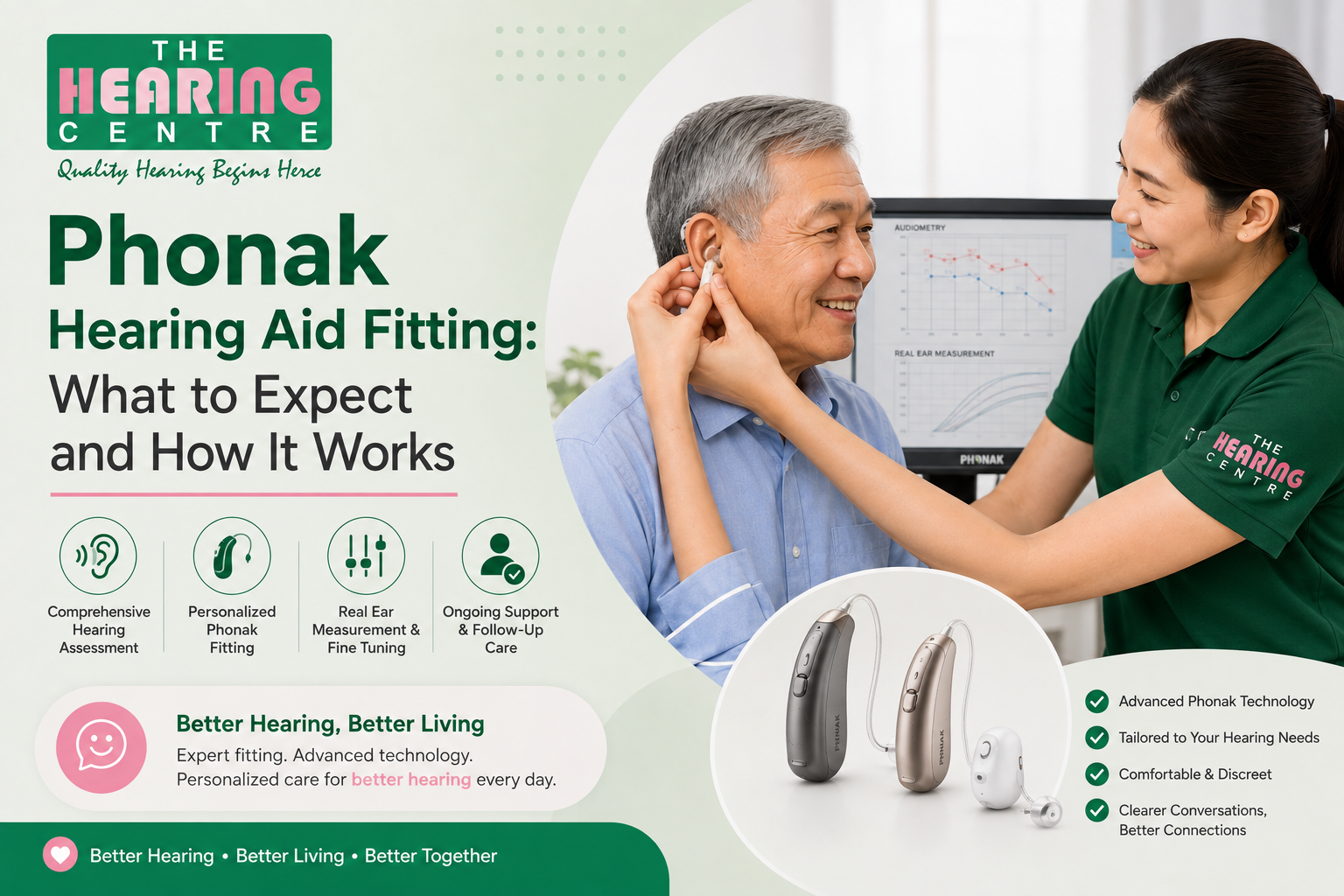
At The Hearing Centre, the price covers a full diagnostic assessment, the fitting process, real-ear measurements — where the device is calibrated to your specific audiogram rather than factory settings — and ongoing aftercare including adjustments and servicing. That’s the right way to do it. A device programmed without real-ear measurements is a device performing below its potential, regardless of what it cost.
Some providers, especially online sellers, quote you just the hardware. The box arrives. What doesn’t come with it is a qualified audiologist spending an hour understanding your hearing profile, your lifestyle, how you spend your days — and then configuring the device accordingly. Before committing to any hearing aid Singapore price, ask specifically: what does this include after the sale?
You can also read the previous guide on hearing aid costs for a brand-by-brand breakdown of how pricing compares across devices.
Government Help That Brings the Cost Down Significantly
This is the part that genuinely surprises people who haven’t looked into it.
The Seniors’ Mobility and Enabling Fund (SMF) covers Singaporeans aged 60 and above and subsidises up to 90% of the hearing aid price. As of January 2026, the monthly per capita household income eligibility threshold was raised to $4,800. Permanent residents became eligible at the same time. If you checked previously and didn’t qualify, check again — the rules changed meaningfully.
The Assistive Technology Fund (ATF) through SG Enable covers people with disabilities under 60. Same 90% subsidy rate, with a $40,000 lifetime cap. Both schemes require a proper audiological assessment to apply.
One important clarification — MediSave cannot be used for standard hearing aid purchases. This is a common misconception worth knowing upfront. A full breakdown of what you can claim and how to apply is on The Hearing Centre’s hearing aid government subsidy guide.
The Hidden Costs Nobody Mentions Upfront
Beyond the device itself, a few things affect what you’ll actually spend over the life of the hearing aid:
- Batteries — if you’re not on a rechargeable model, ongoing battery replacement is a real cost
- Annual servicing and cleaning — should happen at least once a year, may or may not be included in your package
- Adjustment visits — your hearing changes, the device needs to follow; if these are charged per visit they add up
- Repairs — The Hearing Centre’s hearing aid repairs and adjustments service covers this, but not every provider includes it without charge
Average device lifespan is five to seven years with proper care. Understanding the full picture over that period — not just the day-one hearing aid price in Singapore is how you make a genuinely informed comparison between providers.
Online vs a Proper Clinic — Is Cheaper Always Worth It?
Consumer-grade amplifiers exist online for a few hundred dollars. They are not the same as prescription hearing aids. They amplify everything without filtering — background noise, traffic, and voices all go up together. For someone with genuine sensorineural hearing loss, this creates more listening fatigue, not less.
Prescription devices are clinically fitted to your specific audiogram. The hearing aid fitting process involves real-ear measurements, programming, and follow-up calibration — none of which comes in a box delivered to your door. A poorly fitted device is one most people end up not wearing, and a device you don’t wear isn’t a saving.
Book a Consultation at The Hearing Centre
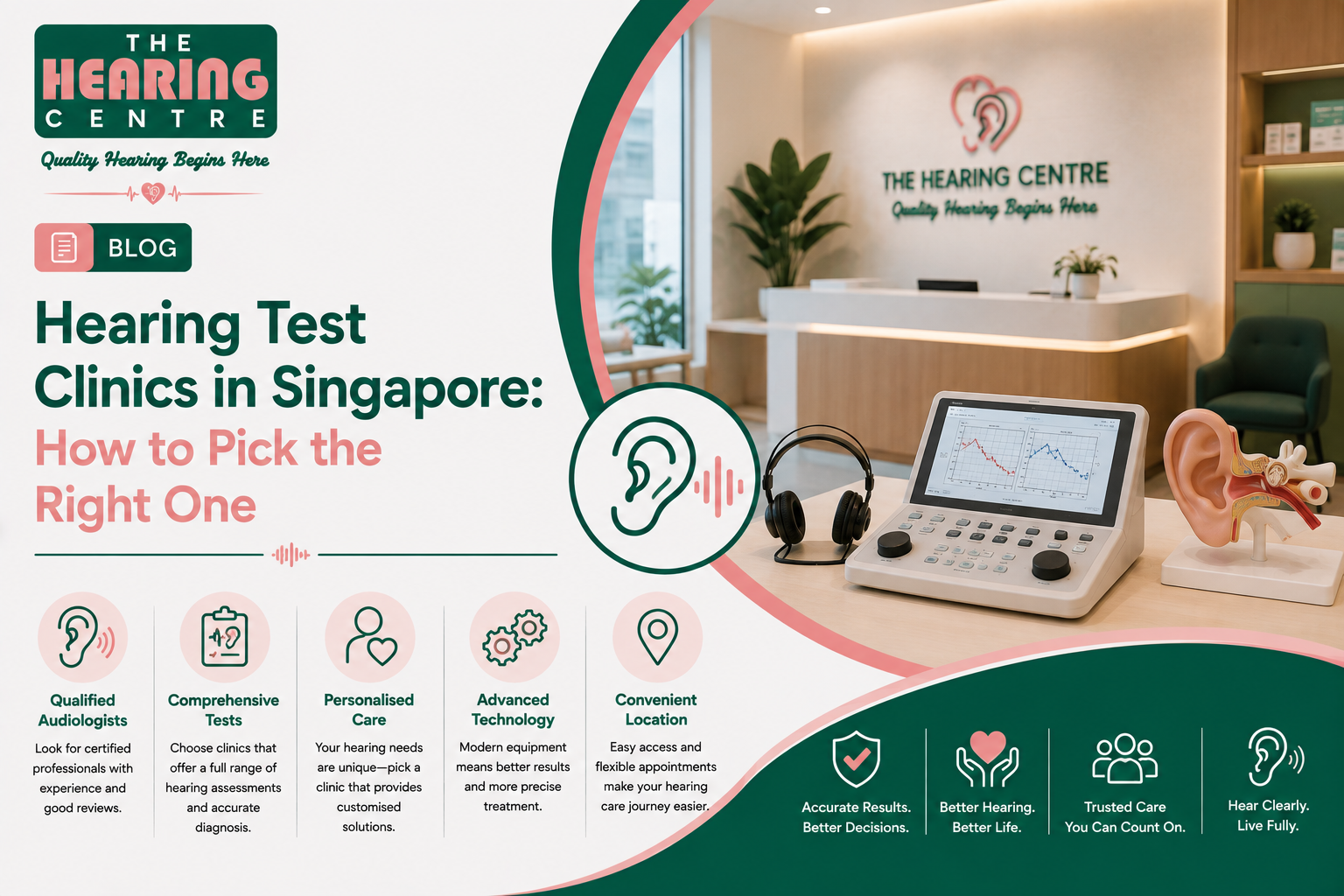
If you want a clear picture of what hearing aid price in Singapore means for your specific situation — your hearing profile, your lifestyle, your budget — the most useful first step is a proper assessment.
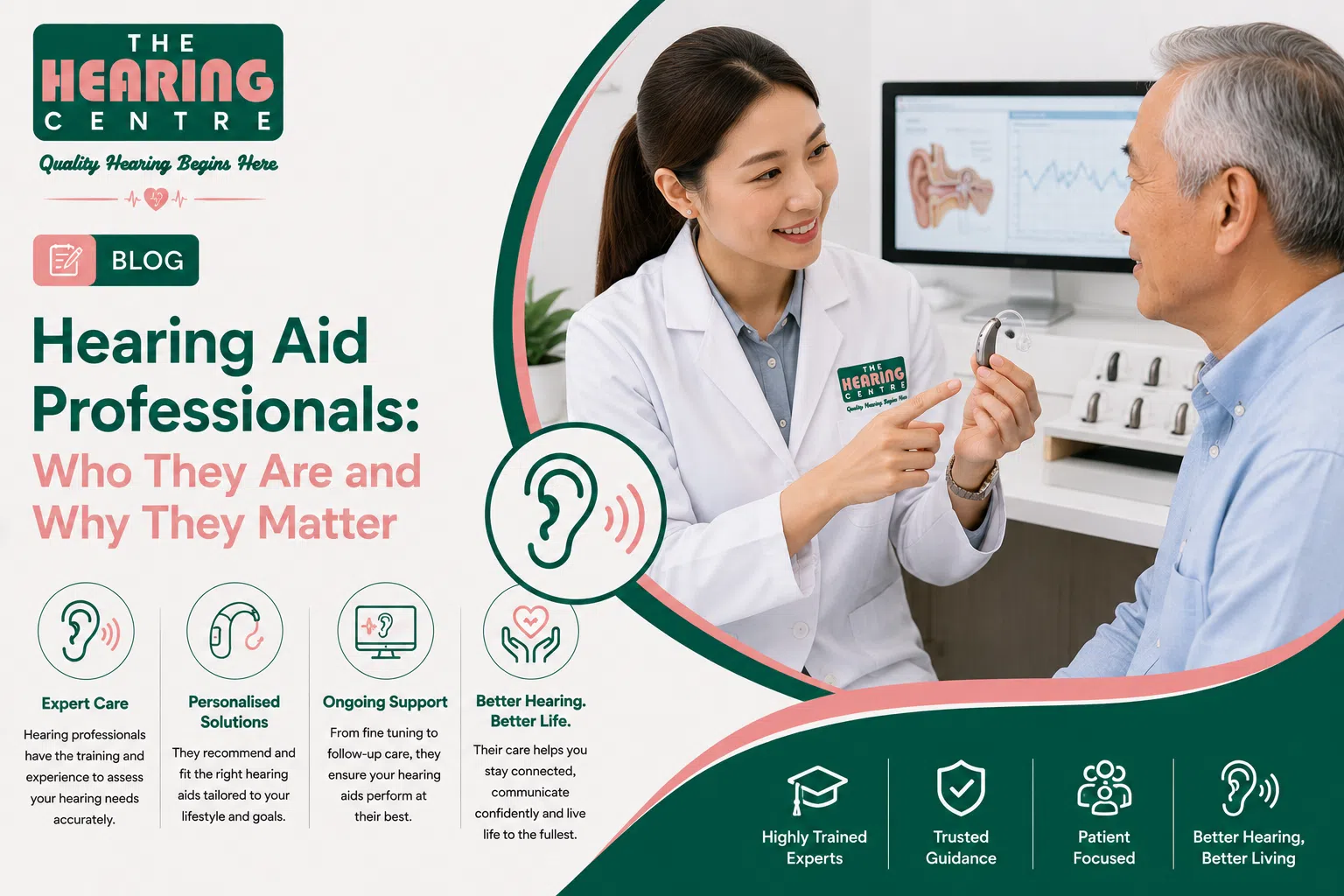
The Hearing Centre has over 20 years of clinical experience, MOH-approved hearing therapists, and a full range of devices from entry-level to premium across brands including Phonak, Signia, Starkey, ReSound, and Oticon. The team walks you through options honestly, explains what’s genuinely worth paying for in your case, and helps you navigate the subsidy process so the hearing aids cost lands somewhere manageable.
For seniors specifically, there’s a dedicated hearing aids for senior citizens page that covers the full care pathway and subsidy application process in detail.
Frequently Asked Questions:
The gap between $800 and $7,000 comes down to technology level, device style, and what aftercare is bundled in. A cheaper quote from one clinic and a higher quote from another may actually be covering very different things.
Most people end up spending between $2,500 and $4,500 per device for a mid-range model with Bluetooth and noise management. If you need both ears fitted, plan to double that figure.
No — MediSave cannot be used for standard hearing aid purchases, which surprises a lot of people. The SMF and ATF subsidy schemes are the main government support options available instead.
Singaporeans and PRs aged 60 and above can apply for the SMF, while the ATF covers people with disabilities under 60. As of January 2026, the income eligibility cap was raised to $4,800 monthly per capita — so if you checked before and didn’t qualify, it’s worth checking again.
Consumer amplifiers sold online are not prescription hearing aids — they amplify everything including background noise without any filtering. For real hearing loss, they tend to make listening more tiring, not easier.
The price covers your diagnostic assessment, fitting, real-ear measurements, and ongoing aftercare including adjustments and servicing. It’s not just the device — the clinical support is built in from the start.
With proper care and regular servicing, most hearing aids last between five and seven years. Annual cleaning and timely adjustments make a real difference to how long the device performs well.
It’s a clinical process where the hearing aid is calibrated using measurements taken inside your actual ear canal, not just factory defaults. Without it, even an expensive device won’t perform the way it should for your specific hearing loss.
Yes — BTE devices are more standardised and generally start lower. Custom in-ear styles like CIC and IIC require individual ear impressions and lab fabrication, which adds to the cost.
Ask specifically whether battery replacement, annual servicing, adjustment visits, and repairs are included or charged separately. These ongoing costs over five to seven years can add up significantly if they’re not bundled into the original price.