Nobody tells you about this one before the baby arrives.
You hear about the heel prick test, the vitamin K injection, the weight checks. But the hearing screening? Most parents find out about it when a nurse quietly does it while the baby sleeps and then hands them a piece of paper saying “refer” or “pass.”
That paper matters more than most people realise.
Why This Test Is Such a Big Deal
Here’s the thing about hearing loss in babies — you can’t see it. There’s no limp, no rash, no obvious clue. A baby with significant hearing loss looks exactly like a baby without it.
Left undetected, that child spends the first year or two of life missing out on the sounds that teach them to talk. By the time anyone notices something is off — usually because speech is delayed — the brain has already missed a critical window for language development.
Roughly 1 to 3 babies in every 1,000 are born with some level of hearing loss. Most of those families have no history of hearing problems. It just happens.
The newborn hearing test catches this in the first days of life. Not at age two. Not when a worried parent finally pushes for a referral. Day one or two.
Children who get diagnosed early and start getting help before 6 months old do dramatically better than those diagnosed at 2 or 3 years. That gap — between early and late diagnosis — shows up in their speech, their confidence, their ability to learn in school. It’s real and it’s significant.
When Does It Happen
Most hospitals do it within the first 24 to 48 hours, usually while the baby is settled after a feed. The baby doesn’t feel anything. Most sleep through the whole thing.
If you gave birth at home or were discharged early, you need to book this yourself. Don’t assume it’ll get sorted at a later checkup. The guideline is:
Before 1 month — Initial screening done. Before 3 months — If the first test flagged anything, a full diagnostic evaluation is completed. Before 6 months — If hearing loss is confirmed, some form of intervention is already started.
That 1-3-6 window isn’t arbitrary. It’s based on how the brain develops and when intervention makes the most difference.
What They Actually Do
Two tests are used. Sometimes one, sometimes both depending on the clinic and the results.
OAE test (Otoacoustic Emissions)
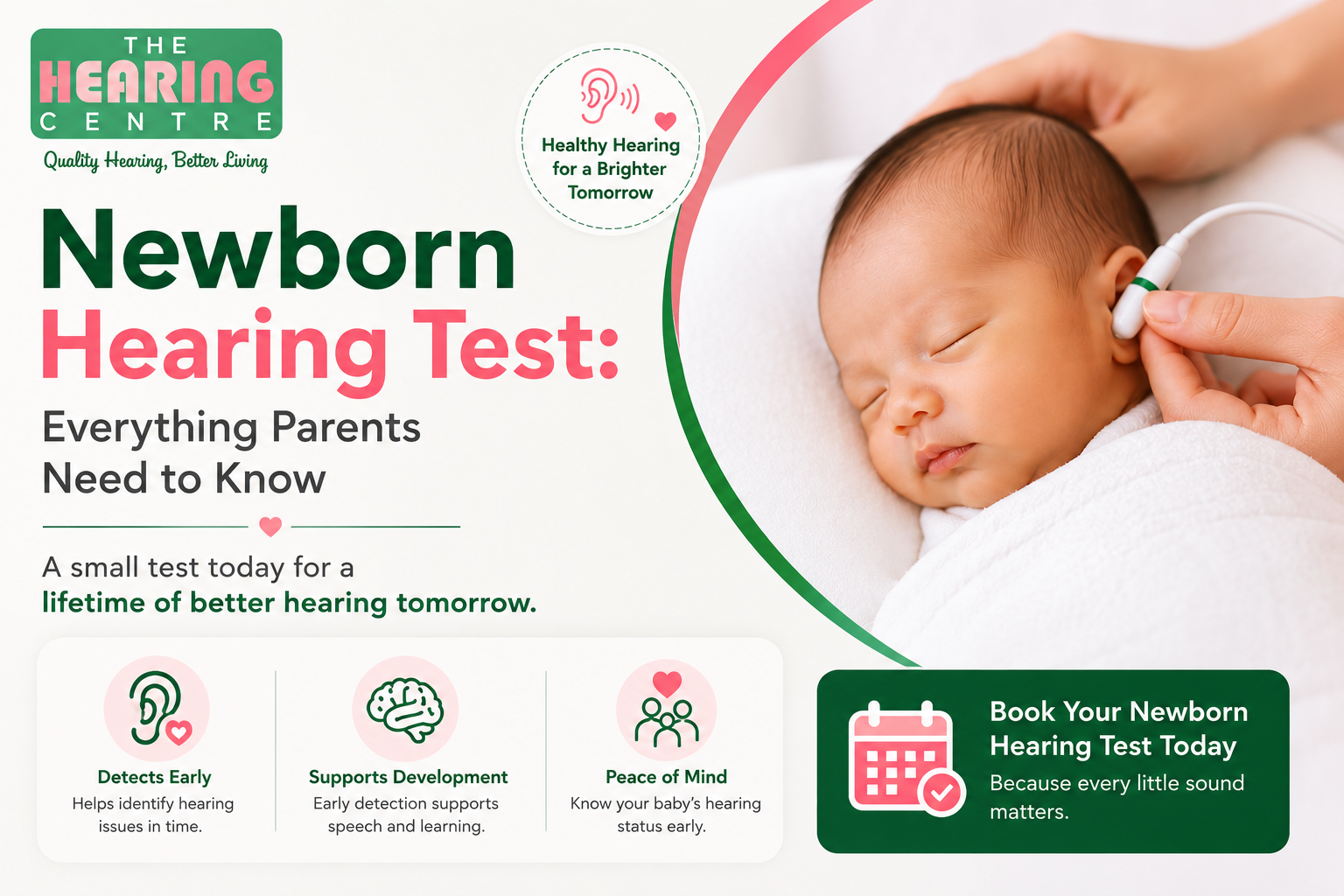
A tiny soft probe goes in the baby’s ear. It plays very quiet sounds and then checks whether the inner ear sends back a response. A working cochlea produces a faint echo when it receives sound. The machine detects that echo. Takes a few minutes. Baby feels nothing.
This is usually the first test done.
ABR test (Auditory Brainstem Response)
Small sticky pads are placed on the baby’s head and behind the ears. Soft clicking sounds play through earphones and the pads pick up how the brain responds. This one checks not just whether the ear hears the sound, but whether the signal travels all the way to the brain properly.
ABR is used when the OAE result isn’t clear, or for a more detailed picture.
OAE | ABR | |
What it checks | Inner ear response | Brain’s response to sound |
How | Probe in ear | Sticky pads on head |
When used | First-line screening | Follow-up or detailed check |
If the Baby Doesn’t Pass
Take a breath first.
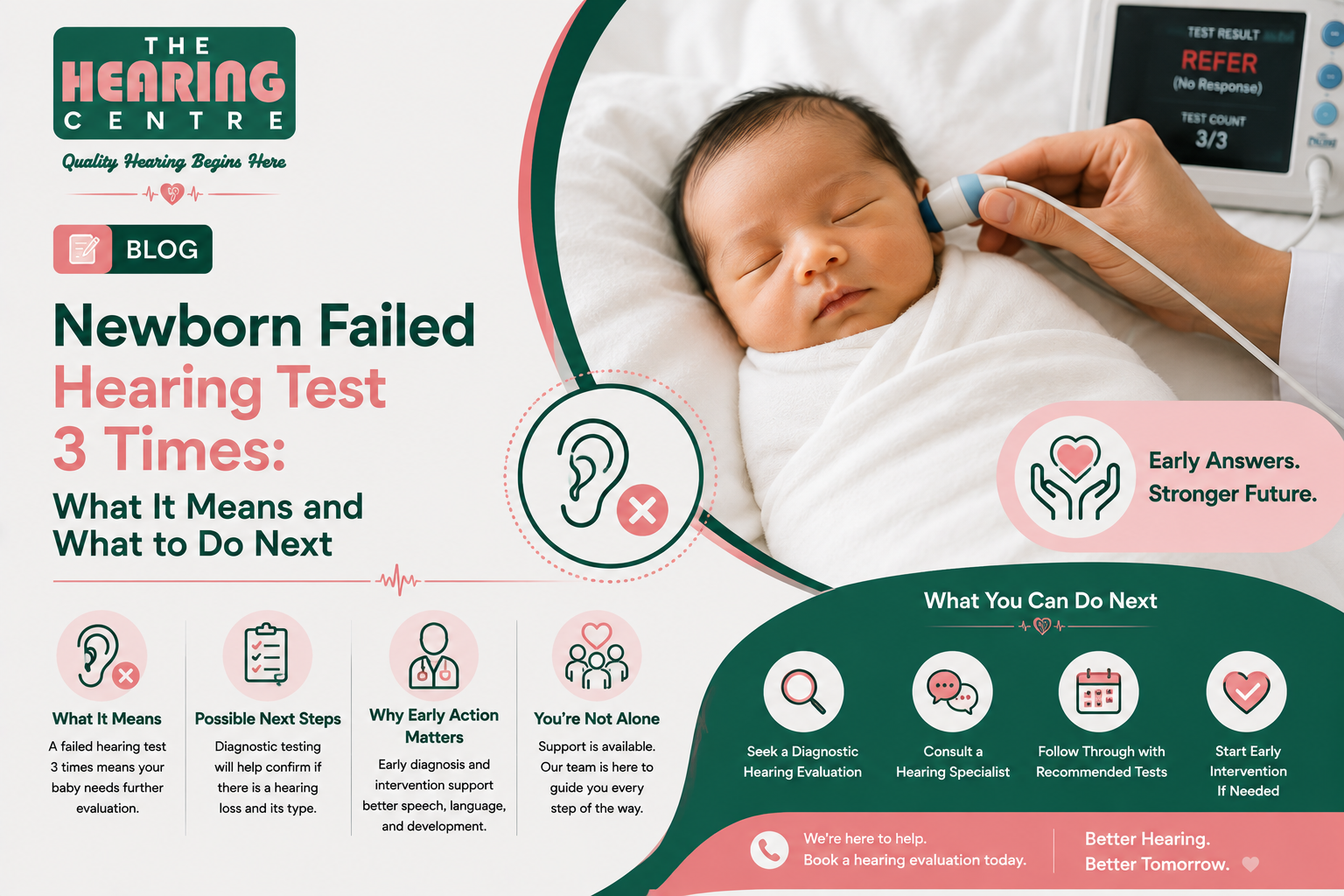
A failed newborn hearing test does not mean your child is deaf. It doesn’t even mean there’s definitely a problem. It means the test couldn’t confirm a clear response that day, and another test is needed.
Common reasons for a failed first screening that turn out to be nothing:
Fluid still in the ear canal from birth. Vernix — the waxy coating babies are born with — can sit in the ear and muffle the test result. It clears on its own within days.
A noisy room during testing. Background noise interferes with the equipment.
The baby was fussy or moving around. The OAE test needs the baby to be still and quiet.
Many babies who get referred after the first test pass easily on the second one. But you still need to go. Don’t skip the follow-up because you think it’ll be fine. Get it confirmed.
Why Some Babies Are Born With Hearing Loss
Parents almost always ask why. Here’s what we know.
More than half of congenital hearing loss cases come down to genetics. Sometimes both parents carry a gene variant and neither of them has any hearing problems. There’s no way to predict it without testing.
Complications during pregnancy or birth can also be a cause — certain infections during pregnancy like CMV, premature birth, low birth weight, oxygen problems at delivery, or severe jaundice.
After birth, serious infections like meningitis, certain medications, or head trauma can cause hearing loss too.
Knowing the cause helps with planning. It affects decisions about treatment, whether the loss might get worse over time, and whether other family members should be checked. If you’re in the early stages of trying to understand what’s happening with your baby’s hearing, reading about early signs of hearing loss in children helps you know what to watch for beyond the newborn period.
What Happens If Hearing Loss Is Confirmed
There are real, effective options. And they work best when started early — which is the whole point of the newborn test.
Hearing aids are usually the first step for mild to moderate loss. Modern ones made for babies are tiny and fit well. Many infants adapt to them faster than parents expect. Before you go to any appointment about devices, choosing the right technology for your child’s hearing aids is worth reading so you go in knowing what questions to ask.
Cochlear implants come up in cases of severe or profound loss where hearing aids aren’t providing enough benefit. They’re not fitted immediately — usually the baby needs to reach around 9 to 12 months — but the assessment and planning starts well before that.
Speech and language therapy runs alongside whatever device is chosen. Hearing aids give the brain access to sound. Therapy helps the child learn to make sense of and use that sound for communication.
Sign language is chosen by some families as the main or alongside spoken communication, particularly where hearing loss is profound.
Parent support is part of it too. Getting a hearing loss diagnosis for your newborn is a lot to process. Connecting with other families and working with a counsellor helps more than people expect.
What You Can Do as a Parent
The appointments matter. Show up to every follow-up. If the first test referred your baby, don’t wait and hope — book the next one immediately.
At home, watch how your baby responds to sound as they grow. By 3 months they should be startling at loud sounds. By 6 months they should turn toward voices and familiar sounds. These aren’t random milestones — they track how hearing and brain development are progressing together.
Talk to your baby. Sing. Read. Make noise. Even while treatment is underway, that constant language input helps.
If something doesn’t feel right at any point — trust it and go back to the specialist. Parents notice things clinics don’t.
Where Things Are Heading
Newborn hearing care is improving fast.
Genetic testing can now confirm hereditary causes more reliably and earlier than before, which changes how treatment is planned.
Research into gene therapy for hearing loss is moving quickly. Clinical trials are underway. It’s not available as a standard treatment yet but it’s closer than most people think.
Portable screening equipment means testing can happen in more settings. Telehealth is making follow-ups more accessible for families who aren’t near major audiology centres.
The newborn hearing test doesn’t take long. But what it can catch — and what early catching makes possible — is worth far more than the few minutes it takes.
For families in Singapore, Hearing aids does newborn and infant hearing assessments and can guide you through everything from first screening to diagnosis to treatment options.
Frequently Asked Questions
In most hospitals it’s part of standard newborn care. Technically parents can decline but it’s strongly advised against. The downside of skipping it — missing hearing loss that could be treated early — is too significant.
Not at all. It’s non-invasive and most babies sleep through it.
Yes. Some types of hearing loss appear or worsen after birth. Passing the newborn screen means things were fine that day — it doesn’t mean monitoring stops. Keep watching developmental milestones.
The OAE part takes under 10 minutes usually. ABR takes a bit longer.
Birth fluid in the ear, a noisy room, or a restless baby. These don’t indicate a hearing problem — they just mean the test needs repeating.
No. Book it as early as possible. Every week earlier that a hearing problem is identified means more time for effective support.
No reaction to loud sounds in the first few months, not turning toward voices by 6 months, no babbling by 9 months, no words by 12 to 15 months. These aren’t definitive — but worth raising with a specialist if you notice them.
Not always. Some types caused by fluid or infection are temporary and treatable. Others are permanent but manageable with the right support started early enough.
A pediatric audiologist will walk you through what’s available and what fits your baby’s specific type of loss. Children take to them well when they’re fitted young.
Call your paediatrician today and ask for a referral to an audiology clinic that does infant screening. Don’t wait for a routine checkup.